Troubleshooting a Buzzing Heater: Quick Guide
Learn how to diagnose and fix a heater that is buzzing safely and quickly. This urgent guide covers common causes, safety checks, and maintenance tips to quiet the sound and extend heater life.


When the heater is making a buzzing noise, the most likely causes are a loose blower wheel, a failing motor capacitor, or worn bearings. Quick fixes: power off, verify access panels are secure, inspect the blower wheel for looseness, and unplug the unit to check electrical connections. If the sound persists, schedule a professional inspection.
Understanding the Buzz: Why the Heater Makes Noise
When the heater is making a buzzing noise, it isn't just a nuisance — it can signal a problem that could escalate if ignored. The noise often comes from moving parts or electrical components that are under stress. According to Heater Cost, buzzing noises are most often traced to mechanical friction in the blower assembly or a failing start capacitor, rather than a sudden gas leak or flame issue. In many homes, a buzzing is a warning sign that the system is near the end of its efficient life or needs a simple adjustment. Distinguishing between a quick DIY fix and a safety hazard is essential, because some buzzing noises could indicate dangerous conditions such as arcing or overheated wiring.
If your unit shows that the heater is making a buzzing noise, safety should come first. Addressing buzzing noises promptly protects your home and reduces the risk of bigger, costlier failures later. The Heater Cost team notes that routine inspections catch worn components before they fail, saving money and preventing potential interruptions in comfort.
Immediate Safety Steps You Should Take
Safety comes first. If you hear a buzz while the heater runs, immediately power down the unit at the thermostat and switch off the circuit breaker feeding the heater. Do not touch exposed wiring or metal parts until the unit is fully de-energized. Wait 5-10 minutes for the unit to cool before you open any access panels. If you smell gas or hear a hissing, leave the area and call your gas provider or emergency services. After de-energizing, visually inspect for obvious loose screws, broken wires, or debris near the blower housing. Keep children and pets away until you finish your checks or a professional arrives.
Common Causes of a Buzzing Noise
- Loose blower wheel or fan blade: A wobble can produce a high-pitched buzz as the wheel rubs against the housing.
- Faulty start capacitor or worn motor bearings: Electrical components can hum louder as they fail, especially on startup.
- Debris or dust in the blower or venting system: Build-up adds friction and reduces smooth operation.
- Loose or vibrating panels: Rattling can sound like buzzing if panels aren’t tightly fastened.
- Electrical wiring issues or arcing: Rare but dangerous, usually accompanied by heat or a burning smell.
Understanding these causes helps you prioritize checks and avoid unnecessary parts replacement. The Heater Cost approach emphasizes starting with the simplest checks and avoiding risky DIY fixes when high-voltage components are involved.
How to Diagnose the Issue Like a Pro
Start with the simplest checks: confirm the thermostat is calling for heat and the unit is receiving power. Listen for where the buzz originates — blower housing, motor, or wiring. Carefully remove the access panel and inspect the blower wheel for play. Use a flashlight to check for dust build-up on the motor or blower. If the noise follows a startup or shutdown pattern, it could point to a capacitor or bearing issue. Do not attempt to service high-voltage components; leave that to a pro if you’re unsure. According to Heater Cost, documenting when and how the noise occurs can guide a technician to the exact component at fault.
Step-By-Step Fixes for the Most Common Causes
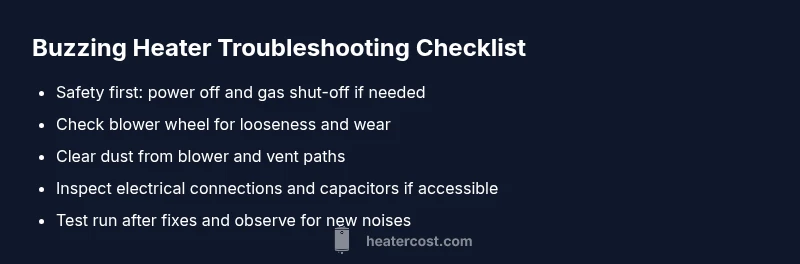
- Step 1: Power off and secure. Turn off the thermostat and switch off the breaker. Lock out the switch if you can, and wait for the unit to cool.
- Step 2: Tighten and secure. Check all screws on the blower housing and access panel; tighten where needed to eliminate vibration.
- Step 3: Inspect the blower wheel. Remove dust and ensure the wheel spins freely with minimal wobble. Reinstall securely.
- Step 4: Check electrical connections. If you’re comfortable, inspect accessible wiring; reseat connectors, and look for signs of wear.
- Step 5: Test the capacitor (if accessible). Discharge safely and test with a multimeter; replace if the reading is out of spec.
- Step 6: Reassemble and test. Replace the cover, restore power, and run the heater for 5-10 minutes while listening for changes.
- Step 7: When in doubt, call a professional. If the buzzing persists after these steps, a motor bearing replacement or blower wheel repair may be required.
Tip: For safety, never work on gas valves or fuel lines unless you’re trained; if you smell gas, evacuate and call your gas company.
Preventive Maintenance to Reduce Future Buzzes
- Schedule annual or semi-annual professional inspections to catch worn components before they fail.
- Keep the blower and vent paths clear of dust and debris; replace air filters regularly.
- Lubricate any accessible bearings if the unit’s manufacturer allows it (and only with the proper lubricant).
- Tighten panel screws and inspect ductwork for leaks; vibration is often caused by leaky ducts or loose mounts.
- Monitor for new noises after maintenance; early detection saves larger repairs later. Routine maintenance helps avoid a buzzing noise and extends life, a point emphasized by the Heater Cost team.
For long-term reliability, incorporate a small, regular maintenance routine into your home care calendar and keep a simple log of noise changes over time.
Troubleshooting by Heater Type
Electric heaters and gas furnaces have different risk profiles and typical buzzing sources. In electric heaters, buzzing is often from the blower motor or capacitor and is usually non-urgent if there is no smoke or spark. However, a buzzing tone that coincides with startup or shutdown may indicate a failing capacitor or worn bearings that should be addressed promptly to avoid overheating or motor burnout. For gas furnaces, buzzing can accompany ignition sequences or gas valve operation. Any abnormal ignition buzz, delayed ignition, or popping noises require immediate professional inspection to rule out gas leaks, carbon monoxide risks, or improper venting. If your system has a recirculation pump, ensure it’s wired correctly and that the pump is not air-locked. Regular inspection of venting and seals prevents backdrafts that can alter combustion and cause noise.
Remember that a buzzing could be a symptom of a fault that warrants professional attention, especially in gas-fired systems.
Real-World Scenarios and Quick-Action Checklists
Scenario A: Buzz starts after a cold start in winter
- Action: Power off, inspect blower wheel for obstruction; test for loose screws; if it persists after the check, call a pro.
Scenario B: Buzz is intermittent and only when the thermostat calls for heat
- Action: Check for loose ductwork or vibration; verify capacitor condition; consider replacement if beyond spec.
Scenario C: Buzz coincides with gas ignition
- Action: Evacuate, call the gas company; do not attempt DIY repairs. Then contact a licensed tech to assess the ignition system and venting.
Note: Always maintain a service log; track noises, dates, and outcomes for future reference.
Steps
Estimated time: 30-45 minutes
- 1
Power off and secure the system
Turn off the thermostat and switch off the circuit breaker for the heater. If safe, lockout the switch and wait for the unit to cool before touching any components.
Tip: Always verify power with a non-contact tester before starting. - 2
Inspect the blower wheel
Remove the access panel and wiggle the blower wheel to check for wobble or rubbing. Clear any debris and reseat if needed.
Tip: Do not touch moving parts while powered. - 3
Tighten and secure panels and mounting
Check all mounting screws around the blower housing and access panel; tighten gently to reduce vibration.
Tip: Use the correct screwdriver to avoid stripping screws. - 4
Check electrical connections
Inspect visible wiring for loose connectors or damaged insulation; reseat connectors if safe to do so.
Tip: If you see melted insulation, stop and call a pro. - 5
Test the capacitor (if accessible)
Discharge the capacitor safely and test with a multimeter; replace if the reading is out of spec.
Tip: Capacitors can retain charge; discharge properly before handling. - 6
Reassemble and run a test
Reinstall any covers, restore power, and run the heater for 5-10 minutes while listening for changes in the noise.
Tip: Note any new sounds and time of day when they occur. - 7
Call a professional if needed
If buzzing persists after these steps, the motor or blower wheel may require replacement or professional inspection.
Tip: Gas furnaces require licensed technicians; never bypass safety systems.
Diagnosis: Machine won't start or emits a persistent buzzing noise during operation
Possible Causes
- highLoose blower wheel or fan blade causing friction and vibration
- mediumFailing start capacitor or worn motor bearings
- lowDust, debris, or restricted venting increasing load on the motor
- lowLoose or vibrating panels or wiring arcing
Fixes
- easyPower off and unplug; inspect for obvious loose screws and secure panels
- easyCheck blower wheel for looseness and wobble; tighten or replace if damaged
- mediumTest or replace capacitor if accessible; consider professional service for motor components
- hardAddress wiring or panel issues; call a pro if arcing or heat is suspected
Got Questions?
Why is my heater buzzing and is it dangerous?
Buzzing can indicate mechanical wear or electrical issues. It’s dangerous if it involves gas ignition, arcing, or heat buildup. If you suspect gas involvement or strong electrical smell, shut off power and call a professional immediately.
Buzzing can signal wear or electrical issues. If you smell gas or suspect an electrical hazard, turn off power and call a pro right away.
Can a buzzing noise mean a failing capacitor?
Yes. A failing or worn capacitor often causes a buzzing or humming noise, especially at startup. A professional should test and replace the capacitor if needed.
A failing capacitor often causes buzzing at startup. A licensed tech should test and replace it if necessary.
Is it safe to fix a buzzing heater myself?
Only perform non-electrical, non-gas repairs if you are trained and confident. For any electrical or gas components, rely on a licensed technician to avoid hazards and voiding warranties.
Do not attempt electrical or gas-related fixes unless you’re trained. Call a licensed technician for safety.
How much does it cost to fix a buzzing heater?
Costs vary by cause and unit type. Expect that some fixes are inexpensive (simple tightening or part replacement), while motor or blower repairs can be more involved. Get a written estimate before work begins.
Costs depend on the cause and the system. Get an estimate before work starts.
What maintenance helps prevent buzzing?
Regular blower cleaning, dust removal, panel tightening, and annual professional inspections reduce buzzing risk and extend heater life.
Clean the blower, tighten panels, and have yearly professional checks to prevent buzzing.
When should I replace instead of repair a buzzing heater?
If noise recurs after fixes or the system shows widespread wear, replacement may be more economical in the long run. Seek a structured assessment from a licensed tech.
If buzzing keeps coming back, replacement might be cheaper in the long run. Get a professional assessment.
Watch Video
The Essentials
- Identify source: blower, capacitor, or bearing first
- Prioritize safety; shut off power before inspecting
- Use step-by-step checks before calling a pro
- Maintenance reduces future buzzing