Does Your Heater Make Noise? A Practical Troubleshooting Guide
Learn why your heater makes noise, identify common causes, safety steps, and practical fixes. This urgent troubleshooting guide from Heater Cost helps homeowners quiet noisy heating systems with at-home checks and when to call a pro.


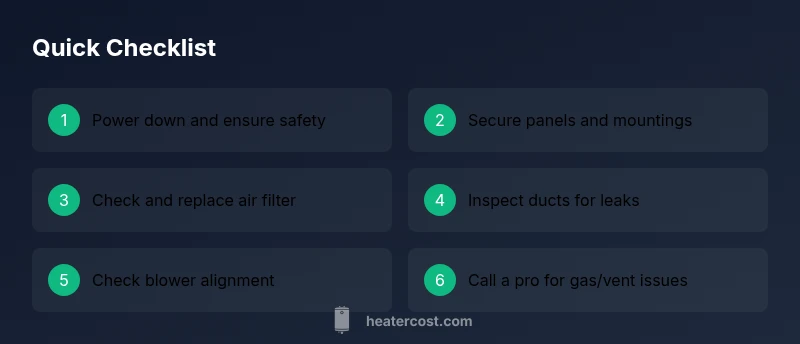
Common heater noises usually come from simple, fixable causes. Step 1: power down safely and inspect for loose panels or mounting hardware. Step 2: check the air filter and ducts for blockages. Step 3: listen for burner or fan sounds; if you smell gas or hear persistent banging, turn off the unit and call a pro.
What noises mean: common causes
If you’ve asked, “does heater make noise,” you’re not alone. Most noises fall into a handful of common causes that homeowners can recognize and address safely. A buzzing or hum often points to electrical components or loose wiring; a rattling sound usually means a panel, door, or access cover isn’t secured. A banging or knocking noise can come from metal expansion as the heater heats and cools, or from unsecured ducts vibrating against framing. A high-pitched squeal may indicate worn bearings, belts, or a drive component; a whistling noise typically signals airflow restrictions, such as a clogged filter, dirty blower, or leaky duct joints. The Heater Cost team emphasizes that listening carefully to when the noise happens (startup, steady operation, or shutdown) can help pinpoint whether the issue is mechanical, airflow related, or safety-related. If you notice gas odors along with noises, treat it as a safety emergency and evacuate.
In many homes, the root cause is straightforward and inexpensive to fix, such as tightening fasteners, replacing a filter, or clearing a clogged vent. More complex noises—especially those involving gas burners or electrical components—may require professional service. Remember: early identification makes repairs safer and cheaper in the long run. According to Heater Cost analysis, proactive diagnosis reduces downtime and protects equipment lifespan.
Safety-first guidelines when diagnosing heater noise
Safety should always come first when your heater makes noise. Before you touch any part of the system, switch off power at the main breaker and, if applicable, turn off the gas supply to the unit. Do not attempt to service gas lines or open live electrical compartments unless you have formal training. If you hear or suspect a gas leak, evacuate immediately and call emergency services. Keep children and pets away from the area. If you smell burning insulation or notice scorching around electrical components, treat it as an urgent safety issue and contact a licensed technician.
For DIY checks, use a flashlight and wear gloves to inspect exterior panels for looseness. Never bypass safety interlocks or disable protections to “test” the system. A professional should verify unusual noises that persist after basic checks, particularly if the unit is older or if you’ve recently performed modifications. The goal is to identify a safe, actionable fix that prevents a recurrence. Heater Cost recommends documenting the symptom patterns (time of day, duration, and whether noises align with startup or shutdown) to aid technicians later.
Safe at-home checks you can perform
These checks are designed to be done safely by homeowners and renters. Start with the simplest steps and progress only if you feel comfortable. First, ensure the unit is powered off. Then verify that all exterior panels and access doors are securely fastened—loose panels can rattle loudly. Next, inspect and replace the air filter if it’s dirty or clogged, and check for blocked return-air paths and vent openings. Dirty filters reduce airflow and can cause whistling or banging noises as the blower strains. If you have a central system, inspect accessible ductwork for loose joints or obvious kinks and gently reseat or tape minor leaks. Clean any visible debris near the outdoor intake or exhaust (for outdoor components) and ensure the condensing unit’s clearance is unobstructed.
If the unit uses a belt-driven blower, listen for squeals that increase with RPM. A worn belt or misaligned pulley can create a high-pitched tone. Some noises are more pronounced at startup or during heavy heating cycles. Record when the noise occurs to help a technician diagnose the underlying cause. The goal of these checks is to confirm whether the issue is a quick fix or something that needs professional attention. The Heater Cost team notes that many homeowners successfully quiet their systems with these steps but warns never to attempt gas burner adjustments.
How different heater types sound
Different heating technologies produce distinct acoustic signatures, and recognizing them helps you triage the problem. Gas furnaces often emit fan or burner hum during operation; banging noises may indicate mounting or duct issues, while click-tick sounds can come from expansion as metal heats. Electric resistance heaters tend to be quieter but can produce buzzing if connections are loose or if a blower is out of balance. Heat pumps produce a variety of sounds: a gentle hum is normal, but grinding or clanking may indicate a broken compressor or fan. Radiant systems, which heat objects rather than air, may exhibit ticking or warm metal sounds without air movement. By understanding the typical sound profile of your heater type, you can better describe the symptom to a technician and minimize unnecessary service calls.
Preventive maintenance to reduce noise
Proactive maintenance is the best defense against persistent heater noise. Schedule an annual professional tune-up, which includes inspecting electrical connections, testing safety devices, and evaluating burner efficiency. Clean or replace filters on a regular cycle and verify that all mounting screws and panel fasteners are secure. Lubrication requirements vary by model; many modern furnaces are sealed and do not need lubrication, so follow the manufacturer’s recommendations. For ductwork, seal and insulate joints to prevent air leaks that cause whistling or rattling. Keep the area around the unit clear of clutter and ensure outside components have adequate airflow. Regular maintenance not only reduces noise but improves efficiency and prolongs system life. According to industry best practices, a well-maintained heater runs quieter and safer than a neglected one.
When to call a professional for heater noise
If a noise persists after safe at-home checks, or if you notice gas odor, unusual flames, or a sudden loss of heat, contact a licensed HVAC technician immediately. A pro can perform a thorough inspection, check gas fittings, test for combustible leaks, and diagnose complex issues like blower motor failure, cracked heat exchangers, or venting problems. Do not rely on DIY fixes for critical components. Prioritize safety and reliability by scheduling a professional assessment when in doubt.
The Heater Cost team emphasizes that certain noises indicate high-risk conditions that require urgent attention. Time-sensitive issues, especially those involving gas and flame safety, should never be postponed. Quick action reduces the risk of property damage and health hazards and often leads to more affordable repairs in the long run.
Steps
Estimated time: 45-90 minutes
- 1
Power down and ensure safety
Turn off the thermostat, switch the unit to OFF, and cut power at the main breaker. If you smell gas, evacuate and call emergency services. Safety first keeps you and your home protected while you inspect basic exterior issues.
Tip: Always leave gas-related tasks to a pro—gas work is hazardous. - 2
Secure panels and check mounting
Inspect all exterior panels and doors for looseness; tighten screws as needed. A rattling sound often comes from loose fitments bouncing during cycles. After tightening, gently shake components to confirm they’re firmly secured.
Tip: Use a flashlight to spot hidden gaps along edge seams. - 3
Inspect air filter and airflow paths
Remove and inspect the air filter; replace if dirty or clogged. Check return air paths and ducts for blockages or kinks that reduce airflow. Clear obstructions and ensure even airflow to quiet the system.
Tip: Record before/after noise levels to gauge improvement. - 4
Check blower and belt (if applicable)
Access the blower area and inspect for wear, misalignment, or loose belts. Clean any dust buildup on the blower wheel. If components look worn or damaged, refrain from DIY fixes—consult a professional.
Tip: Do not lubricate sealed bearings; follow manufacturer guidelines. - 5
Assess ductwork and venting
Inspect visible duct joints for leaks; reseal with appropriate tape or sealant. Ensure outdoor exhausts are clear of debris; blocked vents can cause whistling and backdrafts. Run the system briefly to listen for changes.
Tip: A simple pressure check can reveal hidden leaks in flexible ducts. - 6
Call a professional for risky checks
If you still hear loud noises after these steps or notice gas odor, contact a licensed HVAC technician. They can perform safe, advanced diagnostics and component replacements as needed.
Tip: Provide the technician with a noise log and timing notes.
Diagnosis: Heater makes unusual noise (buzzing, banging, rattling, squealing, or whistling)
Possible Causes
- highLoose panels or mounting hardware
- highAirflow restriction from dirty filters or blocked ducts
- mediumWorn blower bearings or belts (if belt-driven)
- highGas burner or venting issues (gas units)
- lowExpansion/contraction of metal panels
Fixes
- easyTighten loose panels and mounting screws; secure access doors firmly
- easyReplace or clean the air filter; inspect return ducts for obstructions
- mediumInspect blower assembly; clean, lubricate if manufacturer permits, or replace worn parts
- mediumCheck venting and ductwork for leaks or obstructions; seal leaks as needed
- hardCall a licensed HVAC technician for gas burner issues or venting problems
Got Questions?
Why is my furnace buzzing at startup?
A buzzing startup can indicate loose electrical connections or a failing capacitor. Ensure power is off before inspecting and call a pro if the sound persists. Loose parts can be dangerous and lead to bigger failures.
A buzzing sound at startup often means a loose electrical connection or failing capacitor—shut off power and call a pro if it continues.
What does a banging noise from a heater mean?
A banging or hammering sound often points to metal expansion or loose ductwork. Inspect mounting and seals; if the noise persists, a professional should check the burner and venting for safety concerns.
A banging sound usually means metal is expanding or ducts are loose; tighten what you can, but have a pro inspect any burner or venting issues.
Can a dirty air filter cause noise?
Yes. A clogged filter reduces airflow and can cause whistling or buzzing as the blower struggles. Replace the filter and check ducts for obstructions to restore quiet operation.
A dirty filter can cause whistling or buzzing—replace it and check ducts to quiet the system.
Is it safe to service my furnace myself?
Some basic checks are safe, but most furnace repairs—especially gas or electrical work—require a licensed professional. Avoid opening gas lines or electrical components without proper training.
Few furnace repairs are safe to do yourself, especially with gas or electricity involved—get a licensed pro.
When should I call a professional for heater noise?
If noises persist after safe at-home checks or if you notice gas odor, seek professional service promptly. A technician can diagnose duct, blower, or burner issues safely.
Call a pro if sounds persist after basic checks or if you smell gas.
Could expansion noises indicate a bigger problem?
Small expansion noises can be normal, but persistent or new sounds after maintenance could signal mounting or venting issues that require inspection.
Expansion sounds can be normal, but ongoing noises may indicate a mounting or venting issue needing a check.
Watch Video
The Essentials
- Identify noise type to diagnose quickly
- Prioritize safety and shut off power during checks
- Simple fixes often quiet rattles and whistles
- Gas-related noises require professional help
- Preventive maintenance reduces future noise