Why Do Heater Pipes Make Noise? A Practical Troubleshooting Guide
A practical, urgent guide to diagnosing and fixing noisy heater pipes. Learn quick fixes, a diagnostic flow, and maintenance tips to prevent banging, hissing, or clanging in your heating system.


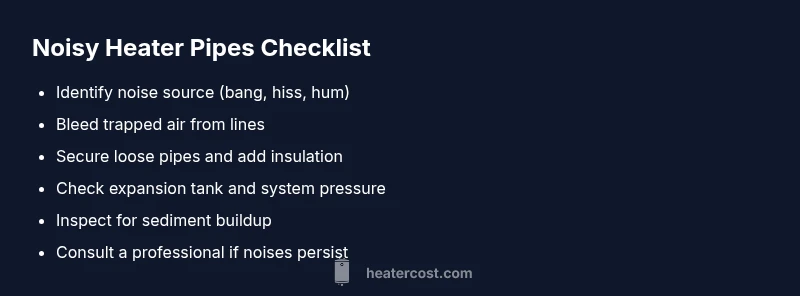
Most often, noisy heater pipes come from thermal expansion, air in the lines, or water hammer. Start by bleeding air, securing loose pipes, and ensuring proper insulation. Check the expansion tank and confirm the pump isn’t cavitating. If noises persist, shut off power and call a licensed technician. Regular maintenance reduces future banging and improves efficiency.
Why do heater pipes make noise
If you hear bangs, pops, or rattles from your heating pipes, you're not alone. The question often comes down to three broad ideas: temperature changes causing metal to expand or contract, air trapped in water-filled lines, and water hammer when valves close suddenly. Understanding these mechanisms helps homeowners identify the likely culprit quickly. According to Heater Cost, most residential noises fall into a few manageable categories, and a majority can be reduced with simple checks or minor adjustments. In this guide, we explore what those noises typically sound like and what they usually indicate, so you know where to start. Keep in mind that bizarre whistles or persistent banging beyond a few minutes after a system starts may require professional assessment for safety and longevity of the equipment. Throughout this guide we use the keyword why do heater pipes make noise to anchor the topic and help homeowners find practical, actionable steps.
Common causes of noisy heater pipes
Thermal expansion and contraction. Metal pipes and fittings expand when hot and contract when cool. If supports are tight or joints are flexible, you’ll hear ticking, popping, or banging as temperatures shift. This is common in older homes and near radiators where metal has aged.
Air trapped in lines. Air pockets can create whistling, gurgling, or tapping noises as water moves through the system. Bleeding air from radiators or the boiler can often quiet these sounds quickly.
Water hammer. A knocking sound when a valve closes suddenly is a classic water hammer symptom. It happens when high water pressure or fast-acting valves slam against the pipe. Installing or repairing an air chamber or a shock arrestor can mitigate this.
Loose pipe hangers and supports. Pipes that rattle against joists, studs, or walls produce vibrating noises that worsen with system pressure. Simple re-securing and adding support clips can resolve this.
Sediment buildup. Over time, mineral deposits in the water heater or boiler can cause restricting flow, leading to periodic banging or humming. A system flush can alleviate this issue when performed safely.
Faulty expansion tank. The expansion tank absorbs pressure fluctuations in a closed system. If it’s waterlogged or failed, you may notice louder noises during heating cycles.
Pump cavitation or circulating pump noise. If the pump is drawing air or functioning improperly, it can create a buzzing or grinding sound. A professional check may be needed to diagnose pump issues.
How to diagnose the source of the noise
If you’re wondering why do heater pipes make noise, start by listening carefully to when the noise occurs. Is it during heating cycles, when hot water is drawn, or at night when the house cools? Trace the path of the sound: does it come from a specific pipe run, a radiator, or the boiler room? Compare symptoms: is the sound a bang, a hiss, a whistle, or a hum? Map each symptom to common causes: air in lines often causes gurgling; water hammer tends to be a sharp knock; expansion noise grows with temperature; loose supports produce a rattle that intensifies with system pressure. Finally, check the expansion tank and main pressure. Small changes here can dramatically reduce noise. This diagnostic approach keeps repairs focused and safe.
Safe, quick checks you can perform this weekend
Before you dive into tools, ensure safety: turn off power to the boiler or furnace and, if applicable, shut off the water supply.
- Bleed air from radiators or the hot-water loop. Use a radiator key or your boiler’s bleed valve to release trapped air until water flows steady.
- Inspect pipe hangers, straps, and clips. Tighten loose fittings and add insulation where needed to dampen vibration.
- Check insulation around hot water pipes to reduce heat transfer noise and protect surrounding surfaces.
- Inspect the expansion tank for signs of waterlogging (rusty look, heavy surface, or no air cushion). If it feels heavy or you can’t drain it safely, contact a pro.
- Check water pressure on your boiler. If it’s above the recommended range, adjust it or have a technician verify the system’s pressure.
If you hear continued banging after these steps, or you smell gas, stop and call a professional immediately. Personal safety comes first, especially when working near gas lines or electrical components.
This section emphasizes practical, low-friction fixes you can try now, while recognizing when to escalate.
Long-term fixes and maintenance to prevent future noise
Noisy pipes often point to underlying issues that recur if unaddressed. Regular maintenance is your best defense against future banging or humming. Start with a methodical upkeep plan:
- Install or verify an expansion tank on hot-water systems to cushion pressure swings.
- Upgrade pipe supports and add vibration-damping clamps in high-traffic areas.
- Schedule annual boiler or furnace service that includes pressure checks, valve operation assessment, and a system flush if mineral buildup is suspected.
- Ensure valves, pumps, and circulators are properly sized and adjusted for your home’s hydraulics. Incorrect sizing can amplify noise under heavy use.
- Maintain proper water temperature and flow rates. Overheating and excessive flow can magnify expansion and hammer effects, especially in older homes.
- Consider insulation upgrades around exposed pipes to reduce radiant noise and energy loss, improving comfort and efficiency.
- Keep a simple maintenance log. Note when noises occur, the time of year, and any fixes attempted to help a technician diagnose patterns later.
If noises change in character after maintenance, it’s a sign that additional checks (or a professional assessment) are warranted. Proactive upkeep minimizes future surprises and extends the life of your heating system.
When to call a professional
Some noises hint at issues that are beyond DIY fixes. If you hear persistent banging after air bleeding, if you detect gas odors, or if your expansion tank or pump shows signs of failure, stop work and contact a licensed technician. Complicated problems like pump cavitation, significant pressure problems, or a suspected gas leak require professional intervention to ensure safety and code compliance. The sooner you involve a pro for ambiguous symptoms, the less risk you’ll take and the sooner you’ll regain quiet, efficient heating.
Steps
Estimated time: 60-90 minutes
- 1
Power and water safety check
Before touching any components, switch off the boiler or furnace and, if feasible, shut off the main water supply. Verify there is no immediate risk of scalding or electrical shock.
Tip: Use a non-contact voltage tester to confirm circuits are dead. - 2
Locate the noise source
Carefully listen along exposed pipes and radiators to identify the approximate corridor or room where the noise is loudest. This helps narrow down the suspect area.
Tip: Use a piece of dry tissue to feel vibration without touching hot surfaces. - 3
Bleed trapped air
Open the bleed valve on a radiator or use the boiler’s bleed screw to release air until water flows smoothly. Close valve once a steady stream appears.
Tip: Have a cloth ready to catch water to avoid spills. - 4
Secure and insulate pipes
Inspect hangers, straps, and clamps. Tighten loose fittings and add insulation sleeves to reduce vibration and heat transfer noise.
Tip: Choose rubberized or foam insulation with a tight fit. - 5
Check expansion tank and pressure
If the system has an expansion tank, ensure it’s not waterlogged and that the precharge matches the manufacturer specification. Adjust pressure if needed.
Tip: A pressure gauge sitting near the boiler can guide adjustments. - 6
Assess the need for professional service
If the noise changes after your DIY fixes, or you encounter gas lines, electrical components, or a suspected faulty pump, schedule a professional inspection.
Tip: Document symptoms and fixes you tried to help the technician.
Diagnosis: Loud banging, knocking, or buzzing in heating pipes when the system runs or hot water is used.
Possible Causes
- highThermal expansion and contraction of metal pipes
- highAir trapped in the lines
- highWater hammer from valve closure or high water pressure
- mediumLoose pipe hangers or supports
- lowSediment buildup in boiler or water heater
- mediumFaulty expansion tank absorbing pressure
- lowPump cavitation or aerated water
Fixes
- easyBleed air from radiators or hot-water lines
- easySecure loose pipes and add vibration dampers
- mediumInspect/replace expansion tank or adjust system pressure
- mediumReduce system pressure and flush sediment if present
- hardIf noises persist, call a licensed professional for a full diagnosis
Got Questions?
What causes banging in hot water pipes?
Banging is often caused by water hammer, trapped air, or thermal expansion. Diagnosing which one is present helps you choose the right fix, such as bleeding air, securing pipes, or checking the expansion tank.
Banging often comes from water hammer, air, or expansion. Identify which is present to pick the right fix.
Is water hammer dangerous for a home system?
Water hammer can damage pipes and fittings over time if left unaddressed. Early fixes like reducing water pressure and adding arrestors help protect the plumbing system.
Water hammer can damage pipes over time; addressing it early helps protect your system.
Can air in lines cause noise even when the system is quiet otherwise?
Yes. Air pockets create gurgling or ticking sounds as water flows. Bleeding air from the system is a common, safe first step.
Air in lines can cause gurgling noises; bleeding air is a safe first step.
Do expansion tanks fix all noises?
Expansion tanks fix many pressure-related noises, but some sounds come from pipe supports or sediment buildup. A full check helps determine if a tank is the right fix.
Expansion tanks fix many noises, but not all; a full check tells you what’s needed.
When should I replace my expansion tank?
Replace when the tank is waterlogged, corroded, or fails pressure tests. A professional can verify compatibility with your system and recommend a replacement.
Replace if it’s waterlogged or fails tests; a pro can ensure proper replacement.
Is it safe to bleed air from a boiler myself?
Bleeding air from a boiler can be safe if you follow manufacturer instructions and turn off power first. If unsure, call a pro to avoid burns or electrical shocks.
Bleeding can be safe if you follow instructions; if unsure, call a pro.
Watch Video
The Essentials
- Identify the noise source first for targeted fixes.
- Bleed air and secure pipes to quiet most common noises.
- Check expansion tank and system pressure to prevent recurrence.
- Call a professional when gas, electrical, or pump issues arise.