How to Tell If Your Heater Is Broken: Quick Troubleshooting Guide
Urgent, practical steps to diagnose a faulty heater, from quick checks to when to call a pro. Learn with clear signs, a diagnostic flow, and a safety-first approach from Heater Cost.


If your heater won’t start, blows cold air, or makes unusual noises, it’s likely experiencing a fault. Start with the basics: ensure power is on, thermostat is set correctly, and the filter is clean. Check for tripped breakers, blocked vents, and visible gas or flame issues. If these steps don’t restore heat, schedule a diagnostic with a licensed technician — timely action matters.
How to tell if your heater is broken: quick overview
Identifying a malfunctioning heater can feel urgent, especially during cold snaps. The key is to distinguish simple, user-fixable issues from mechanical failures that require professional intervention. According to Heater Cost, many heating problems are caused by easy-to-resolve conditions like power supply, thermostat settings, or airflow obstructions. The Heater Cost team emphasizes that early detection protects safety and prevents higher repair costs later. This guide helps homeowners and renters quickly gauge whether heat loss is a minor irritant or a signal of a broken system, and it outlines safe steps to take while you decide on next moves.
Common symptoms that indicate a problem
Recognizing the symptoms can save you time and frustration. Common signs that your heater may be broken include: no heat at all after the thermostat is set correctly, heat that keeps cycling on and off, unusually long burn cycles, or heat that is inconsistent across rooms. You might also notice a sharp rise in energy bills, strange smells (burning or gas-like odors), or rattle, squeal, or grinding noises from the unit. If you see error codes on your furnace control board or a blinking diagnostic light, treat it as a clear signal to investigate further. Clear, persistent symptoms are more likely to indicate a genuine fault than a temporary misconfiguration.
Safety first: basic checks before you get hands-on
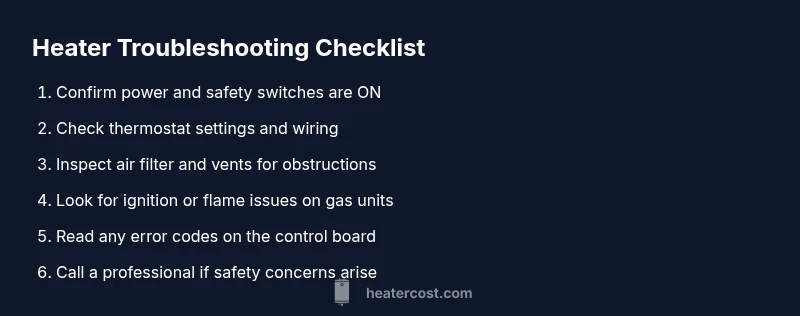
Power and gas safety are non-negotiable. Always start by turning off power if you must handle components. Check that the circuit breaker for the furnace or space heater hasn’t tripped. For gas furnaces, verify the gas valve is open and the pilot light or electronic ignition is functioning. Inspect the air filter; a clogged filter reduces airflow and can make heaters work harder or shut down. Ensure air intake and vents are unobstructed, and confirm that thermostat wires aren’t loose. These steps reduce risk and often surface the root cause without tools.
Quick checks you can perform before calling an expert
A structured checklist helps you avoid missing obvious issues. Confirm the thermostat setting is appropriate (e.g., heat mode and temperature above room temperature). Inspect the blower motor and fan for obstruction or debris. Listen for abnormal sounds that might indicate a failing motor bearing, loose components, or metal fatigue. Look for signs of condensation or water intrusion near electrical components. If your unit uses gas, never ignore gas smells or hissing noises; treat these as emergencies and evacuate if necessary and call emergency services.
Diagnostic flow: symptom to diagnosis (high-level)
This section maps symptoms to potential causes and corresponding remedies. Start with the simplest explanations (power, thermostat, or clogged filter) before moving to more complex components (ignition system, heat exchanger, or control board). Each symptom narrows the field, enabling you to decide whether a quick home fix is feasible or professional service is required. Always prioritize safety and defer any high-risk tasks to licensed technicians.
Interpreting results: next steps after checks
If basic checks restore heat, monitor performance for a day or two to confirm stability. If issues persist, compare the symptom against a diagnostic flow to identify likely causes. When in doubt, choose a professional diagnostic to verify whether a component replacement is necessary. Early professional input can prevent further damage and protect your home’s safety, especially for gas furnaces and complex electrical systems.
Prevention and maintenance: extending heater life
Regular maintenance is cheaper than repeated repairs. Schedule annual inspections, replace air filters every 1–3 months during heavy use, and clean intake vents. Keep the area around the heater clear of clutter and inspect for signs of corrosion or wear. For gas furnaces, ensure proper venting and combustion air, and have carbon monoxide detectors installed and tested. A proactive maintenance plan reduces unexpected breakdowns and keeps your system efficient.
A note on urgency and safety
Heaters are essential for comfort but risky when misused or neglected. If you smell gas, hear gas leaks, or notice a sudden, persistent flame or smoke, evacuate immediately and call your local emergency number. Do not attempt risky repairs on gas-powered units without training. When you’re uncertain about a diagnosis or feel unsafe handling components, contact a licensed technician promptly for a thorough inspection.
Steps
Estimated time: 30-60 minutes
- 1
Check power and safety switches
Begin by turning off power to the furnace or space heater at the disconnect or breaker. Confirm the switch is in the ON position and that electricity is reaching the unit. If you see a tripped breaker, reset it and test heat again.
Tip: If the breaker trips again, there may be an underlying electrical fault that requires a licensed electrician. - 2
Verify thermostat settings and communication
Set the thermostat to heat at a temperature higher than the current room temp. If the thermostat is wired, ensure wires are firmly connected. For smart thermostats, check app status and reboot the device if needed.
Tip: A misconfigured thermostat is a very common cause of no-heat situations. - 3
Inspect air filters and airflow
Remove and inspect the air filter; replace if dirty or clogged. Check that return air and supply vents are unobstructed. Listen for airflow sound at registers; weak airflow often points to filter issues or a blocked duct.
Tip: Dirty filters can cause indoor air quality problems as well as reduced heating efficiency. - 4
Check ignition or burner operation (gas units)
If safe to do so, observe whether the pilot light is lit or the electronic ignition is functioning. A yellow/orange flame or no flame indicates ignition problems and requires professional service.
Tip: Never attempt to light or relight a gas furnace if you smell gas or detect irregular odors. - 5
Observe error codes and diagnostic indicators
Note any blinking lights or error codes on the furnace control board. Refer to the manufacturer manual to translate codes. Codes guide targeted fixes and help you decide if professional service is needed.
Tip: Write down codes before you contact support for faster resolution. - 6
Assess heat exchanger and safety switches
A blocked heat exchanger or tripped safety switch is a serious fault. Look for signs of soot, corrosion, or unusual heat at the exterior of the unit. If you suspect a safety issue, shut down and call a technician immediately.
Tip: Gas systems with safety concerns require prompt professional evaluation.
Diagnosis: Heater won't start or heat output is inconsistent
Possible Causes
- highPower issue (tripped breaker, blown fuse, or loose wiring)
- mediumThermostat malfunction or incorrect settings
- lowClogged air filter or blocked vents reducing airflow
- lowIgnition system failure or flame sensor issues (gas furnaces)
Fixes
- easyReset breakers, replace fuses, and ensure all wiring is secure at the furnace panel
- easyVerify thermostat mode, calibrate or replace a faulty thermostat
- easyReplace or clean air filter; clear return ducts and supply vents
- mediumProfessional inspection for ignition sensor, flame sensor, or control board
Got Questions?
What are the most common signs that a heater is broken?
Common signs include no heat, inconsistent temperatures, strange noises, unusual odors, and frequent cycling. If you see error codes, that also points to a fault. Always rule out simple causes like power or thermostat settings before assuming a major failure.
Common signs are no heat, uneven temperatures, odd noises, and error codes. Check simple causes first, then seek professional help if needed.
Can I fix a heater myself?
Some basic issues, like replacing a dirty filter or correcting thermostat settings, can be done safely by homeowners. More complex problems, especially ignition, heat exchanger, or wiring, require a licensed technician to avoid safety risks.
You can handle simple tasks like filters or thermostat checks, but for ignition, wiring, or gas concerns, call a pro.
What should I do first if the heater won’t start?
First, check power, breakers, and the thermostat. Then inspect the air filter and vents for obstructions. If these steps don’t resolve the issue, check for error codes and consider professional diagnostics.
First check power and thermostat, then the filter and vents. If not fixed, get a professional diagnostic.
Is it safe to operate a space heater after smelling gas?
No. A gas smell or hissing sound indicates a potential leak. Leave the area immediately and call your gas utility or emergency services. Do not operate any electrical switches in the area.
If you smell gas, leave the area and call emergency services—don’t operate the heater.
How long does a typical furnace diagnostic take?
A standard diagnostic visit often takes between 60 and 90 minutes, depending on the complexity and whether parts need replacement. The technician will assess safety, confirm fault codes, and provide a repair plan.
Most diagnostics take about an hour to an hour and a half, depending on the issue.
When should I replace my furnace rather than repair it?
If repairs are frequent, efficiency is low, or the unit is near end-of-life, replacement may be more cost-effective long-term. A licensed technician can help weigh upfront costs against future savings.
If repairs keep happening or efficiency is bad, replacement may be best—ask a pro to compare costs.
Watch Video
The Essentials
- Identify signs early to prevent bigger issues
- Start with simple checks before calling a pro
- Safety comes first—shut off power when inspecting
- Professional help is recommended for ignition and safety-related faults
- Regular maintenance reduces future breakdowns