Why Your Heater Won’t Turn Off: A Practical Troubleshooting Guide
Urgent, practical steps to diagnose and fix a heater that won't turn off. Learn safe checks, a diagnostic flow, step-by-step fixes, and prevention tips from Heater Cost.


Why is heater not turning off? The most common causes are a faulty thermostat, a stuck relay, or wiring problems that keep the circuit energized. To stop the heat safely, turn off power at the breaker and test the thermostat setting. If it still won’t shut off, contact a professional immediately.
Why the heater won't turn off? Causes and urgency
If you’re asking why is heater not turning off, the short answer is that a few failure points feed heat in even when you don’t want it. The most common culprits are a faulty thermostat, a stuck relay or contactor, or wiring problems that keep the circuit energized. In urgent scenarios, always cut power at the breaker to prevent overheating or a potential fire. This guide explains the top culprits, how they behave, and what you can safely check before calling a pro. Understanding these factors helps you act quickly and protect your family and home. In many cases, you can identify the issue using simple checks, but never ignore warning signs like unusual heat, burning smells, or melted insulation. If you feel unsure at any point, stop and seek professional help immediately. The goal is to regain control of your heating system while keeping safety first, especially in homes with children or pets.
According to Heater Cost, thermostat-related faults are among the most common reasons a heater won’t shut off. This insight informs our approach: start with the thermostat and control wiring before moving to more complex components. Treat every electrical issue with care; if the device or wiring looks damaged, do not attempt risky repairs. Our guidance centers on practical, safe steps to reduce risk while you troubleshoot.
Common culprits behind a heater that won't turn off
There are several plausible reasons a heater remains on when you expect it to stop. By far the most frequent are problems with the thermostat itself—calibration drift, age-related failure, or a switch that won't disengage. A stuck relay or contactor in a furnace or central heating system can also keep the circuit closed, feeding heat continuously. Wiring faults, such as damaged insulation or loose connections, can create ghost currents that keep the control signal active. In some cases, safety interlocks or limit switches fail, leaving the system permanently energized. Finally, user settings play a role: a thermostat set to “on” or a remote that can override the schedule might continually command heat. Each cause changes how you diagnose and fix the issue, so proceed methodically and safely.
Safety-first checks you can perform right now
Before you dive into components, ensure safety comes first. Start by cutting power to the heater at the main breaker and, if possible, unplug any plug-in unit. Do not touch exposed wires. If you’re dealing with a central furnace system, switch off power at the service disconnect for that unit and wait for any residual heat to dissipate. Check the thermostat display: is it showing OFF or a lower setting? If heat continues, inspect for obvious signs of damage, such as melted insulation, scorch marks, or a buzzing sound from the control board. Confirm the thermostat is not set to a persistent “On” mode or fan-only setting. If you detect burning smells, smoke, or visible damage, evacuate and call emergency services if needed. These safe checks help you narrow down the problem without taking apart energized components.
Diagnostic flow: symptom → quick checks → deeper inspection
Start with the symptom: heat remains on regardless of thermostat setting. Move to quick checks: verify power is cut, assess thermostat settings, and listen for unusual sounds indicating a failing relay or control board. If heat persists, inspect wiring for obvious damage and test the relay/contactor in a furnace (if you’re comfortable and it's safe to do so). If you still can’t identify the cause, it’s time to bring in a professional. This flow protects you from unnecessary disassembly and reduces risk while guiding you toward a precise fix.
Always document observations (sounds, smells, indicators) to share with a tech. The more detail you provide, the faster the diagnosis will be. After you complete each step, re-test the system to confirm whether heat ceases when you adjust the thermostat.
Step-by-step: safe, practical testing sequence for most common thermostat issues
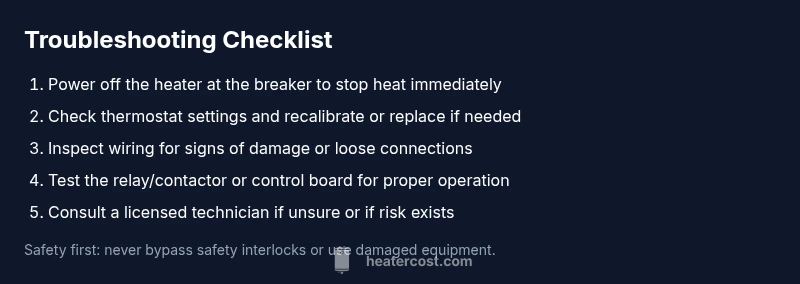
- Power down: Cut power at the breaker or unplug the heater to stop heat immediately. 2) Inspect the thermostat: Check that it is set to OFF or 0 and that the display is responsive. If the thermostat is external, ensure the wiring behind the cover is intact. 3) Calibrate or replace: If the thermostat is old or unresponsive, recalibrate if possible or replace the device. 4) Check wiring and connections: With power off, look for loose wires, damaged insulation, or discoloration at the thermostat terminals and furnace control board. 5) Test the relay: In a central system, listen for the relay switching on/off when you change the thermostat setting. If you hear a buzz or see pitting inside the relay, replacement is likely required. 6) Reconnect and test: Restore power and test again at multiple thermostat settings. Ensure heat stops when set to OFF.
Tip: If you’re uncomfortable testing electrical components, skip ahead to Step 2 and call a qualified technician.
When to call a professional and what to expect
If basic checks don’t stop the heat or you notice burning smells, sizzling noises, or melted components, call a licensed HVAC technician immediately. Professional diagnostics may involve measuring voltages, testing the relay with a multimeter, and inspecting the furnace control board for faults. The tech can safely replace faulty thermostats, relays, or wiring harnesses and verify proper operation. In homes with gas appliances, a professional inspection also helps rule out gas leaks or ventilation issues that could compound the problem. Remember, ongoing issues can indicate a broader control-system failure that requires professional intervention to prevent fire or carbon monoxide risks.
Prevention tips: keeping your heater reliable and safe
- Schedule regular maintenance for your heating system, including thermostat and control wiring checks. - Replace old thermostats with modern, properly calibrated devices. - Keep the area around the furnace and thermostat clean and free of dust or debris. - Use surge protection and avoid overloading circuits. - Test the system seasonally: set the thermostat to AUTO and confirm heat cycles on and off as expected. - If you notice any flickering lights, tripped breakers, or burning odors, address them immediately rather than postponing troubleshooting. - Consider upgrading safety features like carbon monoxide detectors and smoke alarms for early alerts.
Steps
Estimated time: 45-90 minutes
- 1
Power down and secure
Cut power at the breaker or unplug the heater. Ensure all risk of electric shock is eliminated before touching any components.
Tip: Use a flashlight to inspect without touching live parts. - 2
Inspect thermostat and settings
Check that the thermostat is set to OFF or a low setting. If the display responds, consider recalibrating or replacing if it remains unresponsive.
Tip: Note model and age for replacements. - 3
Check wiring connections
With power off, look for loose terminals, damaged insulation, or scorch marks near the thermostat and control board. Tighten or replace damaged wires as needed.
Tip: Take photos before disconnecting anything. - 4
Test the relay/contactor
In central systems, verify the relay or contactor operates correctly when the thermostat changes settings. Replace if stuck closed.
Tip: Only perform this if you’re confident with electrical testing. - 5
Restore power and test
Reconnect power and test the system across multiple settings to confirm heat stops at OFF.
Tip: If heat persists, escalate to a professional.
Diagnosis: Heater won't turn off
Possible Causes
- highThermostat failure or miscalibration
- highStuck relay/contactor in furnace or control board
- mediumWiring short or damaged control circuit
- lowMalfunctioning safety switch or limit switch
Fixes
- easyPower off at the breaker to stop heat immediately
- mediumTest and adjust thermostat settings, recalibrate or replace as needed
- hardInspect and repair wiring or replace faulty relay/contactor
- mediumCall a licensed technician if burning smells, smoke, or if unsure
Got Questions?
What is the first step if my heater won't turn off?
Cut power at the breaker, verify the thermostat setting, and look for obvious damage. If the heat persists, don’t continue studying live components—call a professional.
First cut power, check the thermostat, and look for damage. If it still stays on, contact a professional.
Can a faulty thermostat cause a heater to stay on?
Yes. A stuck or miscalibrated thermostat can keep signaling heat on. Replacing or recalibrating is often needed.
Yes, a faulty thermostat can keep the heat on; replacement is often required.
Is it safe to unplug a space heater that won't turn off?
If the heater remains on after you unplug, there may be an internal wiring issue. Stop and call a professional if you notice any burning smell or damage.
Unplugging should cut power; if heat remains, get professional help.
When should I call a professional?
Call a professional if you smell burning, see smoke, or cannot identify the cause after basic checks. A licensed HVAC tech can diagnose thermostat, relay, or wiring faults safely.
Call a pro if you smell burning or can't diagnose safely.
Will replacing the thermostat fix the issue?
Often yes if the thermostat is the root cause; however, relays or wiring can also fail. A technician can confirm before replacement.
Replacing the thermostat can fix it, but get a diagnosis first.
Can this happen with central heating as well as space heaters?
Yes. Central systems rely on relays and control boards that can fail and keep heat on. A pro can diagnose safely.
Central heating can have the same issue; professional diagnosis recommended.
Watch Video
The Essentials
- Identify thermostat issues quickly and safely
- Power off before inspecting any components
- Differentiate thermostat vs. relay vs. wiring problems
- Call a professional for complex repairs or persistent heat