How to Stop Your Heater from Turning Off
A comprehensive, step-by-step guide to diagnose and fix heater shutdowns, covering thermostat checks, airflow, safety switches, and maintenance to keep warmth reliable.


Learn how to stop your heater from turning off by systematically testing the thermostat, air flow, and electrical supply. Start with confirming the thermostat is set correctly and powered, then check air filters, vents, and safety switches. If the problem persists, inspect fuel or energy source, venting, and fan operation using a step-by-step checklist. This approach helps identify short cycling, blocked exhaust, or misadjusted controls quickly.
Understanding why your heater turns off
Heaters shut down for a variety of reasons, from short cycling to safety interlocks. A common culprit is short cycling, where the furnace or heat pump turns on and off rapidly, wasting energy and increasing wear. Thermostat miscalibration can cause this, as can dirty air filters that choke airflow and trigger the high-limit safety switch. According to Heater Cost, efficient operation relies on clean air intake, correct thermostatic calibration, and stable electrical supply. Inspecting these basics first can save a service call. Additional causes include restricted ductwork, blocked exhaust, or a malfunctioning blower. By recognizing patterns, you can prioritize fixes that address the root cause rather than temporary fixes.
Safety first: assessing fuel, electrical, and venting issues
Safety matters. For gas heaters, a blocked vent or insufficient combustion air can cause CO buildup and automatic shutdown. For electric heaters, a tripped breaker or loose wiring can mimic a shutdown. Always verify CO detectors are functioning and air is vented properly. When you suspect fuel or gas issues, avoid ignition and call a licensed professional. Simple checks like ensuring the pilot or ignition system is clean may restore reliability, but never bypass safety features. By keeping safety devices intact, you protect occupants and extend equipment life.
When and how to test the thermostat and controls
Begin with a simple sanity check of the thermostat: confirm mode (HEAT) and target temperature, then observe whether the unit engages consistently. Next, verify that any programmable schedules are not overriding the desired call for heat. If you use a smart thermostat, confirm firmware is up to date and the device is communicating with the furnace. Finally, inspect the control wiring at both ends for loose terminals or corroded contacts. This sequence helps distinguish thermostat issues from furnace problems.
Maintenance habits to prevent unexpected shutdowns
Preventive maintenance reduces the chance of surprises when temperatures drop. Change or clean filters regularly to maintain proper airflow. Schedule annual professional tune-ups to calibrate the furnace, check safety switches, inspect ductwork, and test the blower motor. Keep a simple maintenance log noting dates, filters changed, and any anomalies observed. Small, consistent upkeep often fixes problems before they become major outages.
Tools & Materials
- Digital multimeter(Test voltage at thermostat and control board)
- Screwdriver set(Phillips and flat-head for access panels)
- Replacement thermostat (optional)(Use if current thermostat is faulty)
- Replacement air filter(Keep on hand for immediate replacement)
- Soft brush and vacuum attachment(Clean dust from blower and vents)
- Furnace service manual or wiring diagram(Helpful for locating terminals)
- Personal protective equipment(Gloves and eye protection when handling electricals)
Steps
Estimated time: 60-90 minutes
- 1
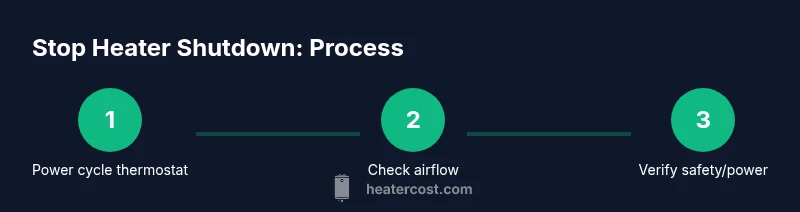
Power cycle the thermostat
Turn off power to the thermostat at the breaker or disconnect. Wait 15-20 seconds, then turn power back on. If the display reboots but the heater still shuts off, move to the next step.
Tip: Note any error codes or blinking lights on the display. - 2
Verify thermostat mode and setpoint
Ensure the thermostat is in HEAT mode and the setpoint is clearly above the current room temperature. If it’s a programmable or smart unit, check for active schedules or geofencing that could override manual settings.
Tip: Record the observed setpoint before making changes. - 3
Replace or test thermostat batteries
If the thermostat uses batteries, replace with fresh alkaline cells. For wired units, confirm the power is steady at the wall, and the backplate terminals are clean and tight.
Tip: Avoid mixing battery brands in multi-device setups. - 4
Check thermostat wiring connections
With power off, inspect thermostat wires at both ends for loose screws, damaged insulation, or corrosion. Re-seat connectors firmly and secure the wall plate so vibrations don’t loosen them.
Tip: Only handle wiring when power is off to prevent shock. - 5
Inspect air filters and intake
Remove and inspect the furnace air filter; replace if dirty or clogged. Ensure the intake openings and return grills are clear of dust, pet hair, or debris that could impede airflow.
Tip: Filter change frequency depends on usage and environment. - 6
Verify airflow and venting paths
Check that supply and return vents are open and unblocked. Inspect ducts for kinks, leaks, or disconnected sections that reduce airflow to the furnace.
Tip: Seal leaks with appropriate foil tape or duct sealant after identifying issues. - 7
Inspect safety switches and limit controls
Locate high-limit or rollover switches and ensure they are properly mounted and not tripped. Loose mounting or a dirty switch can cause premature shutdowns.
Tip: Do not bypass safety switches; they exist to prevent hazardous conditions. - 8
Test system after adjustments
Restart the system and monitor operation for 10-15 minutes to confirm stable heat. If the unit shuts down again, log the behavior and prepare for professional evaluation.
Tip: Allow the system to reach steady-state temperatures during testing.
Got Questions?
Why does my heater turn off after a few minutes?
This often indicates short cycling, thermostat or wiring issues, or a safety switch triggering due to overheating or airflow problems. Use the diagnostic steps in this guide to identify the root cause.
If your heater turns off after a few minutes, it could be a thermostat or airflow issue. Use the step-by-step checks to pinpoint the cause.
Can a dirty air filter cause a heater to shut off?
Yes. A clogged filter restricts airflow, causing the furnace to overheat and trigger the high-limit safety switch, leading to shutdowns.
A dirty filter can cause overheating and shutoffs, so check and replace it if needed.
Is it safe to reset the thermostat to fix shutdowns?
A one-time reset can clear minor glitches, but repeated resets mask underlying problems. Use resets sparingly and continue with full diagnostics.
A reset can help once, but don’t rely on it to fix persistent shutdowns.
When should I call a professional?
If you smell gas, detect a strong gas leak, CO, or you’re uncomfortable handling electrical components, contact a licensed HVAC technician immediately.
If you suspect gas or CO issues or dangerous wiring, call a professional.
Can thermostat placement affect shutting off?
Yes. Placing the thermostat in a draft, direct sun, or near heat sources can cause incorrect readings and nuisance shutdowns.
Thermostat position can cause misreadings and cycling if placed badly.
Will a smart thermostat help stop shutdowns?
A smart thermostat can improve control and diagnostics, but it won’t fix mechanical or safety issues unless the underlying cause is addressed.
A smart thermostat helps with control, but underlying problems still need fixing.
Watch Video
The Essentials
- Start with thermostat power and mode checks
- Ensure airflow is clear to prevent overheating
- Inspect safety switches and wiring for reliability
- Maintain routine maintenance to avoid shutdowns
- When in doubt, call a licensed professional