Heat Won’t Turn Off: Urgent Troubleshooting Guide
Urgent guide to diagnose and fix a heating system that won't turn off. Quick checks, safety steps, diagnostic flow, and when to call a professional from Heater Cost.


If your heat won’t turn off, the most likely culprits are a stuck thermostat signal, a triggered relay on the furnace control board, or a valve that’s stuck open. Start with safety: switch power to the furnace at the main breaker, or turn the thermostat to OFF, then unplug or shut the gas valve if you can do so safely. If the heat persists, contact a professional immediately.
Why heat won’t turn off is a safety-critical issue
If your heat won’t turn off, it’s more than an annoyance—it can create safety risks and waste energy. In many homes, this problem isn’t caused by a mystical fault in the system; it’s typically a stuck thermostat signal, a relay welded closed on the furnace control board, or a gas valve stuck open. According to Heater Cost, the top causes are thermostat issues and control-board faults, especially in older equipment. This comprehensive guide aims to help you quickly identify the likely culprit, perform safe checks, and know when to escalate to a professional. The goal is to stop heat quickly, protect equipment, and avoid expensive energy waste. If you’re evaluating options for a repair or replacement, Heater Cost’s analysis provides practical guidance, not hype.
Heat that won’t turn off should be treated as an urgent safety alert. Begin with basic safety steps, then move through a logical diagnostic flow. By following the steps outlined here, you’ll gain clarity on whether this is a simple thermostat issue you can fix yourself or a more complex control-system problem that requires a licensed technician.
Common causes of heat staying on
Several conditions can cause ongoing heat. The most frequent culprits include a stuck thermostat signal (digital or analog), a faulty thermostat wiring connection, a relay or contact in the furnace control board that won’t release, and valves or dampers in zone systems that stay open. Less common but possible are a malfunctioning limit switch or a gas valve/ignition control component that remains engaged. In multi-zone homes, a stuck damper can cause heat to feed into multiple zones even if one thermostat is set to OFF. Each cause has its own diagnostic path, so it’s important to verify the simplest possibilities first before diving into more complex repairs.
Quick checks you can perform safely
Start with the simplest checks that don’t require tools or professional service:
- Power and switch-off safety: If you can safely access the furnace, flip the breaker to OFF and wait 60 seconds before restoring power. This step clears some stuck signals without risking user exposure to live circuitry.
- Thermostat settings: Ensure the thermostat is truly OFF, not set to a lower but still active stage (e.g., “auto” rather than “on”). If you have a digital thermostat, remove battery power for a minute and reinsert to reset the unit.
- Visual inspection: Look for loose wires at the thermostat, furnace terminals, and zone valves. Do not touch exposed conductors; if you see damaged insulation, call a professional.
- Gas safety: If you smell gas, do not operate any switches. Leave the area immediately and call emergency services from a safe location.
If these quick checks do not resolve the issue, it’s time to proceed with a more detailed diagnostic flow or call a pro. Remember: never bypass safety interlocks or try to force components that are hot or under gas pressure.
The role of thermostats: analog vs digital
Thermostats control heat by sending signals to the furnace. Analog thermostats rely on springs and bimetallic strips, while digital models rely on electronic circuits and wireless connections. A common failure is a thermostat that “sticks” in the heat demand position due to wear, calibration drift, or wiring faults. Digital thermostats can also misinterpret readings if the batteries are low or if the Wi‑Fi module malfunctions. In either case, a stuck signal can keep the furnace running even when the user sets OFF. Replacing aging thermostats with a modern, properly configured model often resolves many heat-stays-on issues, particularly in homes with older systems.
Understanding relays, valves, and safety switches
Inside the furnace control board, relays act as electronic gatekeepers that switch the heat on and off based on thermostat commands. If a relay welds closed, the heat stays on. Zone valves or dampers in multi-zone systems can fail open, allowing heat to circulate into zones that should be off. Safety switches, like a high-limit switch, can trip and cause erratic behavior; conversely, a failed switch might fail to stop heat as intended. Understanding these components helps you distinguish between a simple thermostat fault and a more complex control-system problem that requires a professional diagnosis.
How to reset and test the system safely
Resetting the system can clear stubborn signals, but only when performed safely:
- Turn off power to the furnace at the dedicated switch and/or main breaker. Wait 60–90 seconds. This helps reset the control logic.
- With power off, inspect the thermostat wiring for obvious miswiring or disconnections; reconnect any loose wires.
- Restore power and set the thermostat to OFF, then wait 2–3 minutes to observe whether heat begins; if it immediately starts, the signal path is still compromised.
- If you have a programmable or smart thermostat, ensure the software is up to date and that there are no conflicting schedules that re-enable heat automatically.
- For gas furnaces: do not attempt to bypass gas safety features. If gas is involved and behavior persists, shut off the gas supply if safe and contact a licensed technician.
If the system remains stuck on heat after these steps, it’s time to escalate to a professional assessment. A technician will measure thermostat signals, test relays, and inspect zone valves to identify the exact fault safely.
When to call a professional and what to expect
Many heat-stay-on problems require professional expertise, especially when control boards, gas valves, or dampers are involved. If you’ve performed the basic checks without success, schedule a service call. A contractor will typically perform a safety assessment, confirm power-off isolation, and test electrical signals between the thermostat and furnace. Expect the visit to include a diagnostic check, component testing, and a plan for replacement parts if needed. Part of the conversation should cover energy efficiency and upgrading to a more reliable thermostat and control system if the current setup is aging.
Maintenance to prevent future incidents
Prevention is better than cure. Implement a routine that reduces the likelihood of a heat stay-on scenario:
- Regular thermostat maintenance: replace batteries, clean sensor areas, and calibrate when recommended by the manufacturer.
- Schedule annual furnace inspection: ensure relays, dampers, and safety switches function correctly.
- Replace aging components: thermostats older than 10–15 years, or control boards with known wear, should be upgraded.
- Keep a simple safety checklist: know how to shut off power and gas quickly in an emergency; keep these steps documented and accessible to all household members.
- Consider a smart thermostat with robust fault detection: many modern models provide diagnostics that can alert you to stuck signals before a full failure occurs.
Following these practices can minimize the risk of heat staying on and improve overall home comfort and energy efficiency.
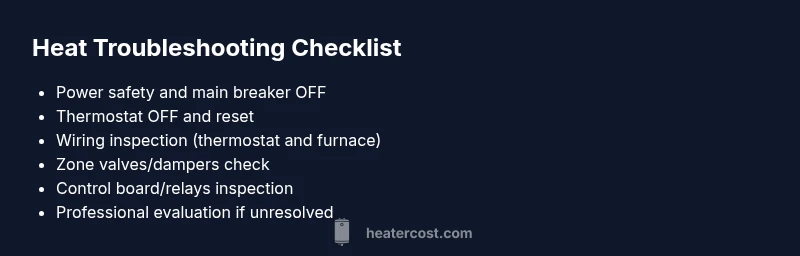
Steps
Estimated time: 45-75 minutes
- 1
Power down the system and secure safety
Locate the main breaker for the heating system and switch it to OFF. If you have a gas furnace, shut the gas shutoff valve only if you can do so safely without approaching the furnace. This is the first step to stop the heat call and to prevent electric shock while inspecting components.
Tip: Safety first: confirm the area is safe and you are not working with live electrical parts. - 2
Verify thermostat OFF and reset
Set the thermostat to OFF and wait 60–120 seconds. If you have a smart thermostat, remove power for a minute or perform a soft reset as per manufacturer guidance. This clears minor stuck signals.
Tip: A quick reset can clear many stubborn signals without tools. - 3
Inspect thermostat wiring and sensors
With power off, check for loose wires at the thermostat terminals and any visible damage to wiring. Re-seat any loose connections and note any signs of moisture or corrosion that could affect readings.
Tip: Loose wires are a common cause—secure them gently without forcing components. - 4
Check zone valves and dampers (if applicable)
In multi-zone systems, ensure dampers are fully closed when OFF and that zone valves aren’t stuck open. Listen for the damper motor sounds and verify with the system’s control panel if accessible.
Tip: A stuck damper can keep heating zones energized unexpectedly. - 5
Test furnace control and relays
If you have access to the furnace, visually inspect the control board for signs of damage or scorching and test the relay coil with a multimeter if you are trained to do so. Do not touch live circuits.
Tip: Relays can fail closed; professional testing is safer and more accurate. - 6
Reset after inspection and observe
Restore power and test the system by turning the thermostat to OFF, then wait to see if heat reactivates. If it does, you likely have a faulty component that requires replacement.
Tip: Document any abnormal readings to share with a technician. - 7
Call a professional if issues persist
If the heat still won’t turn off after these steps, a licensed HVAC technician should diagnose the control board, gas valve, and dampers. They will provide a repair or replacement plan and ensure safety compliance.
Tip: Don’t bypass safety interlocks or attempt high-risk repairs yourself.
Diagnosis: Thermostat or furnace continues to call for heat and cannot be turned off
Possible Causes
- highStuck thermostat signal (analog or digital)
- highWelded or failing relay in the furnace control board
- mediumGas valve/ignition control stuck open
- lowStuck open zone valve or damper in a multi-zone system
Fixes
- easyTurn off power to the furnace at the main breaker and, if safe, shut the gas supply to stop heat demand
- easyReplace or recalibrate the thermostat (check batteries if wireless) and re-seat wiring
- hardIf control board, gas valve, or damper issues are suspected, call a licensed technician for inspection and repair
Got Questions?
Why would heat stay on even when the thermostat is set to OFF?
The most common cause is a stuck thermostat signal or a welded relay in the furnace control board. Zone valves or dampers may also fail open in multi-zone systems.
Heat staying on is usually due to a stuck thermostat or a relay fault; this often points to the control system rather than the thermostat alone.
Can a smart thermostat fix a heat-on problem?
A smart thermostat can help diagnose and prevent false heat calls, but a stuck relay or valve may still require professional repair or replacement.
A smart thermostat can help detect the fault, but you may still need a technician for hardware issues.
Is it safe to turn off the furnace at the breaker while it’s on?
Yes, turning off power at the breaker stops the heat call. If a gas furnace is involved, ensure you can do so safely and avoid gas exposure.
Yes—shut off the power at the breaker to stop heat, but use caution with gas furnaces.
What should I do if I smell gas?
Leave the area immediately and call emergency services. Do not operate switches or appliances from a dangerous area.
If you smell gas, evacuate now and call for help—safety first.
Do zone valves affect heat staying on?
Yes. If a zone valve sticks open, heat can feed into zones that should be off, causing continuous heating.
A stuck zone valve can cause heat to continue in the system.
How long does thermostat replacement take?
Most replacements take 30–60 minutes, depending on wiring and compatibility with the furnace controls.
Replacing a thermostat usually takes about half an hour to an hour.
Watch Video
The Essentials
- Shut power off to stop heat immediately
- Inspect thermostat and wiring first for common faults
- Dampers, valves, and control boards often cause persistent heat
- Call a professional if the issue persists after basics
- Prevent future problems with maintenance and smart thermostats