Heater Won’t Turn Off: Quick Fixes and Safety Tips
Urgent guide to diagnose and fix a heater that won't turn off. Quick checks, practical fixes, and safety reminders for homeowners. 2026 update.


If your heater won't turn off, the likely culprits are a stuck thermostat, miswired switch, or a faulty control board. Start by turning off the power at the breaker to cut power, then manually set the thermostat to off and wait 1-2 minutes before restoring power. If it continues, disconnect power and call a professional.
Understanding the Symptoms: What 'heater won't turn off' Really Means
When a heater won’t turn off, the situation isn’t just inconvenient—it can be unsafe. A runaway heater may indicate an electrical fault, a thermostat calibration drift, or a faulty control relay signaling the system to stay on. In many homes, the root cause is a stuck or misreading thermostat. In other cases, a relay or control board can fail, keeping the circuit energized even when the thermostat calls for heat to stop. The phrase heater won't turn off can describe a space heater, a central heating zone, or a forced-air furnace, so the first step is understanding which component is acting up. Throughout this article, we’ll use practical, safety-first guidance to help homeowners identify the most common culprits and decide when to seek professional help. According to Heater Cost, runaway heating behaviors are more common in older systems, and addressing them quickly can prevent energy waste and reduce risk to occupants. Keep in mind: if you smell burning, hear unusual buzzing, or notice overheating, power down immediately and get out of the area if necessary. Safety comes first when diagnosing a heater that won’t turn off.
Common Causes Behind a Runaway Heater
A heater that won’t turn off almost always starts with a control issue. The most frequent causes include a thermostat that’s stuck in the ON position or inaccurate readings, a faulty relay or control board that fails to cut power, and wiring problems that keep the circuit energized even when other components call for heat to stop. Less common but important possibilities are a shorted limit switch, a miswired wall switch, or a defective safety cutoff. For homeowners, the big idea is to identify whether the issue is internal to the thermostat, the control electronics, or the switching hardware. If the unit is older, degraded components can also contribute to drift in temperature readings. As you investigate, look for visible signs like melted insulation, scorching around terminals, or frayed cables, and remember: do not attempt to repair high-voltage components unless you’re trained. Heater Cost analysis shows that thermostat malfunctions are a leading cause of heater failures to turn off, especially in systems that lack modern smart-control protection.
Safety First: What Not to Do When Testing a Heater
Safety should guide every action when a heater won’t turn off. Do not bypass safety devices, do not poke around live wiring with bare hands, and do not try to repair electrical components without turning off power at the breaker. Never tape or jury-rig a connection, and never leave a hot heater unattended. Before you inspect, switch off the circuit at the main panel and wait for at least 60 seconds to ensure capacitors discharge. When performing any inspection, use insulated tools and wear protective gloves if you need to touch exposed metal. If you smell burnt insulation, see wisps of smoke, or detect a persistent buzzing, evacuate and call emergency services. If you’re unsure about how to safely proceed, contacting a licensed electrician is the safest choice. These safety reminders are essential whenever you address a heater that won’t turn off.
Quick Checks You Can Do Safely Right Now
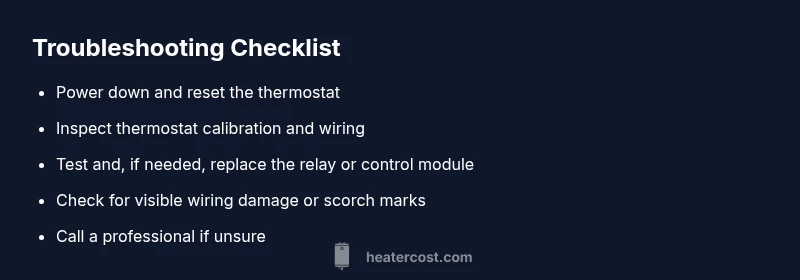
Start with the simplest checks that don’t require disassembly of critical components. First, switch the thermostat to OFF and set the temperature well below room temperature. Then, turn off power at the breaker and wait 1–2 minutes before restoring power; this can reset some relays and sensors. Check that any wall switch or remote control isn’t stuck in an ON position. If a central thermostat controls multiple zones, verify that each zone is configured correctly and that no zoning damper is stuck open. Inspect visible wiring for obvious signs of damage, such as melted insulation or loose screws at terminals. If the heater immediately returns to ON after a reset, proceed to more in-depth checks or call a pro. Remember: never handle live connections. This approach helps you quickly determine whether the issue resides in the thermostat, the switch, or the wiring portion of the system.
Diagnostic Flow: Mapping Symptoms to Likely Causes
Diagnosing a heater that won’t turn off starts with observing symptom details and then mapping them to probable causes. If power can be cut by the breaker and the heater stops, the issue is likely a switch or relay getting a false ON signal. If the unit ignores the OFF command even after a power reset, suspect a faulty thermostat sensor or a stuck control relay. If turning off the thermostat has no effect and a fresh reset doesn’t help, the problem could be a shorted control board or wiring short that keeps power energized. In each case, a systematic approach helps: isolate thermostat, inspect wiring, test relays, and verify control board function. The goal is to identify the root cause without creating new hazards. Heaters that won’t turn off require careful testing, documentation, and, when needed, professional intervention. This flow keeps you focused on safety while narrowing down the likely culprit.
Step-By-Step Fixes for the Most Common Causes
Fixing a heater that won’t turn off involves targeted actions based on the root cause. Start with the easiest, lowest-risk steps. Step 1: Power down the unit at the breaker and remove any batteries or plug-in power sources if applicable. Step 2: Re-seat or replace the thermostat if it’s a replaceable module; verify temperature calibration with a trusted thermometer and adjust as needed. Step 3: Inspect the relay or switch wiring for loose connections or corrosion; tighten connectors and reseat the relay board if you know how to safely do so. Step 4: If you’re comfortable with electronics, test for continuity across thermostat leads and check for signs of arcing or burnt components; replace damaged parts. Step 5: If the problem persists, consider replacing the thermostat or the control module. Step 6: After any repair, perform a controlled test: power on, allow preheating, then toggle OFF and confirm the unit turns off. If any step feels risky, stop and call a professional. Tip: take photos of connections before disassembly.
Prevention, Maintenance, and Routine Checks
Prevention is the best strategy when dealing with a heater that won’t turn off. Schedule regular maintenance checks to ensure thermostats drift slowly with age. Clean and inspect air filters, vents, and grills to prevent restricted airflow from altering temperature readings. Replace batteries in wireless thermostats on schedule and recalibrate sensors after significant temperature changes. Keep an eye on circuit breakers and fuses and test them periodically to ensure they function correctly. A proactive approach reduces the frequency of runaway heating events and helps you catch issues before they escalate. If you notice frequent thermostat recalibration, compatibility problems with smart thermostats, or noisy relays, plan a diagnostic with a professional sooner rather than later.
Real-World Scenarios and When to Call a Pro
homeowners often encounter a runaway heater after a long winter when thermostat batteries die, or when a house has older wiring. In apartment buildings or rental properties, a persistent heater that won’t turn off could involve multiple units and shared circuits, which increases risk. If you observe frequent tripping of breakers, odd odors, buzzing, or heat felt on metal components near the thermostat or control board, stop using the unit and call a licensed electrician or HVAC technician. Even if you have some DIY skills, certain tasks—such as testing internal relay boards or rewiring connections—should be left to professionals. A professional assessment can identify safety issues like overheated relays or worn-out limit switches that could cause a fire risk. The sooner you involve a pro, the better the outcome for safety and energy efficiency.
How Heater Cost Approaches This Problem (What to Expect for Costs)
When addressing a heater that won’t turn off, cost considerations include parts, labor, and whether replacement is more economical than repair. Typical thermostat replacement costs can range from moderate to substantial depending on the model and accessibility, while control board replacements tend to be higher due to the complexity of modern systems. Labor costs vary by region and the technician’s experience, but you can expect a professional diagnostic fee plus the repair or part cost. For homeowners and property managers, budgeting for preventive maintenance reduces unexpected breakdowns and offers long-term savings. Heater Cost’s approach emphasizes clear, written estimates and a focus on safety and reliability. Consider preventative maintenance plans and scheduled tune-ups to mitigate runaway heating issues and improve overall energy efficiency. Remember: addressing a heater that won’t turn off promptly can reduce energy waste and improve comfort for residents.
Conclusion: What to Do Next and How to Stay Safe
A heater that won’t turn off is a serious issue that warrants careful diagnosis and timely action. Start with simple safety checks, then move to targeted testing of thermostats and switches. If the problem persists, escalate to a professional diagnosis rather than risking possible electrical faults or fire hazards. By following a structured diagnostic flow and sticking to safety-first guidelines, you can resolve the issue effectively while protecting your home and family. The Heater Cost team emphasizes disciplined testing, documentation, and professional engagement when needed. With the right steps, you can restore safe, efficient heating and prevent future runaway incidents.
Steps
Estimated time: 30-60 minutes
- 1
Power down the system at the breaker
Locate the main service panel and switch the circuit feeding the heater to OFF. Wait 60 seconds to allow capacitors to discharge. This step ensures your safety before any inspection or testing.
Tip: If you’re unsure which breaker controls the heater, switch off the main breaker to cut all power. - 2
Reset the thermostat and verify readings
Turn the thermostat to OFF, then back to a comfortable setpoint. Observe whether the unit stops after the reset. If it stays on, move to Step 3 or consider swapping the thermostat if the behavior repeats.
Tip: Sanity check with a separate thermometer near the return vent to confirm actual room temperature. - 3
Inspect wiring connections visually
With power still OFF, remove access panels to inspect wiring at terminals for loose or corroded connections. Do not touch live wires. Tighten any loose screws and reseat connectors firmly.
Tip: If you see signs of scorching or melted insulation, do not proceed—call a professional immediately. - 4
Test the relay or control board (if comfortable)
Carefully test the relay controls with a multimeter if you have training. Look for signs of sticking contacts or burnt traces. Replace the relay module if you confirm a fault.
Tip: If you’re not confident in electrical testing, skip this step and contact a licensed technician. - 5
Replace the thermostat or control module as needed
Install the new thermostat or replacement control module following the manufacturer’s wiring diagram. Reconnect power and test the OFF function thoroughly.
Tip: Keep the old part for warranty or diagnostic reference when ordering a replacement. - 6
Run a controlled test after repairs
Power the system, allow it to reach the target temperature, then initiate an OFF command. Confirm the heater shuts down cleanly and does not re-engage unexpectedly.
Tip: Document the test results with timestamps and settings for future service visits.
Diagnosis: Heater won't turn off
Possible Causes
- highStuck thermostat or inaccurate temperature sensing
- mediumFaulty relay or control board that keeps power energized
- lowWiring fault or miswired switch causing constant energization
Fixes
- easyPower down at the breaker, then reset the thermostat and cycle power to the unit
- mediumTest thermostat calibration or replace the thermostat sensor/module
- hardInspect and test relay board and control wiring; replace damaged components if necessary
Got Questions?
Why does my heater stay on even when the thermostat is set to OFF?
A stuck thermostat or a faulty relay can keep the heater energized even with the OFF setting. Check calibration, test the switch, and consider replacing the thermostat or relay if the behavior persists. If in doubt, consult a professional.
A stuck thermostat or relay is the most common reason; check calibration, test the switch, and replace parts if needed.
Is a runaway heater dangerous?
Yes. A heater that won’t turn off can overheat rooms, stress electrical circuits, and create a fire risk. Shut off power at the breaker if you notice any signs of overheating and call a professional for a safe repair.
Yes, it can be dangerous. Shut power off and call a pro if you see overheating signs.
Can I fix a thermostat issue myself?
Basic thermostat checks are reasonable for a homeowner, but more complex tests should be left to a licensed technician. Avoid disassembling high-voltage components if you’re unsure of the wiring.
Basic checks are okay, but don’t tackle complex wiring yourself.
When should I replace versus repair?
If multiple components fail or the unit is old, replacement may be more cost-effective and safer than continued repairs. Always weigh part availability and safety implications before deciding.
If several parts fail or the system is aging, replacement may be wiser.
What safety steps should I take immediately?
Power down at the breaker, avoid touching exposed wiring, and ventilate the area if you smell smoke or heat. If there’s any risk of fire, evacuate and contact emergency services.
Power off and call for help if you smell smoke or heat.
Will professional service be expensive?
Prices vary by region and system type, but expect diagnostic fees plus parts and labor. A professional can provide an itemized estimate and help you decide between repair and replacement.
Costs vary; a pro can give you an detailed estimate and options.
Watch Video
The Essentials
- Identify root cause before replacing parts
- Prioritize safety and professional help when needed
- Regular maintenance reduces runaway heating risk
- Document tests for future reference
- Know when to call a licensed technician