Why Heaters Smell Bad: Quick Diagnosis & Safe Fixes
Discover why a heater smells bad and how to safely diagnose common odor causes—from dust buildup to electrical issues—and take immediate steps to protect your home and loved ones.


If your heater smells bad, the most likely causes are dust burning off during initial heat cycles or a worn electrical component. To reduce risk, turn off the unit, unplug if safe, and ventilate the area. Check the air filter, clean accessible debris, and schedule a service if the odor persists or you detect gas-like or chemical scents.
What the smell means and why it matters
If you're wondering why heater smells bad, the answer is often tied to dust burning off during the first heat cycles, electrical components heating up, or accumulated debris near the burner. These odors are not always harmless, and delaying a check can turn a minor maintenance task into a safety risk. According to Heater Cost, an odor that lingers beyond a few minutes, or a sharp chemical, metallic, or burning scent, should trigger a safety check. Start by turning off the unit if you detect a strong or unfamiliar odor, and ventilate the room. Even if the odor fades, schedule a follow-up maintenance visit to identify and correct underlying causes. Remember: carbon monoxide cannot be detected by smell alone, so a working CO detector is essential in any home with combustion-based heat sources. Quick action now saves cost, energy, and peace of mind.
Common odor profiles and their meanings
Heater odors can signal different issues based on the scent profile. A dusty, burnt odor typically points to dust accumulation on burners or in the ductwork that burns off when heating starts. A medicated, chemical, or solvent-like smell can indicate insulation or wiring nearby overheating. A sulfur or rotten-egg scent may hint at combustion by-products or gas-related concerns. A sharp metallic odor often signals electrical components warming up. Each scent calls for a different level of attention, but safety should be your guiding principle. We’ll break down profiles and practical steps below to help you act quickly and effectively.
Quick checks you can do safely (no tools required)
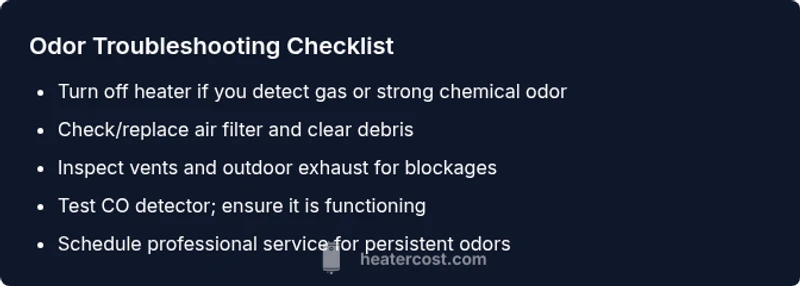
If you notice an odor, start with quick, safe checks:
- Turn off the heater and open windows to ventilate. If you smell gas or rotten eggs, leave the area and call emergency services from a safe location.
- Inspect the air filter: a clogged filter forces the system to work harder and can cause overheating and smells.
- Look for obvious debris or dust near vents, burners, and the blower compartment and remove it carefully if you can do so safely.
- Check the outdoor venting path for obstructions like leaves or snow that could cause improper exhaust flow.
- Ensure the thermostat and wiring connections look intact and free of visible damage. If you’re unsure, stop and seek professional help.
Note: these are basic checks; if any step feels risky, skip it and contact a technician. Ventilate as you perform checks for safer air quality.
Gas, electrical, and combustion odors: what each means
Different odor types map to different risks. A natural gas smell (often sulfurous) or hissing sound can indicate a gas line issue; this is a critical safety concern that requires immediate evacuation and emergency assistance. A burning plastic or chemical odor may come from melted insulation or overheated wiring and signals electrical risk. A dusty or burnt odor usually means dust buildup on heating elements or in ducts. Distinguish between these categories to prioritize action: gas issues are the most dangerous, followed by electrical hazards, then routine dust burning.
How to clean and inspect safely without causing damage
Cleaning should focus on removing dust and debris without dislodging delicate parts. Start by turning off power at the breaker and letting the system cool. Use a vacuum with a narrow nozzle to remove loose dust from accessible surfaces. Wipe down exterior housings with a damp cloth, avoiding moisture near electrical components. Do not scrub the burner or any ignition parts. If you’re not confident in disassembling panels, schedule professional maintenance. Regularly replacing or cleaning the air filter and keeping the area around the heater clear will reduce odor issues over time.
What a professional will do during service
A qualified technician will perform a comprehensive heater inspection including burner cleaning, flame inspection, and venting assessment. They’ll test for proper combustion, check for CO leaks with calibrated equipment, replace filters, inspect electrical connections, and verify safety shutoffs. If a gas odor or CO exposure is detected, they’ll address gas lines, ensure ventilation, and may install or upgrade CO detectors. Routine maintenance often includes lubrication of moving parts and inspecting expansion tanks or ductwork for cracks that could harbor debris and odors.
How to handle temporary odor in cold weather
In colder months, odor issues may persist longer due to increased heating cycles. Keep your space well ventilated while you wait for service. If an odor strengthens or coincides with symptoms like dizziness or headaches, leave the area and seek medical or professional assistance immediately. Cold weather can also stress older systems; plan proactive maintenance to avoid odor issues during peak usage.
Preventive steps to reduce future odors
Prevention focuses on regular maintenance and good filtration. Change air filters according to manufacturer recommendations, typically every 1-3 months depending on use and indoor air quality. Schedule an annual professional inspection to catch dust buildup, worn components, or improper venting before they cause odors. Keep the area around the heater clean and unobstructed to improve airflow and reduce odor persistence. Investing in a carbon monoxide detector with audible alert adds an essential safety layer for any combustion-based heater.
When to replace vs repair: making the call
If odors persist after a professional cleaning and system tuning, or if repairs exceed a practical percentage of replacement cost, consider upgrading to a newer, cleaner, and more energy-efficient unit. Older systems may produce recurring odors because of aging seals, corroded pipes, or degraded insulation. A professional can help assess remaining service life and total cost of ownership, including energy costs and potential safety risks that new models mitigate.
Immediate actions if you smell gas or CO
A gas odor or CO alarm requires immediate action: leave the area, call your gas provider or emergency services, and do not operate electrical switches or lights. CO is odorless, so rely on detectors and professional testing rather than scent. After the danger is mitigated, have a licensed technician inspect your heating system and ventilation to ensure future safety.
Steps
Estimated time: 60-90 minutes
- 1
Power down and ventilate
Shut off the heater at the switch or breaker. Open windows and doors to improve air exchange while you assess. If you smell gas, leave the area immediately and call for help from a safe location.
Tip: Ventilation reduces exposure and buys time before an inspection. - 2
Check the air filter
Locate and inspect the furnace filter. A clogged filter can cause overheating and odor; replace it if dirty, and ensure the replacement is the correct size and type.
Tip: Always power off before touching electrical components. - 3
Inspect accessible surfaces
Look for obvious debris, dust, or damaged insulation around the burner area and blower compartment. Remove loose material with a gentle brush or vacuum attachment.
Tip: Do not disassemble burner internals unless you are trained. - 4
Check exterior venting path
Ensure outdoor exhaust points are clear of leaves, snow, or other obstructions. Poor venting can cause backdrafts and unusual odors inside.
Tip: Keep the exhaust path unobstructed year-round. - 5
Test for gas or CO indicators
If you have a gas smell or CO detector, verify it’s functioning and within its service life. Do not rely on smell alone to assess CO risk.
Tip: Test detectors monthly if possible. - 6
Consult a professional
If odors persist after basic checks, call a licensed HVAC technician to diagnose burners, heat exchanger, wiring, and venting systems.
Tip: Document any odors, times, and conditions for the tech. - 7
Schedule maintenance
Set up an annual service visit to clean, calibrate, and verify safety systems. Regular maintenance reduces odor risks and improves efficiency.
Tip: Mark your calendar for a yearly reminder. - 8
Confirm post-service safety
After service, run the heater in short cycles to observe whether the odor recurs and listen for unusual sounds or changes in flame color.
Tip: If you notice any abnormality, stop using the unit and call the technician again.
Diagnosis: Machine won't start or a strong, unusual odor is emitted when turning on the heater
Possible Causes
- highDust buildup near burners or heat exchanger causing burnt odor
- mediumOverheating electrical components or loose wiring
- lowGas leak or improper combustion (gas smell or CO risk)
Fixes
- easyTurn off the heater and ventilate the area; avoid using the unit until inspected
- easyClean accessible surfaces and replace the air filter; check for visible debris
- mediumSchedule a professional service to inspect burners, electrical connections, and venting
- easyIf you smell gas or suspect CO, evacuate and call emergency services immediately
Got Questions?
What does a burnt smell from a heater indicate?
A burnt smell often signals dust burning off or debris near heating elements. If it persists after cleaning, schedule professional service to verify safe operation.
A burnt smell usually means dust or debris is burning off. If it doesn’t go away after cleaning, get a professional to check it.
Is a strange odor from a heater dangerous?
Odors can indicate safety issues, including gas, electrical faults, or improper combustion. Treat unfamiliar odors as urgent and seek inspection if they persist.
Strange odors can be dangerous—gas or electrical issues require urgent attention. Have it checked if it won’t go away.
Should I keep using my heater if I smell something unusual?
Do not continue using the heater if you smell gas, rotten eggs, or chemical odors. Ventilate and call a professional promptly.
If you smell unusual odors, stop using the heater and call a professional.
What should I do if I smell gas or CO while the heater is on?
Leave the area immediately, call your gas provider or emergency services, and do not operate electrical switches. CO detectors should be tested regularly.
If you smell gas or CO, evacuate and call emergency services right away.
How often should I service my heater to prevent odors?
Most systems benefit from an annual professional inspection and regular filter changes. This helps prevent odor issues by catching wear and buildup early.
Annual professional service plus regular filter changes helps stop odors before they start.
Can a carbon monoxide detector prevent harm from bad odors?
CO detectors provide essential alerting if combustion is imperfect. They do not replace regular professional maintenance, but they are a critical safety device.
CO detectors alert you to dangerous gas byproducts; they’re essential for safety alongside routine maintenance.
Watch Video
The Essentials
- Identify odor type and act quickly
- Prioritize gas/CO concerns over dust odors
- Regular maintenance reduces odor risk
- Consult a professional for persistent smells