Why Do Heaters Smell? Urgent Troubleshooting Guide
Urgent, practical guidance for homeowners dealing with odd heater odors. Learn quick safety steps, common causes like dust, gas, or electrical issues, and when to call a pro. Heat safety and prevention tips from Heater Cost.


A burning odor or chemical smell from a heater usually signals dust burning on hot surfaces or a safety hazard in the system. First, turn off and unplug if it’s an electric unit, or switch off the gas supply if you smell gas. If the odor persists after basic checks, shut down and call a licensed technician for a thorough inspection.
Why this matters when you notice a heater smell
Why do heaters smell? The presence of an unusual odor is a warning sign. While some smells can be benign (dust burning off when you first turn on a furnace after a season of inactivity), others point to hazards like electrical faults, blocked vents, or improper combustion. Treat any persistent odor as urgent and act quickly to assess safety, reduce exposure, and prevent expensive damage. This section lays out the most common smells, what they typically indicate, and how to approach them safely. Remember, your goal is to protect health, avoid carbon monoxide exposure, and keep energy costs from spiking due to inefficient operation.
Common smells and what they indicate
Different odors map to different problems. A sweet or hot plastic-like scent can indicate overheated plastics or insulation near moving parts. A dusty, burnt toast odor is often dust or lint on a heat exchanger or motor winding. A sulfurous or rotten-egg odor can signal a gas-burning issue or venting problem. A chemical-like odor can come from solvent residues or burning electrical components. CO detectors should be installed and tested because some dangerous emissions are odorless, and they won’t be detected by smell alone. In any case, odors that persist after initial checks, intensify with fan operation, or occur during ignition require professional attention. Treat odor as a call to action, not a mystery to solve alone.
Immediate actions you should take today
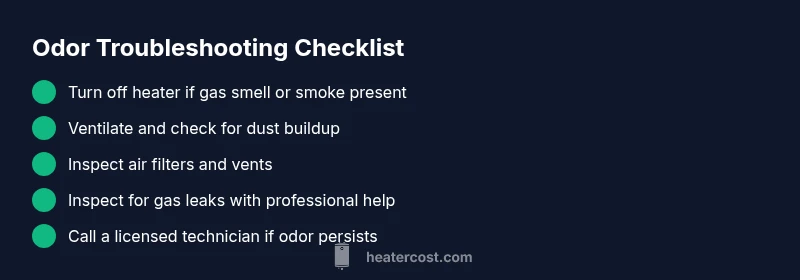
- Turn off the heater if you smell gas or see visible smoke; evacuate if you suspect a gas leak and call emergency services. 2) If safe to do so, ventilate the area by opening doors and windows to disperse fumes. 3) Check for obvious issues: dirty air filters, debris near intake vents, or signs of melted wiring insulation. 4) Do not bypass safety controls or keep the unit running while you investigate. 5) If the odor remains after basic checks, contact a licensed heating technician promptly. 6) Keep a carbon monoxide detector in every occupied space and test it monthly.
Diagnostic flow: narrowing down the culprit
This flow helps you sort signals from benign to dangerous. Start with the simplest checks (dust, filter, loose panels) and move toward complex ones (combustion diagnostics). If you notice gas smell, hissing sounds, hissing from the gas line, or headaches from exposure, treat it as a gas-related emergency and evacuate. Electrical odors require power shutdown and a tech visit. Always prioritize safety and do not randomize fixes that could worsen the issue.
Step-by-step fixes for the most common causes
Below are practical fixes for the most frequent smells homeowners encounter. Always begin with safety: shut off power if indicated, ventilate the area, and avoid using gas if you suspect a leak. For dust or lint: vacuum and clean around the burner compartment, replace dirty filters, and wipe down accessible surfaces. For venting issues: ensure flue or exhaust paths are clear and unobstructed. For gas or combustion issues: do not attempt repairs—call a professional immediately. After addressing the cause, run the heater on a low setting to confirm smells have diminished and air quality is stable.
Safety first: avoiding risk now and later
Never ignore a strong or persistent odor. Gas smells require you to leave the building and call the gas company or emergency services. CO detectors are essential safety devices and should be tested monthly. Regular maintenance by a licensed technician reduces the likelihood of odors by keeping heat exchangers clean, burners properly adjusted, and ventilation unobstructed. Use the thermostat features to avoid overfiring and ensure safe ignition sequences.
Prevention and maintenance that make a real difference
Establish a seasonal maintenance routine: replace or clean filters every 1–3 months during heating season, inspect the exhaust vent for blockages, and schedule professional inspections annually. Keep the area around the furnace clear of clutter and dust. If you own an older unit, consider a professional pre-winter check to identify potential heating-related odor sources before temperatures drop. A small investment in maintenance now pays off in reliability and safety.
When to call a pro: red flags you should not delay
Call a licensed heating technician if you notice persistent burning smells, a gas-like odor, smoke or scorch marks near electrical components, or a decline in heating efficiency. If CO detectors alarm or you experience headaches, dizziness, or confusion, evacuate and seek help immediately. A pro can safely test for combustion efficiency, venting adequacy, and potential heat exchanger faults, ensuring your system is safe to operate.
Steps
Estimated time: 45-90 minutes
- 1
Power down safely and ventilate
If you smell gas or see smoke, shut off the appliance and leave the area. Open windows and doors to increase ventilation while you assess safety. Do not use electrical switches that could spark.
Tip: Keep a clear path to the exit and have a phone ready before you start inspecting. - 2
Check for obvious debris and clean
Inspect around the burner and blower for dust, cobwebs, or lint. Use a soft brush or vacuum to remove buildup. Replace or wash any accessible air filters according to your unit’s manual.
Tip: Turn off power at the breaker before touching electrical components. - 3
Assess the air filter and intake
A clogged filter restricts airflow and causes overheating. If you can safely access it, replace with the correct size and type. Confirm that the return and supply vents are not blocked by furniture or drapes.
Tip: Record the date of replacement to establish a maintenance cadence. - 4
Check for gas smell or fuel concerns
If you detect a gas odor, do not operate the unit. Turn off the gas valve at the appliance if you know how, leave the home, and call the gas utility from outside the building. A professional should inspect for leaks and improper combustion.
Tip: Never ignite a flame or use electronics that could create a spark in the presence of a gas smell. - 5
Inspect venting and combustion pathways
Ensure the flue, chimney, or exhaust duct is clear and properly connected. Look for bird nests, debris, or other blockages. If you notice rust or damage, do not attempt DIY repairs—call a pro.
Tip: Do not attempt to modify venting; improper installation can cause dangerous backdrafts. - 6
Recommission and monitor after fixes
After completing the above, restore power and run the unit on a safe setting. Listen for odd noises and note any lingering smells. If the odor persists beyond a few cycles, shut down and call a technician.
Tip: Keep a log of odor occurrences and maintenance actions for the technician.
Diagnosis: Persistent or unusual odor from the heater
Possible Causes
- highDust or lint buildup on heat exchanger or motor
- highClogged or dirty air filters reducing airflow
- mediumElectrical insulation overheating or wiring issue
- highGas leak or incomplete combustion (gas furnace or boiler)
- mediumBlocked venting or flue causing backdraft
- lowNew installation residues or solvents near the unit
- mediumHeat exchanger crack or worn components (older units)
- mediumCO buildup in the space (odorless but dangerous)
Fixes
- easyPower down safely and ventilate the space; check and replace dirty filters
- easyVacuum around intake and discharge areas to remove dust
- mediumInspect for gas smells and shut off gas supply if suspected; call gas company if smell persists
- mediumInspect venting/flue for obstructions and ensure clear exhaust path
- hardSchedule professional service for combustion analysis or heat exchanger inspection
- easyInstall or test CO detectors and replace batteries; ensure detector placement per guidelines
Got Questions?
Why does my heater smell burning or electrical after running?
A burning or electrical smell usually means overheating parts, dust on hot surfaces, or degraded insulation. Turn off power, ventilate, and inspect for obvious debris or loose panels. If the odor persists, contact a qualified technician to check wiring and safety controls.
A burning smell often means something is overheating or dirty. Turn off and ventilate, then contact a technician if it continues.
Is a heater odor dangerous?
Some odors indicate safe dust burning, but others signal serious dangers like gas leaks or electrical faults. Treat persistent or chemical smells as urgent and have a professional inspect soon. Do not ignore warning signs like smoke or dizziness.
Odor can be dangerous if it’s gas or electrical. Seek professional help promptly if it persists.
Can a heater smell indicate carbon monoxide exposure?
Carbon monoxide is odorless. A heater odor may be a separate issue, but CO risk should be addressed by installing or testing detectors and having a pro inspect combustion safety. If CO detector alarms, evacuate immediately.
CO has no smell. If detectors alarm or you suspect exposure, leave and call for help.
What should I do if I smell gas?
If you smell gas, leave the building immediately and call the gas utility from outside the home or dial emergency services. Do not operate electrical switches or try to fix the leak yourself. A professional should assess containment and repair.
Gas smell? Leave right away and call the gas company. Don’t try to fix it yourself.
How often should I service my heater?
Most heaters benefit from annual professional maintenance, with more frequent checks for older or frequently used units. Routine service helps maintain efficiency and reduces odor risks by cleaning critical components.
Annual professional service keeps smells at bay and protects efficiency.
Why does the odor disappear after a few minutes?
Initial odors often come from dust burning off or temporary residues of installation. If the smell fades quickly, monitor the unit and schedule a maintenance check to ensure no underlying issues remain.
Dust burning off is common; if it stops quickly, still consider a checkup.
Watch Video
The Essentials
- Act quickly on persistent odors to protect health and safety
- Start with simple checks (dust, filter, ventilation) before calling a pro
- Gas leaks or combustion issues require professional inspection immediately
- Regular maintenance reduces odor risk and extends heater life
- Keep CO detectors active and functional year-round