What to do if your heater smells like burning: Immediate safety guide
Urgent guide to handling a heater that smells like burning. Learn safety steps, quick fixes, when to call a pro, and prevention tips to protect your home.


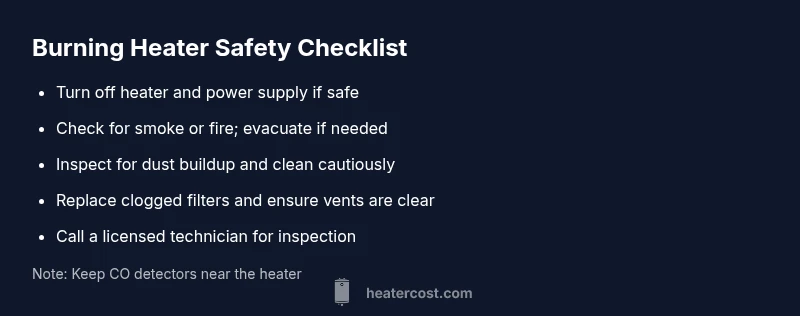
Immediate safety: if you smell burning from a heater, switch it off at the unit and unplug only if safe. Evacuate if you see smoke or suspect fire, and call emergency services. Do not use the heater again until a licensed technician inspects it. Possible quick checks include dust buildup, loose wiring, or tripped breakers.
Immediate safety steps
The moment you notice a burning odor from a heater, your first move is safety, not troubleshooting. According to Heater Cost analysis, a burning smell often signals an electrical fault, overheating, or foreign material burning and can lead to a fire if ignored. Start by turning the unit off at the thermostat, then switch off power to the heater at the circuit breaker if you can do so safely. If you see or smell smoke, evacuate immediately and call emergency services. Do not relight or operate the heater until a licensed technician confirms it is safe. After you have secured safety, document what you observed: the exact odor, any smoke, whether the smell persists after power is off, and any signs of electrical buzzing or heat on nearby surfaces. This record will help the technician diagnose the issue more quickly. If a gas heater is involved, do not attempt to shut off gas valves unless it is clearly safe to do so. Evacuate and contact the utility or emergency services as needed. Remember, safety first, always.
bold:
,
Steps
Estimated time: 45-60 minutes
- 1
Power down and secure the area
Shut off the heater at the thermostat and, if safe, cut power at the breaker. Do not touch exposed wires. Ensure the room is well-ventilated and that children and pets are away from the unit.
Tip: Never bypass safety devices; it creates a greater risk. - 2
Inspect for obvious hazards
Look for visible signs like melted plastic, scorch marks, or burnt dust near vents and components. If you see flames or heavy smoke, evacuate and call emergency services.
Tip: Document what you observe with notes or photos. - 3
Check for dust and debris
Dust buildup can ignite when the heater heats up. Use a flashlight to inspect accessible areas; do not use water on electrical components. If you can, gently remove loose dust from accessible openings.
Tip: Use a vacuum with a brush attachment and wear a mask. - 4
Assess gas safety (for gas heaters)
If you have a gas heater and notice a rotten egg odor or hissing, leave the area and call the gas utility or emergency services. Do not relight the appliance until a professional has evaluated gas lines and the ignition system.
Tip: Do not attempt to shut off gas valves unless you can do so safely. - 5
Schedule professional inspection
Contact a licensed HVAC technician as soon as possible to inspect for heat exchanger damage, electrical faults, or failing safety controls. Do not operate the heater until cleared.
Tip: Provide the technician with your observations and any photos. - 6
Re-test only after clearance
If the technician approves, have the system tested in controlled conditions and confirm there are no abnormal odors, heat, or noises.
Tip: Prepare a list of questions about maintenance and safety afterward.
Diagnosis: Heater emits a burning odor during operation
Possible Causes
- highElectrical fault such as loose wiring or damaged insulation
- highDust, lint, or plastic debris burning inside the housing
- mediumOverheating motor, belt friction, or worn components
- lowGas valve issue or gas leak (for gas heaters)
Fixes
- easyTurn off the heater and unplug or switch off the breaker if safe.
- easyVentilate the area and remove nearby combustibles; inspect for obvious debris.
- mediumCheck for hot spots on accessible wiring and tighten any loose connections if you are trained to do so.
- hardCall a licensed HVAC technician to inspect heat exchanger, gas lines, and safety controls.
Got Questions?
What could cause a heater to smell like burning?
Burning odors from heaters can be caused by dust or debris burning in the discharge or heat exchanger, electrical faults, overheated motors, or, in gas units, a gas leak or ignition issue. A professional should assess any persistent or strong burning odor.
Possible causes include dust burning, electrical faults, or gas-related issues; have a professional inspect to stay safe.
Is a burning smell from a heater always dangerous?
A burning smell can indicate a real safety risk, including fire or carbon monoxide exposure. Treat it as urgent and shut the unit off, then have it inspected by a licensed technician.
Yes, treat it as urgent and get a professional inspection.
What should I do immediately if I smell burning?
Turn off the heater and unplug if safe, evacuate if you see smoke, and call emergency services if danger is suspected. Do not use the heater again until a professional confirms safety.
Turn it off, evacuate if needed, call for help.
Can dust be the sole reason for a burning odor?
Dust can cause a temporary burning odor as it burns off when the heater first runs after a period of inactivity. If the smell persists after cleaning, have it inspected.
Dust can cause a temporary odor, but persistent smells need a pro check.
When should I replace a heater due to burning smell?
If a professional identifies heat exchanger damage, gas leaks, or recurring electrical faults that can’t be fixed safely, replacement may be necessary. Discuss options with a qualified technician.
Replacement might be needed if safety-critical components are damaged.
Watch Video
The Essentials
- Stop and secure safety before troubleshooting
- Call a licensed pro for any persistent odor
- Keep CO detectors active and up to date
- Document observations for the technician
- Schedule regular maintenance to prevent smells