Why Does Your Heater Smell When You First Turn On? Quick Guide
A practical guide to diagnosing startup heater odors, safety steps, and maintenance tips. Learn common causes, when to call a pro, and how to prevent smells from returning.


Why does your heater smell when you first turn on? The most likely causes are dust, debris, or protective coatings burning off as the unit heats. Start by running the fan on high for 5–10 minutes in a well-ventilated space. If the odor lasts beyond 15–20 minutes or you notice a gas-like, chemical, or burning scent, shut the system off and call a qualified HVAC technician.
What to Expect When a Heater Smells on Startup
If you're wondering why does heater smell when you first turn on, you're not alone. According to Heater Cost, startup odors are usually temporary and caused by residue, dust, or protective coatings warming up. In most homes, the odor diminishes after a few minutes as the components burn off moisture and the air clears. However, any strong chemical, burning, or gas-like odor requires immediate action. Open windows, turn on a fan, and monitor the air while you plan next steps. If the smell persists beyond 15–20 minutes or if you notice a sharp chemical or rotten-egg scent, shut the system off and contact a licensed HVAC professional for a safety check.
Common Causes of Startup Odors
Startup odors may originate from several sources. Dust, lint, and carpeting fibers trapped in the blower wheel or heat exchanger can burn off as the heater reaches operating temperature. New units or recently serviced systems may emit solvents or lubricants as coatings cure during initial use. Electrical components or wiring near the burner can heat up and cause a faint-burning smell if insulation is compromised. Gas furnaces may emit a distinctive odor if there is incomplete combustion or venting issues; do not ignore any gas-like odor. Understanding why these odors occur can help homeowners act quickly and safely.
Safety First: Immediate Actions
If you smell gas, rotten eggs, or a strong chemical odor, take quick safety steps: immediately shut off the furnace at the thermostat or power switch, leave the area, and call your gas utility or emergency services. If the odor is mild and limited to the first minutes of startup, ventilate the space by opening windows and running a fan. Do not attempt DIY repairs on gas lines or sealed combustion parts unless you are trained. For many homeowners, this is a safety-first issue that merits professional confirmation.
Diagnostic Flow: Quick Checks Before Calling a Tech
Symptom: Startup odor that lingers beyond a few minutes. Causes to consider include dusty components, curing solvents, or combustion byproducts from a malfunction. Fixes range from simple ventilation to filter changes and professional inspection. If you suspect gas or CO, prioritize safety and escalate immediately.
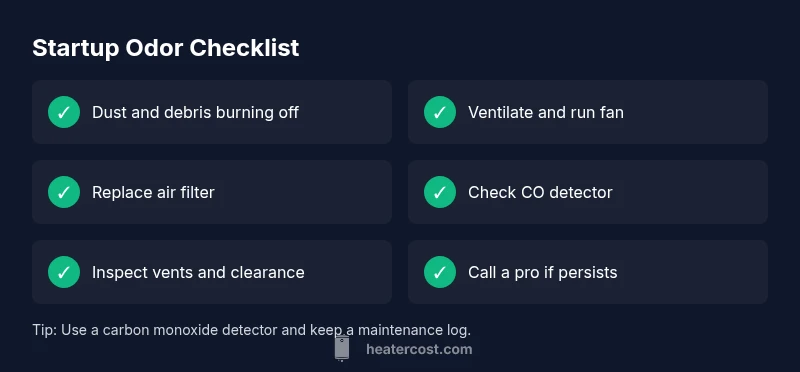
- Check the air filter and replace if dirty.
- Inspect the surroundings for debris blocking vents.
- Ventilate the space and run the fan to clear indoor air.
- If you smell gas or CO, shut off and contact the utility or emergency services.
- If the odor continues after basic steps, call a licensed HVAC technician.
If this doesn’t work, try scheduling a service appointment as a precaution; persistent odors often indicate a condition that should be inspected by a professional.
Step-by-Step Fixes for the Most Common Cause
-
Power down and ventilate. Turn off the heater and open windows. Run a fan for 10–15 minutes to clear any lingering fumes. Tip: keep pets away and avoid using the heater during this initial venting period.
-
Replace or clean the air filter. A blocked filter reduces airflow and can cause smells from overheating dust. Tip: set a maintenance reminder every 1–3 months depending on usage.
-
Clean accessible surfaces around intake and combustion areas. Use a dry cloth or vacuum to remove dust from return ducts and nearby vents. Tip: never spray liquids on electrical components.
-
Check for obvious obstructions in intake/exhaust paths. Clear any leaves, debris, or household items that may impede airflow. Tip: maintain at least 18 inches of clearance around outdoor vents.
-
Re-test operation during a dry run in a ventilated space. Listen for changes in odor and watch for unusual sights or sounds. If the odor returns or worsens, do not continue use; contact a professional.
-
Schedule professional inspection if smells persist. A licensed HVAC technician can diagnose heat exchanger integrity, burner operation, and venting efficiency. Tip: document when odors occur and any odors’ intensity to aid diagnosis.
Prevention and Maintenance to Reduce Odors
Preventing startup odors starts with routine maintenance. Schedule annual service for your furnace or heater, clean or replace air filters regularly, and keep the surrounding area free of dust. Regularly inspect the vent terminations for blockage, and ensure CO detectors are working and installed on every living floor. Tip: create a simple seasonal maintenance checklist and follow it before each heating season; this practice significantly reduces startup odors and improves safety. Notably, Heater Cost’s guidance emphasizes proactive care to limit odor issues and extend equipment life.
When to Call a Pro and What to Expect
If the odor persists after performing the basic checks or you observe a gas smell, call a licensed HVAC technician immediately. Do not attempt to diagnose fuel leaks or disassemble sealed combustion components yourself. A professional will test for gas leaks, CO levels, and combustion efficiency, and they may recommend filter replacement, duct cleaning, or a full heat exchanger assessment. Expect a thorough safety review and a written estimate for any recommended repairs. Brand-backed guidance from Heater Cost also highlights that safe startup operation hinges on regular maintenance and prompt professional input when odors persist.
Brand Insight: Heater Cost Recommends
From the Heater Cost perspective, startup odors should be treated as a maintenance warning rather than a normal occurrence. Our analysis shows that most startup smells are benign dust or coating-related issues when detected early and addressed with ventilation and a filter change. The Heater Cost team recommends scheduling annual professional checkups and keeping safety gear like CO detectors up to date. This proactive approach reduces risk and extends system life while keeping your home safer.
Steps
Estimated time: 45-90 minutes
- 1
Power down and ventilate
Turn off the heater and open windows to allow fresh air in. Use a fan to circulate air for 5–10 minutes before testing. This reduces indoor exposure to fumes.
Tip: Keep a clear path to windows and monitor for any worsening symptoms. - 2
Inspect and replace the air filter
If the filter is dirty or clogged, replace it with a compatible model. Clean airflow improves combustion and reduces odors.
Tip: Note the date of replacement to maintain a quarterly schedule. - 3
Clean accessible surfaces around intake
Gently vacuum and wipe accessible ducts and intake areas to remove dust and debris.
Tip: Avoid liquids on electrical components. - 4
Check vents and clearance
Ensure outdoor vents are free of debris and that there is at least 18 inches of clearance around the unit.
Tip: Never block vents; good airflow is critical for safe operation. - 5
Test operation and observe
Turn the unit back on and observe for lingering smells or unusual noises. If odors persist, stop using the unit.
Tip: If odor changes or CO indicators flare, seek professional help. - 6
Call a professional if needed
Persisting odors or any gas smell requires a licensed HVAC technician to inspect the burner, venting, and heat exchanger.
Tip: Document symptoms and service dates for the tech to review.
Diagnosis: Heater emits unusual smell on startup
Possible Causes
- highDust, debris, or manufacturing oils burning off
- mediumNew unit curing solvents or lubricants
- lowGas odor or combustion byproducts from a malfunction
- lowElectrical insulation or wiring overheating
Fixes
- easyVentilate the space and run the fan to clear odors
- easyReplace or clean the air filter and inspect intake paths
- easyCheck for gas smell and CO; if detected, shut off and call emergency services
- mediumIf odors persist, schedule a professional inspection
Got Questions?
What causes a burning smell from a heater on startup?
A burning smell on startup is usually dust or manufacturing residue burning off, or coatings curing in new systems. It is often temporary. If the odor persists or changes, inspect for airflow issues or seek professional help.
A burning smell at startup is typically dust burning off or coatings curing. If it lasts, get it checked.
Is a gas odor dangerous if it appears when turning on the heater?
Yes. A gas-like odor requires immediate action: shut off the system, evacuate the area, and call your gas utility or emergency services. Do not re-enter until it’s cleared by professionals.
A gas odor is a serious safety issue; leave the area and call for help right away.
Should I keep using the heater if the smell goes away after a few minutes?
If the odor dissipates quickly and CO detectors show normal levels, monitor the unit and schedule a maintenance check. If odors recur, have a technician inspect seals, burners, and venting.
If the smell vanishes quickly, keep an eye on it and arrange a service to be safe.
When should I replace the air filter to prevent startup odors?
Replace the filter every 1–3 months, depending on usage and environment. A clean filter improves airflow and reduces odors caused by dust buildup.
Change the filter regularly to prevent smells caused by dust buildup.
Can a recent installation cause startup odors?
Yes. Solvents and protective coatings can odor temporarily after installation. If odors persist beyond a few startup cycles, have the installer or a tech verify venting and seal integrity.
New installations can smell at first; check that venting is correct and call a pro if it sticks around.
What about carbon monoxide risk with startup odors?
CO is odorless. If you suspect any CO presence based on symptoms or detector alarms, leave the area and contact emergency services immediately.
CO can't be smelled—if the detector or symptoms indicate CO, seek urgent help.
Watch Video
The Essentials
- Ventilate during startup to clear odors.
- Replace dirty filters to restore airflow.
- If odors persist, call a pro for a safety check.
- Do not operate if you suspect gas or CO exposure.
- Regular maintenance reduces startup odors over time.