Why Your Heater Smells Like Fish: A Practical Troubleshooting Guide
Discover why a heater smells like fish, how to safely diagnose the odor, and practical fixes. A comprehensive 2026 Heater Cost guide for homeowners, renters, and managers.


If your heater smells like fish, it’s a red flag that should not be ignored. Immediately turn off and unplug the unit if safe, ventilate the area, and inspect for obvious signs of burnt insulation, oil residues, or dust on hot surfaces. According to Heater Cost, you should pursue basic checks first and then call a pro if the odor persists after safety steps.
Understanding the fishy smell from heaters
A heater that emits a fish-like odor during operation is a warning sign and should be treated with urgency. The phrase heater smells like fish is not typical for normal operation and warrants a careful, methodical check. Causes can range from simple dust burning off a hot element to more serious issues such as burned wiring insulation or lubrication residues on components. While not every odor indicates imminent danger, persistent or strong smells merit professional assessment. For homeowners, renters, and property managers, addressing this promptly helps protect safety, reduce the risk of fire, and prevent costly damage down the line. The Heater Cost team emphasizes safety first—never ignore a persistent scent and always ensure adequate ventilation while inspecting.
In the world of home heating, the exact cause can vary by type of heater (electric, gas, or dual-fuel). If you notice a sharp, chemical, or fishy odor, assume there could be a heat source contacting electrical components or accumulated residues on coils. The goal is to identify whether the odor is residual from recent use, an ongoing problem, or a new and rising risk. Remember, a fishy odor is not a smell that should be brushed off; it’s a signal to act, especially in homes with children, pets, or elderly residents. This guidance aligns with the Heater Cost Analysis for 2026, which highlights urgency and safe practices when odors are detected.
For context, the quick takeaway is straightforward: stop use if safety is in doubt, ventilate the area, and begin a careful inspection. If you’re unsure about improving your system safely, seek professional help sooner rather than later. This approach is reinforced by our brand's standards and the practical experience shared by homeowners who faced similar issues.
Steps
Estimated time: 45-60 minutes
- 1
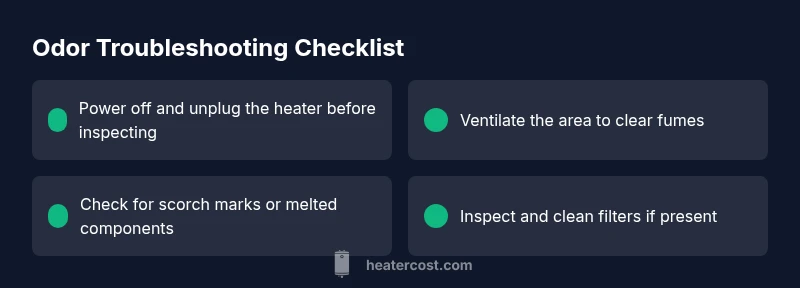
Power off and unplug
If safe, switch off power and unplug the heater. Let it cool for at least 10-15 minutes before touching any external parts. This prevents accidental shocks and reduces risk while you inspect.
Tip: Never touch exposed wiring while the unit is hot. - 2
Ventilate the space
Open doors and windows or use a vent fan to clear any lingering fumes. Adequate ventilation protects occupants while you diagnose the odor source.
Tip: If you have carbon monoxide detectors, ensure they’re functioning and tested. - 3
Check for visible damage
Look for scorch marks, melted plastic, or oil-like residues on exterior panels and near vents. Document any signs with photos before you touch internal components.
Tip: Do not probe into hot cavities; this can cause injury or more damage. - 4
Inspect and replace filters
If your heater has filters, remove and inspect them for buildup or oil deposits. Clean or replace according to the manufacturer’s instructions. Dirty filters can worsen odors and reduce efficiency.
Tip: Always use the manufacturer-recommended filter type and size. - 5
Clean cooling surfaces safely
With power off, wipe accessible coils or heat-exchange surfaces with a dry cloth or compressed air as advised by the manual. Do not use liquids that could reach electrical components.
Tip: Follow the exact cleaning method recommended by the manufacturer. - 6
Decide on the next step
If there are no obvious signs of damage and the odor fades after basic cleaning, monitor the unit. If the smell returns or you notice heat instability, schedule a professional inspection promptly.
Tip: Keep records of inspections and any odors for the technician.
Diagnosis: Foul fishy odor from heater when in use
Possible Causes
- highBurning insulation or wiring insulation contacting hot surfaces
- mediumDust, oil residue, or manufacturing lubricants on heating elements
- lowMold or moisture near the exhaust/air intake
Fixes
- easyPower off and unplug the unit, then allow it to cool before inspection
- easyVacuum or wipe away dust and residue; replace filters if applicable
- mediumInspect for scorch marks or melted components; if found, do not operate the unit and call a professional
- easyIf the odor persists after basic checks, schedule service with a licensed technician
Got Questions?
Why does my heater smell like fish?
A fish odor usually signals burning insulation, oil residues on heating elements, or accumulated debris. It’s a safety alert, so stop using the unit and investigate safely or contact a pro if the odor persists.
A fish odor means something may be burning or contaminated; stop using the heater and get a professional check if it doesn’t clear up.
Is a fishy odor from a heater dangerous?
Yes, odors like fish can indicate overheating electrical components or fuel residues. Treat it as a safety issue and avoid prolonged use until inspected.
Yes—odor signals potential danger. Stop using the heater and schedule an inspection.
Should I try to clean the heater myself?
Light cleaning of accessible surfaces is fine after power is disconnected, but avoid opening the unit or cleaning near electrical parts. If unsure, call a professional.
Light cleaning after unplugging is okay, but avoid opening the unit. If in doubt, call a pro.
When should I replace the heater instead of repairing?
If damage is extensive, odors recur after preventive steps, or the unit is old, replacement may be more cost-effective and safer.
If repairs keep failing or the unit is old, replacement is often safer and more economical.
Can a professional fix the odor quickly?
Often yes, but odor specifics determine time. A technician will identify the source, perform necessary cleaning or a part replacement, and test for safe operation.
A pro can usually identify and fix the odor, but timing depends on the source.
How can I prevent this odor in the future?
Schedule regular maintenance, replace filters as needed, and clean vents and surfaces seasonally to prevent buildup that causes odors.
Regular maintenance and cleaning prevent odors from building up.
Watch Video
The Essentials
- Act quickly when odor appears
- Unplug and ventilate before inspecting
- Persisting smells require professional service
- Regular maintenance helps prevent odors