Why Your Heater Doesn’t Heat: Troubleshooting Guide
Facing a cold home? This urgent, practical troubleshooting guide covers why your heater doesn’t heat, how to diagnose common causes, safe quick checks, and when to call a pro. Learn with Heater Cost to restore comfort fast and prevent future outages.


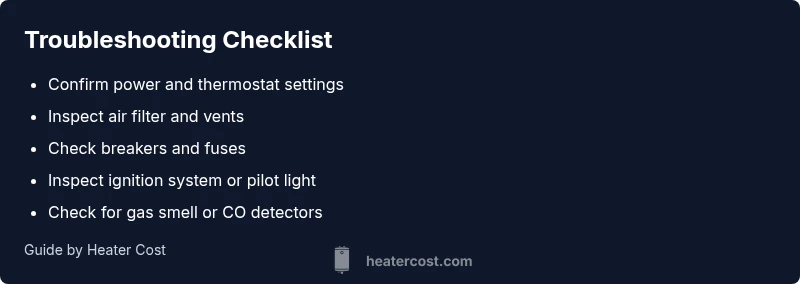
Most heating failures come from simple power, thermostat, or airflow issues, not a broken furnace. Start by confirming the unit is powered on and the thermostat is set above room temperature, then check the air filter and vents. If heat still won’t come, reset the breaker and move to the deeper diagnostic steps. This quick path helps you act fast.
Why the heater doesn’t heat: quick context
According to Heater Cost, when a heater doesn’t heat, the culprit is usually a straightforward power or thermostat issue, an airflow restriction, or a safety interlock. The phrase why heater doesn’t heat surfaces here to anchor your understanding of common failure modes. Understanding the underlying pattern helps homeowners prioritize where to look first and what to rule out before considering professional help. The cost of inaction is wasted energy, higher bills, and colder rooms, so a calm, methodical approach is essential. This guide blends practical checks with safety guidance to help you regain warmth quickly while protecting your equipment.
In most homes, the first step is to verify that the system has power, the thermostat is correctly configured, and airflow paths are open. Even a very small issue—a dirty filter, a tripped circuit, or a misreading thermostat—can keep heat from circulating. By identifying the symptom patterns, you can often fix the problem without a service call, saving time and money for you and your household.
Common causes by category
The most frequent causes of “why heater doesn’t heat” fall into a few broad categories. Power and control issues sit at the top: a tripped breaker, blown fuse, or a malfunctioning thermostat can silently block heat. Airflow problems, like dirty filters or blocked vents, reduce perceived warmth and may trigger safety switches. Ignition or burner problems in gas systems or failed heat exchangers can also stop heating without obvious external signs. Finally, safety interlocks—like a closed combustion chamber switch or a faulty limit switch—are designed to protect occupants but can halt heat until addressed. Understanding these categories helps you navigate the diagnostic flow without unnecessary risk. A systematic assessment often reveals a fix you can perform safely, with professional help reserved for more complex issues.
Safety first: when to call a pro
Safety should always come first when diagnosing a heater. If you smell gas, hear unusual noises, notice flame irregularities, or see a carbon monoxide alarm go off, evacuate and call emergency services. For electric heaters, never bypass protective components, and avoid poking around live wiring. If you’re uncertain about any step, or if a basic check doesn’t restore heat, contact a licensed technician. The Heater Cost team recommends a cautious, safety-first approach, especially with gas appliances or complex electrical systems. Safety devices exist to protect you; they should not be disabled for the sake of a quick fix.
Quick checks you can do safely
Before you pick up any tools, run through these checks safely:
- Ensure the thermostat is set higher than room temperature and that the unit is powered on.
- Inspect the air filter; a clogged filter reduces airflow and can cause heat loss.
- Check for closed vents or blocked intake/exhaust paths in the room.
- Reset any tripped switches or circuit breakers to restore power to the unit.
- Look for obvious signs of damage, unusual noises, or burning smells from the unit—if any are present, turn off power and call a technician.
- If you have a gas furnace, never attempt ignition or gas-line work without proper training; rely on a pro for ignition problems.
These checks are designed to be quick, reversible, and safe. If none resolve the issue, proceed to the diagnostic flow and scheduled maintenance steps.
Interpreting symptoms and mapping to causes
When heat is weak or absent, symptoms often map to specific root causes. For example, no heat with a responsive thermostat frequently points to airflow restrictions or a tripped breaker. A cold house with a warm blower implies restricted burner ignition or fuel supply rather than a blown fuse. If the unit runs but cycles off quickly, a high-limit switch or overheat condition may be at fault. By cataloging symptoms (no heat, weak heat, cycles on/off, odd odors) you can narrow the likely causes and choose the right fixes. Across all patterns, start with visible and reversible issues (power, filters, vents) before testing safety interlocks or calling for professional service.
Step-by-step: Most common fix (preview)
The most common fix for “why heater doesn’t heat” often combines a simple airflow and control check with a reset of safety interlocks. In the steps that follow, you’ll verify power, thermostat accuracy, and filter condition, then address ignition or burner concerns if applicable. This section prepares you for the formal STEP-BY-STEP guide, ensuring you’re ready to perform safe, effective maintenance while knowing when to call a pro.
After completing the quick checks, you’ll be prepared to execute a focused fix for the most frequent problem in your home heating system: restricted airflow and a misread thermostat. If the heat remains off, you’ll have a clear path to professional support and cost considerations to discuss with a technician.
Maintenance to prevent future outages
Prevention is simpler than cure. Regular maintenance reduces the likelihood of “why heater doesn’t heat” scenarios and keeps your system operating efficiently. Schedule annual or biannual service for your heating system, replace or clean air filters every 1–3 months depending on usage and filter type, and keep vents unobstructed. For gas furnaces, ensure CO detectors are functional and test them monthly. Establish a simple routine that combines filter changes, therm thermostat checks, and a quick visual inspection of connections and ductwork. Proactive care often translates into lower energy bills and longer equipment life.
What to expect from a professional investigation and cost considerations
If a do-it-yourself approach doesn’t restore heat, a professional assessment is the next best step. A licensed technician will verify electrical connections, gas supply, and control board function, and assess safety interlocks. The cost can vary by region and the complexity of the issue, but you can use this guide to prepare questions and understand the possible scope of work. In general, expect a diagnostic visit to include a system test, parts inspection, and a plan for repair or component replacement. The Heater Cost team emphasizes transparent communication about labor rates and parts, plus guidance on whether a full replacement is more economical than repair for older units.
Steps
Estimated time: 60-90 minutes
- 1
Check power and thermostat
Turn off power, then restore power and confirm the thermostat is set above room temperature. Listen for the furnace blower and ensure the unit cycles on. If it doesn’t respond, proceed to other checks.
Tip: Always start with the easiest check to rule out the simplest cause. - 2
Inspect air filter and vents
Remove the filter and inspect for excessive dust or debris. Clean or replace the filter, and ensure all supply and return vents are open and unobstructed.
Tip: Dirty filters are the most overlooked cause of heat loss. - 3
Reset breakers and safety switches
If the unit has a dedicated breaker, switch it off and on again. Check any reset or high-limit switches for tripped states.
Tip: A reset often resolves minor interlock faults. - 4
Check ignition or burner (gas systems)
For gas systems, verify the pilot light or electronic ignition; look for signs of gas odor only from a safe distance and call a pro if needed.
Tip: Gas work should be left to licensed technicians. - 5
Verify ductwork and airflow
Inspect visible ducts for disconnections or leaks and listen for air escaping; ensure the blower is circulating air properly.
Tip: Leaky ducts waste energy and reduce warmth. - 6
Call a professional if needed
If none of the above fixes restore heat, schedule a professional diagnostic visit to identify less obvious problems like failed ignition modules, blower motors, or heat exchangers.
Tip: Professional help is essential for complex electrical or gas-related issues.
Diagnosis: No heat or weak heat from the heater
Possible Causes
- highPower issue (tripped breaker, blown fuse, power outage)
- highThermostat/settings error or failed sensor
- mediumAirflow restriction (clogged filter, blocked vents)
- mediumIgnition or burner problem (gas/electric)
- lowSafety interlock or limit switch activation
Fixes
- easyReset the circuit breaker or replace the blown fuse; ensure the power switch is on.
- easyVerify thermostat is correctly set and reading room temperature; recalibrate if needed.
- easyClean or replace the air filter and clear all vents.
- mediumInspect ignition/burner and gas supply; do not attempt repairs beyond basic safety checks if you’re not trained.
- mediumTest safety interlocks and limit switches; if fault persists, call a licensed technician.
Got Questions?
What is the first thing I should check when my heater won’t heat?
Start with power and thermostat: ensure the unit is powered on and the thermostat is set higher than the room temperature. If heat doesn’t appear, check the air filter and breakers as next steps.
First, check power and the thermostat. If there’s no heat after that, inspect the filter and breakers before calling a pro.
Can a dirty filter really stop heat?
Yes. A clogged filter can restrict airflow and cause the system to shut down to protect itself. Replacing or cleaning the filter often restores heat.
A dirty filter can stop heat by blocking airflow. Clean or replace it and test again.
Why won’t a gas furnace ignite properly?
Issues with the gas supply, ignition system, or faulty safety interlocks can prevent ignition. Do not attempt repairs; call a licensed technician for gas-related problems.
Gas ignition problems require a professional—don’t try to fix gas lines yourself.
Is it safe to ignore a burner that cycles on and off?
Frequent cycling can indicate improper ignition, airflow issues, or thermostat faults. It’s a warning sign—have a professional inspect soon.
If the heater keeps cycling, get it checked to avoid safety risks.
When should I replace my heater instead of repairing it?
If repair costs approach or exceed a significant percentage of replacement or the unit is old, replacement is often the smarter choice. Consider efficiency and energy costs.
If repairs pile up or efficiency drops, replacement may be wiser.
What maintenance reduces future problems the most?
Regular filter changes, annual professional inspections, and keeping ducts clean are the best ways to reduce unexpected outages and keep efficiency high.
Regular maintenance helps prevent future heating problems and saves energy.
Watch Video
The Essentials
- Troubleshoot in order: power, thermostat, airflow.
- Safety devices protect you—don’t disable them.
- DIY fixes work for common issues, but call a pro for gas/electrical faults.
- Regular maintenance reduces the chance of future outages.