House Heater Not Working: Troubleshooting & Fixes
Learn fast, practical steps to diagnose and fix a house heater not working. This urgent guide covers safety checks, common causes, when to call a pro, and tips to prevent future outages.


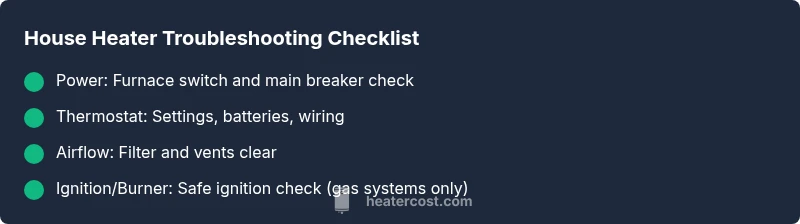
Most heater failures start with basic safety checks and a simple power/thermostat review. Begin by verifying power to the furnace, resetting any tripped breakers, and confirming the thermostat is correctly set. If you smell gas, hear banging, or the furnace won’t ignite after these checks, stop and contact a licensed pro immediately.
Immediate Safety and Quick Checks
When your house heater isn’t delivering heat, safety comes first. If you smell gas, hear hissing, or detect a strong burning odor, evacuate and call emergency services and your gas company right away. For all other cases, start with power and control checks. Ensure the furnace switch near the unit is in the ON position, validate that the home’s main breaker hasn’t tripped, and reset any blown fuses if applicable. If you rely on a smart thermostat, verify that it’s online, connected, and showing the correct setpoint. Do not bypass safety devices or perform repairs beyond your experience level.
Key safety steps in this block include: confirming power supply, checking for gas safety signals, and ensuring CO detectors are functioning. These checks prevent dangerous situations and lay the groundwork for more in-depth troubleshooting. The Heater Cost team emphasizes that safety rules are non-negotiable when dealing with gas furnaces or electrical components.
Pro tip: If the unit is new, consult the manufacturer’s safety guide before touching internal components. If you’re unsure about any step, pause and seek professional help.
Quick Checks You Can Do Right Now
Here are practical checks you can perform without special tools to identify the most common culprits:
- Verify thermostat settings: ensure the mode is set to heat, the temperature is higher than the current room temperature, and batteries are fresh if your thermostat is battery-operated.
- Inspect the circuit: locate the furnace’s disconnect switch and the main service panel. Toggle the breaker OFF and then ON to reset power to the system.
- Confirm ignition status (for gas systems): listen for a clicking sound indicating ignition; if the pilot light is out, relighting may be necessary according to the manufacturer’s instructions.
- Check air flow: look at the air filter; a dirty or clogged filter reduces airflow and can trip safety limits. Replace or clean the filter if needed.
- Look for obvious blockages: ensure the outdoor condenser is clear of snow, leaves, or debris and that any condensate lines are free-flowing.
If these checks don’t restore heat, proceed to more detailed diagnosis and consider scheduling a professional inspection.
Common Causes of a House Heater Not Working
Many heating failures fall into a handful of predictable categories. Understanding these helps you prioritize fixes and communicate clearly with technicians:
- Power and control issues: a tripped breaker, blown fuse, or a faulty smart thermostat can prevent the unit from starting.
- Thermostat problems: incorrect wiring, dead batteries, or a malfunctioning sensor can keep the system from recognizing a demand for heat.
- Ignition or burner problems: an ignition failure, pilot light out, or dirty burners can stop heat production in gas furnaces or boilers.
- Airflow restrictions: a clogged filter, blocked vents, or a malfunctioning blower can impede heat distribution and trigger safety shutoffs.
- Gas supply and venting: insufficient gas supply, closed valves, or vent blockages can prevent ignition or cause CO buildup hazards.
The Heater Cost team notes that while these are common, safety concerns around gas and electrical components require careful handling and professional assessment when in doubt.
Diagnostic Questions and Flow: Symptom to Diagnosis
A structured diagnostic approach helps isolate the root cause without unnecessary repairs. Start with observable symptoms and move toward fixes:
- Symptom: No heat or no ignition. Question: Is the thermostat signaling heat? Is the furnace responding to requests?
- Symptom: Frequent cycling or short cycling. Question: Is airflow restricted or is the limit switch tripping repeatedly?
- Symptom: Discolored flame or unusual smoke. Question: Is there a gas/ignition issue or a dirty burner?
- Symptom: Unusual noises (bangs, rattles). Question: Are ducts, the blower, or the burner assembly loose or worn?
Based on answers, you’ll typically land in one of these diagnoses: power/control fault, thermostat issue, ignition/burner problem, airflow restriction, or gas/venting concerns. Always document the symptom and the date it began to help the technician.
Step-by-Step: Fixes for the Most Common Issue
This section gives a practical sequence to address typical failures, with safety in mind. Follow each step in order and stop if you encounter a safety warning.
- Confirm power and reset. Turn off power to the furnace at the disconnect box, wait 30 seconds, then switch it back on. If the system has a reset button, use it per the manual.
- Tip: Keep a note of any breaker trips or fuse changes to share with the pro.
- Check and test the thermostat. Replace batteries if needed, verify wires are intact, and re-sync with the HVAC system. If possible, try a separate thermometer or a known-good thermostat to compare readings.
- Tip: If the thermostat is old or unresponsive, upgrading to a programmable or smart model can improve reliability.
- Inspect the air filter and airflow paths. Replace dirty filters and ensure supply/return registers are unobstructed.
- Tip: Establish a quarterly maintenance habit to prevent airflow problems.
- Inspect ignition or burner components (gas systems only). Look for a muted flame, delayed ignition, or excessive soot. If ignition malfunctions persist, do not attempt to repair the burners yourself.
- Tip: Never override safety controls; if ignition won’t engage, call a licensed technician.
- Examine venting and condensate drainage. Clear any blockages and confirm proper drainage to avoid backflow and pressure issues.
- Tip: Blocked vents can lead to CO buildup—install or test CO detectors regularly.
- When all basic checks fail, call a professional. Provide the symptom timeline, any error codes, and steps you’ve already taken. A licensed tech can diagnose ignition, control boards, electrical connections, and gas safety with proper equipment.
- Tip: Schedule preventive maintenance to reduce sudden outages.
Safety First: TIPS & WARNINGS
- Always prioritize safety before attempting any fixes. If you smell gas, hear hissing at the gas line, or experience CO detector alarms, evacuate and contact emergency services immediately.
- Never bypass safety switches or controls to force operation. Modern furnaces include protective features that may shut the system down to prevent hazards.
- Handle gas appliances only if you are trained and qualified. If you’re unsure, opt for a professional inspection.
- Keep children and pets away during troubleshooting, especially near gas lines and electrical panels.
- Use CO detectors on every level and test them monthly. Poor ventilation or venting problems can cause dangerous CO buildup.
Key Preventive Maintenance to Extend Lifespan
Proactive maintenance reduces the likelihood of cold snaps turning into breakdowns. Integrate these practices into your annual routine:
- Schedule professional inspections annually, including burner cleaning, ignition testing, and safety checks.
- Replace air filters every 1–3 months, depending on usage and filter type.
- Keep the outdoor unit clear of debris and ensure the condensate line is unobstructed.
- Update thermostat programming to optimize energy use while maintaining comfort.
- Inspect the chimney or venting system for obstructions and proper sealing, especially after storms or heavy winds.
Steps
Estimated time: 45-60 minutes
- 1
Verify safety and power
Turn off the furnace at the switch, then the breaker. Wait 30 seconds and restore power. If there’s a reset button, use it per the manual. Confirm there’s no gas odor before proceeding.
Tip: Document any breaker trips or fuse changes for the technician. - 2
Check the thermostat
Ensure the thermostat is set to heat, the temperature is above room temp, and that batteries (if any) are fresh. If available, test with a known-good thermostat.
Tip: A simple reset of the thermostat can sometimes resolve miscommunications with the furnace. - 3
Inspect air filtration and intake
Remove and inspect the air filter; replace if dirty. Check supply and return vents for blockages and remove any obstructions.
Tip: A clean filter improves airflow and reduces cycling issues. - 4
Inspect ignition and burner (gas systems only)
Listen for ignition clicks and inspect for a steady flame. If the flame is yellow or inconsistent, do not attempt major repairs—professional service is recommended.
Tip: Ignition problems can indicate burner buildup or safety interlocks. - 5
Check condensate and venting
Ensure condensate lines aren’t clogged and that outdoor vents are clear. A blocked vent can trigger safety shutoffs.
Tip: Blocked venting can lead to CO buildup; never ignore alarms. - 6
Call a professional if unresolved
If heat still won’t start after basic checks, schedule a service call. Provide symptom history and the steps you’ve taken.
Tip: Professional evaluation can safely diagnose electrical, gas, and control board issues.
Diagnosis: House heater won't start or produce heat
Possible Causes
- highPower issue (tripped breaker or blown fuse)
- highThermostat setting or faulty thermostat
- mediumIgnition/burner problem (gas systems)
- lowAirflow restriction (clogged filter or blocked vents)
- lowGas supply/venting issue or CO risk
Fixes
- easyReset the furnace disconnect and main breaker; replace blown fuses as needed
- easyTest and replace thermostat batteries or upgrade the thermostat
- mediumRelight pilot light or service ignition system with gas safety precautions
- easyReplace or clean the air filter and clear obstructions in ducts
- mediumCheck gas supply and venting; call a pro if you detect gas odor or unsafe conditions
Got Questions?
Why won’t my house heater start even though the thermostat seems fine?
The problem could be power-related, a tripped breaker, or a faulty thermostat. Check the breakers and wiring, and test with a known-good thermostat if possible. If issues persist, a professional inspection is recommended.
If the thermostat seems fine but the heater won’t start, check power at the furnace and try a different thermostat to rule out control issues.
Can I safely relight a pilot light myself?
Relighting a pilot light is sometimes possible with the manufacturer’s instructions. If you smell gas or are unsure, do not attempt it—call a pro for safety.
Relighting a pilot is possible in some systems, but if you’re unsure or smell gas, prefer professional help.
What does it mean if I hear banging or popping noises from the furnace?
Noises can indicate duct issues, loose components, or burner problems. If gaps or unusual sounds persist, turn off power and contact a technician.
If you hear banging, turn off power and call a professional to inspect the burner and ductwork.
How often should I service my heater?
Annual professional maintenance is recommended, with monthly filter checks and seasonal inspections before peak heating periods.
Most experts suggest a yearly professional check, plus regular filter maintenance.
If a gas smell is detected, what should I do?
Immediately evacuate, call your gas company and emergency services. Do not operate electrical switches or try to relight anything until cleared by professionals.
Leave the area, call for help, and never ignore a gas smell.
My CO detector goes off; what should I do?
Move to fresh air immediately and call emergency services. Do not return until the area is declared safe by professionals.
If CO alarm sounds, exit quickly and contact emergency services.
Watch Video
The Essentials
- Safety first before any troubleshooting
- Start with power, thermostat, and airflow checks
- Relight or ignition fixes require caution with gas appliances
- Venting and CO risks demand professional evaluation
- Preventive maintenance reduces future outages