What to Do When Your Furnace Stops Working
Urgent guide to diagnose and fix a furnace that won't heat. Step-by-step checks, safety tips, and when to call a pro for lasting warmth.


If your furnace stops working, start with the basics: check the thermostat settings, replace the air filter, and reset the circuit breaker. If there’s no heat after these easy checks, inspect the gas supply valve and listen for unusual noises. If safety concerns arise, or the issue persists, contact a licensed HVAC technician.
Immediate steps when your furnace stops working
When you’re faced with a cold home, the question often comes down to what to do when furnace stops working. This section outlines quick, safe actions you can take to restore warmth and reduce damage risk. According to Heater Cost, start with power and control checks, then move to simple maintenance tasks you can perform without special tools. Keeping safety at the forefront is essential: never ignore a gas smell or hissing sound, and always shut off power if you suspect a short or electrical fault. As you proceed, document what you find so a technician can work efficiently if you need professional help. The goal is to restore comfort while avoiding unnecessary repairs or unsafe situations.
Quick checks to restore warmth
- Verify the thermostat is set to Heat and the temperature is higher than the room temperature. If the thermostat uses batteries, replace them.
- Check the furnace’s power switch and the circuit breaker. A tripped breaker is a common cause of a no-heat condition and can be reset safely if nothing else seems wrong.
- Inspect and replace the air filter if it’s dirty or clogged. A restricted airflow can cause the furnace to shut down or run inefficiently.
- Listen for unusual noises or smells. A rattling sound may indicate a loose panel or a blower issue; a gas odor requires urgent action and professional inspection.
Identifying the most likely culprits
While the exact cause varies, the most common reasons a furnace stops working are power or control issues, thermostat misreads, and airflow problems. A safe, methodical approach starts with power and control checks and moves to more specific diagnostics only if the basic steps don’t restore heat. Throughout, remember that safety is non-negotiable: if you detect a gas smell, shut off the gas valve, evacuate if needed, and call the gas utility or emergency line. As you troubleshoot, keep a simple log of what you tested and what happened to help a technician.
Tip: If you have a smart thermostat, confirm it’s communicating with your furnace. Network issues can spoof a non-responsive system even when the furnace itself is OK.
Safety first: when to call a pro
If you smell gas, hear a hissing sound, or see a flame that looks unusual, leave the area immediately and call the gas company or emergency services. Do not attempt complex repairs yourself on gas-fired systems. For all other issues that persist after basic checks, schedule a visit from a licensed HVAC technician. Regular seasonal maintenance can prevent many common failures and extend the life of your furnace.
Steps
Estimated time: 60-90 minutes
- 1
Check power at the furnace
Locate the furnace disconnect or power switch and confirm it’s in the ON position. If you have a circuit breaker panel, look for any tripped breakers and reset them. This is often the simplest fix when the furnace won’t start.
Tip: Take a photo of the panel in case you need to explain it to a technician. - 2
Inspect the thermostat
Ensure the thermostat is set to Heat and at a higher temperature than the current room temperature. If it uses batteries, replace them and re-aim the thermostat to communicate with the furnace.
Tip: If you have a smart thermostat, verify Wi-Fi status and app connection. - 3
Replace or clean the air filter
Remove the furnace access panel and locate the air filter. If it’s dirty, replace it with the correct size. A clean filter improves airflow and helps prevent shutdowns.
Tip: Mark your calendar to check filters monthly during the heating season. - 4
Reset the furnace and thermostat
Turn off power to the furnace for 60 seconds, then restore power. Restart the thermostat and allow the system to attempt ignition again. This can clear minor electronic glitches.
Tip: Avoid rapid power cycling; a full minute is enough to reset most controllers. - 5
Check the gas supply and ignition
If you have a gas furnace, verify the gas valve is open. If you smell gas or the flame won’t light, do not proceed—evacuate and contact the gas company or emergency services.
Tip: Ignition problems can be caused by dirty burners or sensor issues—these require professional service. - 6
Inspect venting and condensate line
Ensure exhaust vents are not blocked and condensate lines (for high-efficiency units) are clear. A blocked vent can prevent ignition and trigger safety shutdowns.
Tip: Never use tools to forcibly clear vents; call a pro if you’re unsure. - 7
Listen for errors and test cycles
Pay attention to any error codes or flashing lights on the furnace control board. Note the sequence of events during a restart to help the technician diagnose the issue.
Tip: Write down error codes and any unusual sounds or smells. - 8
If it still won’t run, call a professional
When basic steps fail or you encounter gas, persistent ignition problems, or unusual noises, professional diagnosis is essential for safety and reliability.
Tip: Ask about maintenance plans to prevent future outages.
Diagnosis: Furnace won't heat or won't stay on
Possible Causes
- highPower issue or tripped circuit breaker
- highThermostat misreadings or improper settings
- mediumDirty air filter constricting airflow
- mediumGas supply valve closed or ignition/igniter problem
- lowBlower motor or pressure switch fault
Fixes
- easyReset the circuit breaker and verify power to the furnace
- easyDouble-check thermostat settings and batteries, then re-sync with the furnace
- easyReplace dirty air filter and ensure the return ducts are clear
- mediumInspect gas valve position and listen for ignition; if igniter or gas issue is suspected, call a pro
- hardTest the blower and pressure switch with basic safe checks; professional help if unsure
Got Questions?
Why won’t my furnace turn on even though the thermostat shows heat?
This can be caused by a dead thermostat battery, a miscommunication between the thermostat and furnace, or a tripped breaker. Start with battery replacement, re-sync the thermostat, and confirm the furnace is receiving power.
If your thermostat isn’t triggering heat, check batteries, re-sync, and ensure power is flowing to the furnace.
I smell gas. What should I do?
Leave the area immediately, avoid flames or switches, and call your gas utility or emergency services. Do not attempt to relight the furnace.
If you smell gas, evacuate and call the utility or emergency services right away.
How often should I replace my furnace filter?
Check the filter monthly during heating season and replace it when dirty. A clean filter improves heat delivery and reduces wear.
Check monthly and replace when dirty to keep heat steady and reduce strain on the system.
Can I prevent furnace failures in winter?
Regular maintenance, filter changes, and prompt attention to odd noises or drafts help prevent outages. Consider a professional tune-up once a year.
Keep up with annual maintenance and quick checks to catch problems early.
When should I replace my furnace rather than repair it?
If repairs exceed a significant portion of replacement cost or the system is old, replacement is often more cost-effective and reliable.
If repair costs pile up or the unit is old, replacement may be the smarter long-term choice.
What safety measures should I take after a furnace outage?
Turn off the furnace if you’re unsure about ignition or gas lines, keep space heaters away from combustibles, and ensure proper CO detectors are installed and functioning.
Turn off uncertain systems, keep heaters away from combustibles, and check CO detectors.
Is DIY repair recommended for a furnace problem?
Some basic maintenance tasks are DIY-safe (like filter changes), but most repairs—especially ignition, gas, or electrical issues—should be handled by a licensed professional.
Basic maintenance is fine to do yourself, but most repairs require a pro.
What should I include in a professional service visit?
Ask for a full inspection, safety test, and filter replacement if needed. Inquire about a maintenance plan to reduce future outages.
Get a full safety inspection and discuss a maintenance plan for next time.
Watch Video
The Essentials
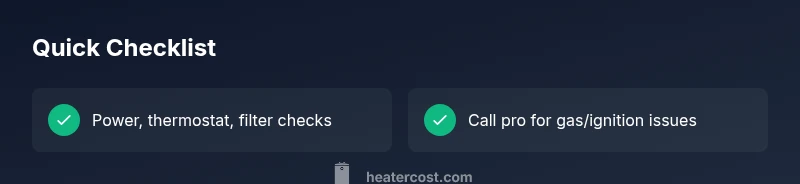
- Act safely first; power, thermostat, and filter are the most common fixes.
- If gas is involved or you smell gas, evacuate and call for help immediately.
- Keep up with routine maintenance to minimize future outages.
- Professional service is essential for ignition, gas, and structural issues.
- Use a simple maintenance log to prevent repeat problems.