Why Does My Heater Stop Working Sometimes? A Homeowner’s Troubleshooting Guide
Urgent, practical troubleshooting for intermittent heater failures. Learn quick checks, a diagnostic flow, and step-by-step fixes to restore warmth safely in 2026.


If your heater stops working sometimes, the quickest path to relief is to start with the basics: check thermostat accuracy, confirm the power supply and circuit breaker status, and inspect and replace a dirty air filter. If the issue persists, move into the diagnostic flow to identify the most likely cause and apply safe, practical fixes. This proactive approach can save time and prevent unsafe DIY mistakes.
Why intermittent heater failures happen
When a heater stops working sometimes, it’s often a signal from your system rather than a total breakdown. The most common culprits are thermostat misreads, airflow restrictions, or power inconsistencies. A modern heating system relies on coordinated subsystems: sensors, controls, the blower, and the fuel or electrical supply. A single weak link can cause brief outages or cycling issues. If you’re wondering why does my heater stop working sometimes, the root cause often hides in plain sight—an out-of-date thermostat, a clogged air path, or a tripped power switch. By focusing on these areas first, you can resolve many intermittent failures without expensive service calls, especially during cold snaps when every hour of warmth matters.
Common culprits in residential heating systems
- Thermostat or control problems: miscalibration, dead batteries, or loose wiring can cause the system to shut down or misread room temperature.
- Airflow restrictions: a dirty air filter, clogged return ducts, or blocked vents reduce airflow and trigger safety shutoffs.
- Power issues: tripped breakers, loose connections, or an aging circuit that can intermittently cut power to the furnace.
- Fuel or ignition problems (gas furnaces): faulty ignition, gas valve sticking, or burner issues can cause intermittent shutdowns.
- Safety interlocks and sensors: pressure switches, limit switches, or flame sensors failing can halt operation until the fault is resolved.
If you’re asking why does my heater stop working sometimes, these areas are the most likely culprits to investigate first.
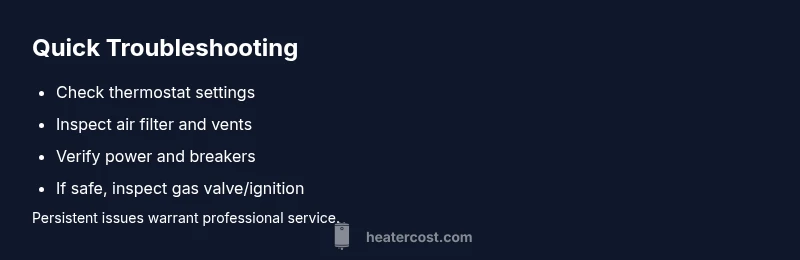
Safe quick checks you can do today
- Verify the thermostat is set to heat and the target temperature is comfortably above room temperature; if needed, recalibrate or replace batteries.
- Check the power supply: ensure the furnace switch is ON, the outlet is live, and the breaker hasn’t tripped. Do not reset a breaker that repeatedly trips; investigate the load or wiring first.
- Inspect the air filter and intake vents: replace a dirty filter and clear any obstructions to restore proper airflow.
- Look for obvious gas and ignition signs (if you have a gas furnace): ensure the gas valve is open and there are no gas smells; if you detect gas, evacuate and call your gas company immediately.
- Listen for the furnace blower: unusual noises or no fan at start can indicate a failing blower motor or control board needing evaluation.
These checks are quick, low-risk steps you can perform before moving into more involved troubleshooting.
Diagnostic flow overview
A structured diagnostic flow helps you translate symptoms into likely causes and practical fixes. Start with the simplest checks and progress to targeted tests:
- Symptom gathering: When and how does the issue occur (all the time, only during very cold snaps, after a certain period of operation)?
- Quick elimination: Power, thermostat, and airflow are the first lines of evidence. If these are healthy, move to fuel/ignition and safety sensors.
- Targeted testing: If you notice a specific behavior—for example, the burner failing to ignite—focus on ignition components and gas flow. If the furnace cycles on but the blower doesn’t, inspect the blower motor and belt.
- Safe fixes and escalation: Apply straightforward, low-risk fixes first (airflow, thermostat, power). If the problem involves gas, flame sensing, or electrical wiring, contact a professional.
This flow helps you avoid chasing random causes and keeps safety at the forefront.
Step-by-step fix for the most likely cause
If a dirty air path or thermostat issue is the root cause, follow these steps to restore reliable operation:
- Turn off power to the furnace at the service panel.
- Replace the air filter with a fresh one of the correct MERV rating for your home; check if the filter is seated properly.
- Clean the blower compartment and inspect for dust buildup on the blower wheel.
- Reconnect any loose thermostat wires, or replace battery-powered thermostats if necessary.
- Restore power and run the system to observe cycling, listening for normal burner operation and airflow.
- If issues persist, record symptoms and consult a professional to inspect controls and sensors.
Tip: Never bypass safety controls or modify wiring. If you’re unsure, stop and call a professional.
Safety and professional help you might need
Safety is non-negotiable when dealing with heating equipment. Gas furnaces pose carbon monoxide risks; electrical components can present shock hazards. If you smell gas, hear hissing, detect persistent gas leaks, see discolored wiring, or notice fluctuating flames, exit the area and call your utility or a licensed technician. Do not attempt to repair gas valves, ignition modules, or the control board unless you are trained. For electrical work, ensure the power is off and use proper PPE when inspecting access panels.
Prevention: maintenance tips to prevent recurrence
- Schedule seasonal maintenance with a licensed technician before winter. A professional can clean burners, test safety sensors, and verify the heat exchanger’s integrity.
- Change filters regularly, typically every 1-3 months depending on usage, filter type, and household conditions.
- Keep vents and returns clear of furniture and clutter to maintain steady airflow.
- Install and test carbon monoxide detectors near the heating system; replace batteries annually and test monthly.
- Note and track any unusual noises, odors, or flickering lights; early reporting helps prevent larger failures.
What to expect during a professional visit
A technician will typically perform a safety inspection, diagnose ignition or sensor faults, verify electrical connections, test switches and limit controls, and assess airflow. They may need to access the furnace cabinet, verify gas pressure (for gas systems), and check venting integrity. Expect a written assessment, a recommended fix plan, and a transparent price estimate before any work begins. Having a recent maintenance history helps the technician isolate intermittent issues more quickly.
Quick maintenance routine you can perform monthly
- Inspect and replace or clean air filters; vacuum around the furnace to reduce dust.
- Check the thermostat accuracy and battery status; recalibrate if necessary.
- Ensure all intake and exhaust vents are unobstructed.
- Listen for abnormal noises during startup and operation; note any voltage fluctuations in the electrical panel.
- Confirm CO detectors are functioning and within sensor life expectancy.
A simple monthly routine reduces the chance of unexpected outages and extends the life of your system.
Steps
Estimated time: 60-90 minutes
- 1
Power and safety check
Turn off the furnace at the service panel and confirm the area is safe. Check the external disconnect and ensure no water or debris is near electrical components. If you’re unsure about wiring, stop and call a pro.
Tip: Never bypass safety switches; they protect you and your home. - 2
Thermostat verification
Set to heat and higher than room temperature. If it’s programmable, verify the schedule. Replace batteries if needed and ensure the wires are securely connected.
Tip: Consider a smart thermostat to improve reliability and diagnostics. - 3
Airflow check
Inspect the air filter and replace if dirty. Check that supply and return vents are open and unblocked. Vacuum around the furnace area to reduce dust.
Tip: A clean filter can improve efficiency dramatically. - 4
Fuel/ignition check (gas systems)
If you have a gas furnace and you can do so safely, check for burner ignition. Do not attempt to diagnose gas leaks; if you smell gas, evacuate and call the gas company immediately.
Tip: Never work near gas lines without professional training. - 5
Safety interlocks assessment
Look for a tripped limit switch or a faulty flame sensor. If any safety device trips, reset only according to the manual, and if it repeats, call a professional.
Tip: Do not bypass safety devices to run the unit. - 6
Test run and monitoring
Restore power and run the system for 15-20 minutes. Listen for normal burner ignition, steady flame, and consistent blower operation. Note any unusual sounds or odors for follow-up.
Tip: Keep a record of cycling behavior to share with a technician.
Diagnosis: Heater stops working intermittently
Possible Causes
- highThermostat or control system issue
- highDirty air filter or restricted airflow
- mediumPower supply issues (tripped breaker, faulty switch)
- lowFuel supply or ignition problem (gas/oil furnace)
- lowElectrical wiring fault or sensor failure
Fixes
- easyCheck thermostat settings, calibrate, and replace batteries if needed
- easyReplace or clean air filter and clear blocked vents
- easyReset the circuit breaker and verify furnace power connections
- mediumInspect gas valve and ignition module only if trained; call a pro if unsure
- mediumInspect venting for blockages and signs of exhaust problems
- mediumIf symptoms persist, contact a licensed technician for a full diagnostic
Got Questions?
What are the most common reasons a heater stops working intermittently?
Intermittent failures are often caused by thermostat issues, airflow problems from dirty filters, or power issues. Gas furnaces may have ignition or gas valve problems. Start with safety checks and basic maintenance.
Common causes include thermostat problems, airflow issues, and power or safety switch failures.
Should I reset the thermostat or the furnace?
Yes, try resetting the thermostat by turning it off and on. If problems persist, perform a controlled restart of the furnace following the manual or contact a technician.
Yes—start with a thermostat reset, then see if the furnace needs professional help.
Can a dirty air filter cause the heater to stop working?
Absolutely. A clogged filter restricts airflow, which can cause overheating and trigger safety shutoffs. Replace the filter and clear vents.
Yes. A dirty filter can trigger overheating and shutdown.
Is it safe to work on a gas furnace myself?
Only if you have proper training. Gas work carries carbon monoxide and fire risks. When in doubt, hire a licensed technician.
Gas furnace work should be left to professionals.
When should I replace my heater instead of repairing?
If repairs are frequent or the system is old, replacement is often the smarter choice. A professional can help evaluate life expectancy and cost.
When repairs happen often or the unit is old, replacement may be best.
Watch Video
The Essentials
- Start with power, thermostat, and airflow checks.
- Do not bypass safety devices or electrical wiring failures.
- Use a diagnostic flow to identify the most likely cause.
- Call a professional for gas, ignition, or control-board issues.