What to Do When Your Heater Sounds Like Water Running
Urgent guide to diagnose and fix a heater that sounds like water running, with safe checks, a diagnostic flow, step-by-step repairs, and prevention tips for homeowners, renters, and property managers.


The most likely cause is air trapped in the hydronic loop or boiler, which makes water-like rushing noises. In a pinch, turn off the system and bleed air from radiators or the boiler drains, then recheck pressure. If the sound persists, proceed with the diagnostic flow and call a pro if you can't purge the air.
What the phrase 'heater sounds like water running' usually indicates
If your heating system makes a noise that reminds you of rushing water, your first instinct is to worry about leaks. In many homes, this sound isn't water leaking from a pipe; it's air moving through water-filled pipes or a piece of equipment struggling to circulate. The keyword heater sounds like water running captures a common scenario for both hydronic boilers and some forced-air systems that use a water-based coil or dampener. In short, the sound typically means one of these issues: air trapped in the lines, water hammer from fast valve closure, a pressure problem in the boiler or expansion tank, or loose piping vibrating against the framing. Urgency is warranted when you notice any damp spots, steam, or a sudden drop in system pressure; these signs can indicate a more serious fault. For homeowners, renters, and property managers, recognizing the difference between a harmless air burp and a dangerous leak is essential. Heater Cost analysis shows that most noise problems can be resolved without expensive repairs by following a careful diagnostic flow.
Quick safety checks you can perform today
- Power down the heating system and, if applicable, switch off the boiler or furnace at the breaker. Do not touch live wires.
- Locate where the sound originates: boiler, circulating pump, or radiators. Note the pattern: continuous, pulsing, or intermittent.
- Look for obvious signs of trouble: wet spots, condensation, or frost around outdoor components; a gas odor is a separate emergency.
- Check the pressure gauge on the boiler. Most residential hydronic systems run around 12-15 psi when cold; if the reading is far outside this range, avoid running the system and seek professional help.
- Attempt safe air bleeding only of accessible radiators or boiler bleed valves. Have a towel ready for any hot water.
- If you feel unsure or the noise continues after these checks, contact a licensed technician promptly.
The most common causes explained
Air in the system: The leading cause is air trapped in the hydronic loop or boiler, which creates gurgling or rushing sounds as water moves past air pockets. Water hammer: Rapid valve closures or sudden demand changes can cause a hammer effect, producing loud bangs or rushing noises. Expansion tank issues: A waterlogged or undercharged expansion tank can fail to absorb pressure changes, leading to strange noises. Pump cavitation or vibration: A failing circulator pump or loose mounting can produce whines, thumps, or chattering. Loose pipes or components: Vibration from unsecured pipes striking framing can imitate water sounds. Open purge valves: If a purge or drain valve is left slightly open, flowing water can be heard. Each cause has a distinct diagnostic path, but air-related noises are by far the most common in homes.
Diagnostic approach: flowchart-style checks
- Confirm symptom: Is the noise tied to heating cycles, water flow, or only when the boiler starts or stops?
- Check system pressure: Compare with the recommended range; adjust if necessary following manufacturer guidance.
- Listen to the source: Is the sound coming from the boiler, radiators, or the pump?
- Inspect for leaks or dampness: Look under equipment and along pipes for moisture.
- Isolate the sound source: Use a stethoscope or long screwdriver to trace vibration to a valve or section of piping.
- Decide next steps: If air is suspected, plan to purge; if pressure or leaks are suspected, involve a professional.
Step-by-step fixes for the most common cause
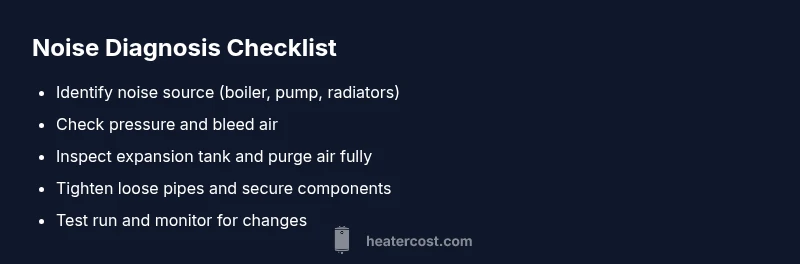
- Power down and ensure safety: Turn off the thermostat, switch off the boiler at the breaker, and lock out electrical power to prevent accidental restart.
- Bleed air from the system: Starting at the highest radiator or the boiler bleed valve, slowly open the valve until a steady stream of water (no air) flows out.
- Check and adjust system pressure: After bleeding, check the pressure gauge; add water carefully to bring it into the recommended range if it’s low.
- Inspect the expansion tank: If the tank is waterlogged or shows improper pressure, it may need replacement or recharging by a professional.
- Secure loose components: Tighten loose pipes, clamps, and brackets that may be vibrating against the structure.
- Purge remaining air: Use a purge station or follow a purging procedure to remove trapped air from the loop.
- Test the system: Reconnect power and run the system through a full cycle; listen for changes and confirm no new leaks appear.
- Call a professional if unresolved: If the noise persists after these steps, a licensed technician should diagnose more complex issues like internal pump problems or buried leaks.
Safety reminders and prevention tips
- Never bypass safety devices or operate a gas-fired system with obvious leaks or smells. Abort if you smell gas and call emergency services.
- Regular maintenance reduces noise: annual inspections, boiler service, and cleaning of burners or heat exchangers help prevent air buildup and friction.
- Use the correct bleed procedure: Bleed valves can release hot water; wear protective gloves and keep children away.
- Document changes and readings: Note pressures, dates, and any noises to help a technician diagnose the root cause faster.
Prevention, maintenance, and safety reminders
Proactive maintenance is the best defense against recurring water-running noises. Schedule annual professional tune-ups, forward-thinking replacements of aging expansion tanks, and periodic bleeding of the system as needed. Keep an eye on pressure levels, listen for changes in cycling patterns, and address leaks promptly. If the room or equipment feels abnormally hot or if you smell gas, exit and call emergency services immediately. Heater Cost recommends a scheduled maintenance plan to reduce noise, extend system life, and lower energy waste.
Key takeaways and next steps
- Start with safety: power down before any inspection or bleeding.
- Air is the most common culprit; purge air and recheck pressure.
- If noise persists after basic steps, involve a professional to assess expansion tanks and pump integrity.
- Regular maintenance minimizes future noise and keeps your heating system efficient.
Steps
Estimated time: 60-90 minutes
- 1
Power down and safety check
Turn off the thermostat and cut power to the boiler. Verify no live electrical sources are exposed before touching any components.
Tip: Always lock out power during inspection and bleeding. - 2
Identify noise source
Trace the noise to its source—boiler, pump, or radiators—so you know where to start your purge and checks.
Tip: Use a stethoscope or a long screwdriver’s handle to locate the sound safely. - 3
Bleed air from zones
Starting at the highest point in the system, open bleed valves slowly until a steady stream of water flows out without air.
Tip: Have a towel ready and avoid scalding water. - 4
Check system pressure
Observe the pressure gauge and compare with the recommended range; adjust by adding water if low, never exceeding the max.
Tip: Reference manufacturer guidance for exact numbers. - 5
Inspect expansion tank
Assess whether the expansion tank is charged and not waterlogged; replace or recharge if needed.
Tip: A tank test can reveal loss of air charge. - 6
Secure loose pipes and components
Tighten any loose fittings and secure components that vibrate against the structure or framing.
Tip: Avoid overtightening brass or steel threads. - 7
Purging air from the system
If air remains, perform a full purge of the loop using a purge station or proper procedure.
Tip: Follow a step-by-step purge guide to avoid trapping more air. - 8
Test run and monitor
Restart the system and run through a full heating cycle; listen for changes and check for leaks.
Tip: Record readings and sounds for comparison after adjustments.
Diagnosis: Heater or boiler makes loud rushing water noise or water running
Possible Causes
- highAir trapped in the hydronic loop or boiler
- mediumWater hammer from sudden valve closure or steam release
- mediumFaulty expansion tank or incorrect system pressure
- lowLeaking valve or pipe creating noise
- lowLoose components or unsecured piping vibrating
- mediumCirculator pump air lock or pump cavitation
Fixes
- easyBleed air from radiators or boiler through bleeder valves until no air comes out
- easyCheck and stabilize system pressure; recharge if needed to recommended psi
- easyInspect expansion tank; ensure it is properly charged and not waterlogged
- easySecure any loose pipes and mounting; snug fittings, avoid overtightening
- mediumPurging air from the system using a purge station or procedure (professional guidance)
- easyIf noise persists after these steps, call a licensed technician
Got Questions?
Why does my heater sound like water running?
Air in the hydronic system is the most common cause, creating rushing water sounds. Other possibilities include water hammer, expansion tank issues, or loose pipes.
Air in the heating system is usually the culprit. Bleed the air and check pressure, and if the noise continues, a professional should inspect the expansion tank and pump.
Is it dangerous to hear water running in a heater?
The noise can indicate a leak or pressure problem, which can be hazardous. If you smell gas, see liquid water pooling, or notice a burning odor, shut off power and contact emergency services.
While not always dangerous, persistent rushing noise warrants careful inspection and may require professional service.
Can I fix this myself, or do I need a pro?
Many noise sources are addressable with safe DIY steps like bleeding air and checking pressures. However, issues with expansion tanks, pumps, or gas safety should be handled by a licensed technician.
Some fixes are DIY-friendly, but significant components require a pro for safety and code compliance.
What if bleeding air doesn’t stop the noise?
If bleeding air doesn’t stop the sound, the problem may be expansion-tank related or a faulty pump. A professional inspection is advised to avoid water damage or boiler malfunction.
Bleeding is often enough, but persistent noise needs expert assessment.
When should I call a professional?
Call a professional if you detect leaks, gas presence, persistent noise after purging, or abnormal pressure readings outside the recommended range.
Call a technician if you’re unsure, or if the noise remains after basic checks.
Can a water heater cause this kind of noise?
Yes, some noises can originate from a water heater component like a coil or supply line. Distinguish between domestic hot water noise and heating-loop noise to target the right system.
It can be either the central heating loop or the water heater; check both if you’re unsure.
Watch Video
The Essentials
- Bleed air before other fixes.
- Check pressure and expansion tank condition.
- Secure loose pipes to stop vibration.
- Call a professional if noise remains after basic steps.