Where Do Water Heaters Leak From: A Troubleshooting Guide
Learn where water heater leaks typically originate, how to diagnose safely, and practical fixes to prevent costly damage. Heater Cost provides urgent, actionable guidance for homeowners, renters, and property managers.


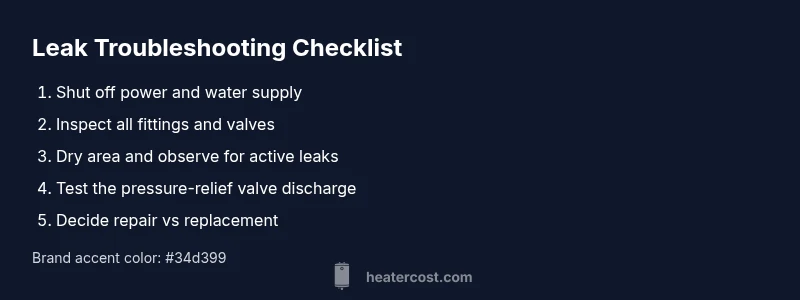
Most leaks come from fittings, valves, or the tank itself. Start by turning off the power and water supply, then inspect the drain valve, pressure-relief valve, and the hot and cold water connections for drips. If the moisture appears on the tank body or is persistent, the unit may be failing and should be evaluated by a professional.
Understanding where do water heaters leak from
When homeowners ask where do water heaters leak from, the answer is usually a small set of common sources. Most leaks trace back to fittings at the cold and hot water lines, the drain valve, or the pressure-relief valve. In some cases, moisture near the unit is just condensation, not a dripping leak from the tank. The goal is to identify the true source quickly so you can choose a safe fix or know when to call a pro. Common sources include loose fittings at supply lines, a faulty drain valve, a faulty pressure-relief valve (T&P), tank corrosion, or moisture forming from condensation on a cold surface. By narrowing to the exact source, you can decide whether a quick tighten, a component replacement, or a full unit replacement is required. Where the leak is coming from also dictates safety steps and the urgency of professional help.
Quick checks you can do safely
Before you touch any parts, ensure your safety. For electric water heaters, switch off power at the breaker; for gas heaters, set the thermostat to the pilot position or switch off the gas supply. Close the main cold-water shutoff to stop new water from entering the tank. Open a nearby hot water faucet to relieve pressure and help the tank drain more easily. Have a bucket and towels ready, and wear gloves. If you smell gas, evacuate immediately and contact emergency services. Do not attempt to disassemble high-temperature components or the T&P valve while the system is pressurized. These precautions protect you from scalding, electrical shock, and gas hazards while you diagnose.
How to identify the exact leak source
The trick is to observe the flow path. Start by drying the area with a cloth and looking for active drips from the top connections, the drain valve, or the discharge line of the pressure-relief valve. If the leak is at a connection, tighten or reseal the fitting with appropriate-approved thread sealant or plumber’s tape. If water appears around the base of the tank after shutting down and draining, the tank may be failing due to corrosion. A careful inspection should also consider condensation, especially in humid spaces; condensation may appear as moisture but originates from humid air cooling on the cold surface, not a leak from the tank itself.
Diagnostic flow you can follow
This flow helps you move from symptom to solution with minimal risk. Start with the symptom: visible water pooling near the heater. If the source is a valve or fitting, you can often fix it by tightening or reseating the part. If the discharge line from the T&P valve is wet, inspect whether it’s actively releasing water due to overpressure or a faulty valve. A slow drip from the drain valve is common after servicing; ensure the valve is fully closed and consider replacing if it leaks. If the tank body shows rust or a large crack, replacement is usually required. If you’re unsure, consult a professional and avoid disassembly that could cause scalding or flooding.
Step-by-step fixes for common leak sources
- Tighten loose fittings at cold/hot water lines. Use a wrench to snug the connection without over-tightening, then wipe dry and monitor. Pro-tip: apply plumber’s tape to threaded connections if leaks persist. 2) Replace a faulty drain valve. Shut off water, drain a portion of the tank, remove the old valve, install a new valve, re-fill, and test for leaks. 3) Test and replace the pressure-relief valve (T&P). Place a bucket under the discharge pipe, lift the test lever gently to see if water flows; replace the valve if water drips continuously. 4) Check the expansion tank and related fittings if you have one. A failed expansion tank can create pressure that promotes leaks; replace if corroded or waterlogged. 5) If the tank itself is compromised, plan for a full unit replacement. This is usually the safest course when rusted walls or multiple leaks appear. 6) After any repair, re-pressurize the system slowly and monitor for new leaks. Do not rush to restore full operation if you see any sign of dripping again.
Safety and when to call a professional
If you smell gas, hear hissing sounds, or see a major leak, evacuate and call emergency services. Gas or electric heaters with leaks should not be repaired by DIY methods. For uncertain leaks or complex components—like the T&P valve, gas lines, or an aged tank—professional intervention is recommended to avoid injury. Even when fixes seem straightforward, a licensed plumber or heater technician can verify the system’s safety and ensure the repair complies with local codes. When in doubt, err on the side of caution and seek professional help promptly.
Prevention tips to extend water heater life
Regular maintenance reduces the likelihood of leaks. Schedule an annual or bi-annual flush to remove sediment that can contribute to tank corrosion. Inspect hoses and fittings for wear and replace cracked lines. Keep the thermostat at a safe level (typically 120°F/49°C) to reduce stress on the tank and valves. Install or maintain an expansion tank if your system requires one, especially on well-water systems with high pressure. Finally, consider a dedicated water heater shield or protective enclosure to minimize exposure to humidity and heat. Consistent inspection helps catch issues before they become leaks.
Key takeaways
- Leaks usually originate at fittings, drain valves, or the T&P valve. Condensation is not always a leak. - Safety first: power, gas, and water shutoffs are essential. - If the tank shows corrosion or a persistent leak, replacement is often the safest option. - Regular maintenance reduces future leak risk and extends heater life.
Steps
Estimated time: 90-150 minutes
- 1
Power, water, and gas safety check
Power off electric heaters at the breaker, or shut off gas to a gas-fired unit. Close the main cold-water supply, relieve pressure by opening a hot faucet, and have towels ready. This creates a safe baseline before you inspect further.
Tip: Never bypass shutoffs; even a small leak can escalate to flooding. - 2
Isolate and drain the tank
If safe to proceed, isolate the heater and drain a portion of the tank so you can inspect connections without pressure. Attach a hose to the drain valve and direct water to a drain or outside area. Refill later and check for leaks during refill.
Tip: Drain only as much as needed to inspect; excessive draining can waste water and create a bigger mess. - 3
Inspect top connections
Check the hot and cold water lines for signs of dripping or moisture around compression fittings. If fittings are loose, tighten them step by step and re-check after re-pressurizing the system.
Tip: Use thread sealant or PTFE tape only on compatible threaded connections. - 4
Check the drain valve and T&P valve
Close the drain valve fully and monitor for any drip. Lift the T&P valve lever gently to see if it releases water; if it leaks or has rust, plan replacement by a professional.
Tip: Never mock test the T&P valve under full pressure without following safety procedures. - 5
Evaluate the tank condition
If the base area remains damp after the system is pressurized, inspect for rust or pitting on the tank shell. A rusted or bulging tank is typically beyond a repair and should be replaced.
Tip: A professional assessment is advised if you detect any rust or cracks. - 6
Decide on repair vs replacement
For minor, easily fixed leaks, perform the repair and recheck after a few days. If leaks recur, or the tank shows corrosion, plan for a replacement and schedule a professional service.
Tip: Document the repair steps and dates for future maintenance records.
Diagnosis: Visible water pooling or dripping around the water heater
Possible Causes
- highLoose or damaged fittings at cold/hot water lines
- highDraining or discharge from the drain valve
- mediumFaulty or worn pressure relief valve (T&P)
- mediumTank corrosion or crack in the tank body
- lowCondensation mistaken for a leak
Fixes
- easyTighten or reseal loose fittings; replace gaskets if needed
- easyInspect, reseal, or replace the drain valve if leaking
- mediumTest and replace the T&P valve if it leaks continuously
- hardInspect tank for corrosion; plan replacement if the tank is compromised
- easyIf unsure or for gas heaters, contact a licensed plumber or heater technician
Got Questions?
What should I do immediately if I see a water heater leaking?
Shut off power and water, drain slowly if possible, and call a plumber if the leak is large or if gas is involved. Do not touch or disassemble high-pressure components.
Shut off power and water, drain slowly if you can, and call a plumber if the leak is large or involves gas.
Is condensation around a water heater a leak?
Condensation can form on cold surfaces, especially in humid spaces. If moisture is persistent and dampens a large area, it may be a leak and should be checked.
Condensation can happen, but if moisture persists, have it checked for leaks.
How can I tell if the leak is from the tank vs a pipe?
If moisture appears only at a connection, it’s likely a fitting or valve. Leaks at the tank base or shell indicate tank damage. A professional can confirm and safely replace components.
Leaks at fittings mean it’s a valve or pipe; leaking at the tank suggests tank damage and needs professional attention.
Can I fix a leak myself?
Some leaks from fittings or valves can be addressed by a careful homeowner, but leaks from the tank or gas lines require a licensed professional to prevent injury.
Some fixes are DIY-safe, but tank or gas-line leaks need a professional.
How often should I inspect my water heater for leaks?
Inspect visually every few months and perform a formal flush and pressure check yearly or per manufacturer recommendations based on your water quality and system usage.
Check visually every few months and flush yearly as recommended by your heater's manual.
What are warning signs that my water heater is near end-of-life?
Frequent leaks, rusty water, inconsistent heating, and louder-than-normal operation can indicate aging components. Consider a replacement plan in consultation with a professional.
Frequent leaks, rust, irregular heating, or loud operation can signal aging hardware.
Watch Video
The Essentials
- Shut off power and water before inspecting.
- Fittings, drain valve, and T&P valve are common leak sources.
- Tank leaks often require replacement for safety.
- Regular maintenance prevents most leaks.