Water Heater Leak Troubleshooting: Urgent Guide
Urgent guide to diagnosing and fixing a water leak hot water heater, with step-by-step checks, safety precautions, and maintenance tips to prevent costly damage for homeowners.


Most likely, a water leak near a hot water heater is caused by a loose drain valve or a failing T&P relief valve. Start by hand-tightening the drain valve and briefly testing the valve to stop minor drips. If water continues to appear, shut off power or gas and the cold-water supply, then call a licensed plumber for a full assessment and safe repairs.
Why a water leak hot water heater happens
A water leak hot water heater is a red flag that something in your heating system is failing. According to Heater Cost, quick action can prevent water damage and costly repairs. Most leaks originate at simple failure points, such as worn-out valves or gaskets, or from the tank itself once corrosion eats through the metal. The good news: many leaks are slow and repairable if caught early. The downside: ongoing leaks can waste energy and threaten the structural integrity of nearby floors. Start with safe, non-destructive checks you can perform yourself, and know when to call a licensed plumber. In this guide you’ll learn how to differentiate real leaks from condensation, identify likely failure points, and decide whether to repair or replace the unit. Time is critical: a small leak can escalate into major damage within days or weeks, especially in basements or utility closets.
Condensation vs. a real leak: tell the difference
Not every wet patch means a failing heater. Condensation occurs when warm water meets a cooler surface, and it often dries as the system cools. A true leak will continue to drip or pool water even after a pause in usage. To verify, dry the area thoroughly and watch for renewed dampness over the next several hours. Use a tissue to catch droplets and a moisture meter if available. Treat any confirmed leak seriously: a persistent drip can erode flooring and lead to mold. In short, confirm the leak before taking costly repair steps, and lean on a professional if you’re unsure.
Start with the simplest checks: drain valve, fittings, and T&P valve
Begin with the easiest sources of leaks: the drain valve at the bottom of the tank and all nearby fittings. Hand-tighten any loose connections, then slowly open and close the drain valve to observe for drips. Inspect the temperature-pressure relief (T&P) valve and its discharge pipe; a dripping valve here may indicate overpressure, a failing valve, or a blocked discharge line. If you see water staining around pipe joints, tighten or replace gaskets carefully. Remember: only perform simple valve checks if you’re comfortable and the heater is de-energized.
Inspect the tank area for corrosion and external leaks
Check the metal around the tank for rust, pitting, or wet patches that extend beyond fittings. Corrosion can create pinhole leaks that expand over time; even a small area may indicate the tank is compromised. Look at weld seams and the bottom pan for standing water or pooling. If you notice visible corrosion, plan for professional evaluation or a replacement, as a corroded tank is a safety risk and may fail without warning.
Safety first: shutoffs, electrical/gas precautions, and protection for your home
If you suspect a leak, shut off the electrical supply (or the gas valve and pilot light for gas units) and close the main cold-water feed. Do not touch plumbing with wet hands or stand on damp surfaces. Place towels or a bucket to catch drips and protect floors, especially if you have wood or carpet nearby. If you smell gas or hear hissing, evacuate and call emergency services; leaks near a heater are a real safety concern.
Maintenance, prevention, and next steps to reduce future leaks
Regular maintenance can extend the life of your heater and reduce leak risk. Schedule annual inspections of valves and the tank, flush the tank to remove sediment, and replace aging components like gaskets and the drain valve as needed. Keep the area around the heater dry and free of clutter to help you spot leaks early. If the tank shows corrosion, or leaks recur after basic fixes, plan for a replacement and consult a licensed plumber or HVAC technician for a professional evaluation.
Steps
Estimated time: 90-120 minutes
- 1
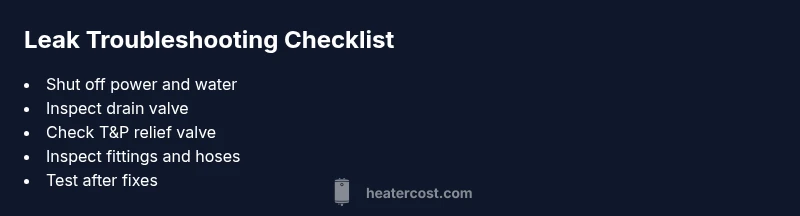
Shut off power, gas, and cold-water supply
To prevent electrocution and flood damage, switch off the heater's power at the breaker (for electric models) or shut off gas and the pilot light (for gas models). Then close the main cold-water valve to stop incoming water. If you cannot reach the shutoffs safely, evacuate the area and call a professional.
Tip: If you smell gas, leave the area immediately and call emergency services. - 2
Check drain valve and nearby fittings for drips
Carefully inspect the drain valve for obvious drips; tighten hand-tight only. Open and close the valve slowly to observe whether drips occur. If leaking continues, you'll need to replace or service the valve.
Tip: Use a bucket to catch drips and place towels to protect floors. - 3
Inspect the T&P relief valve and discharge pipe
Observe the T&P valve for any leakage and ensure the discharge pipe is intact and directed to a safe drain. Do not block the discharge. A leaking valve may indicate overpressure or a faulty valve.
Tip: Do not pressure-test the valve yourself; call a pro if unsure. - 4
Check inlet/outlet connections and hoses
Look for loose nuts, corroded fittings, or cracked hoses. Tighten fittings with appropriate tools and replace worn hoses. After tightening, dry the area and re-check for fresh leaks.
Tip: Always dry and inspect after tightening to confirm stop. - 5
Test refill and power, then observe
Slowly refill the tank and restore power or gas. Watch the area closely for new leaks over the next 15–30 minutes. If leaks resume, stop and proceed to professional evaluation.
Tip: Take photos of work before and after for future reference. - 6
Decide on repair vs. replacement
If leaks persist after basic fixes, or the tank shows rust or significant corrosion, plan for professional assessment or replacement. A failed tank is a safety risk and typically requires a licensed technician.
Tip: Keep documentation of dates, parts, and repairs for warranty and future service.
Diagnosis: Visible water pooling or dampness around the water heater, or a leak from fittings
Possible Causes
- highLoose or damaged drain valve or drain line
- highFaulty or mis-seated T&P relief valve
- lowCracked tank or corroded welds
- mediumLeaking inlet/outlet connections or unions
- lowCondensation mistaken for a leak
Fixes
- easyTighten or replace the drain valve and reseal the drain line
- mediumInspect and replace the T&P valve or discharge pipe if deteriorated
- hardArrange professional tank assessment or replacement if corrosion is visible
- easyTighten or reseal inlet/outlet fittings; replace worn gaskets
- easyUse a moisture detector to confirm active leakage and monitor after fixes
Got Questions?
What should I do first if I notice water pooling around my water heater?
Shut off the power or gas supply and close the cold-water valve immediately, then dry the area and call a plumber if the leak continues. Do not delay, as water damage can escalate quickly.
Turn off power or gas, shut the water supply, dry the area, and contact a plumber if the leak persists.
Is a small drip normal after heating?
A small drip can be condensation, not a true leak. If dripping continues after the system stabilizes, treat it as a leak and follow the safety steps in this guide.
Small drips can be condensation. If it keeps dripping, treat it as a leak and check the valves.
What is a T&P relief valve and why does it leak?
The T&P relief valve protects the tank from overpressure. If it leaks, it may indicate high pressure or a faulty valve; have it inspected by a professional.
The relief valve protects against overpressure; a leak should be checked by a pro.
Can I fix leaks myself or should I hire a plumber?
Tightening simple fittings and replacing worn gaskets can be DIY for some models. Persistent leaks or tank damage require a licensed plumber.
Some fixes are DIY, but persistent leaks need a professional.
How often should I inspect or replace components to prevent leaks?
Regular valve checks and annual servicing help prevent leaks; replace worn parts promptly and keep the area clean and dry.
Regular checks and timely part replacements help prevent leaks.
Watch Video
The Essentials
- Shut off power and water before inspecting.
- Differentiate condensation from a real leak.
- Address valve/relief valve issues promptly.
- Call a professional if corrosion or persistent leaks occur.