When the Water Heater Is Leaking: Urgent Troubleshooting Guide
A practical, urgent troubleshooting guide for homeowners and property managers dealing with a leaking water heater, including safety steps, diagnostic flow, steps to fix common causes, and prevention tips.


If you notice a leak, act fast: shut off power or gas to the water heater, then close the cold-water supply and drain the tank if safe. This quick guide helps you identify the source and take immediate steps before calling a plumber. Remember, safety first—turn off utilities and evacuate any flooded area.
Immediate action when you notice a leak
When the water heater is leaking, time is of the essence. Start by turning off the power at the breaker for electric heaters, or the gas supply to a gas unit. Immediately close the cold-water supply valve to stop more water from entering the tank. If flooding is significant, shut off the home’s main water supply and place towels or a bucket to catch drips. This initial response minimizes water damage and buys you time to assess the situation. According to Heater Cost, safety and speed are the two most important factors in the first 15 minutes of a leak.
Common leak sources in residential heaters
Leaking water heaters don’t always mean a failed tank. The most frequent culprits are the drain valve, the TPR (temperature and pressure relief) valve, loose fittings, or corroded pipes. A small pinhole leak at the drain valve may indicate a worn seal rather than a tank issue. Leaks at the TPR valve can occur after pressure spikes or a faulty valve. Inspect any exposed piping for cracks, loose connections, or mineral buildup.
Assessing the severity safely
Before you touch anything, determine if the leak is ongoing or a one-time dribble. A continuing flow from the drain valve or TPR valve often requires professional inspection, while a temporary leak after a fill cycle can sometimes be addressed with a simple tighten or reseal. If the tank shows rust, bulges, or coating damage, don’t attempt a DIY repair—the risk of a catastrophic rupture is real.
Safe, quick checks you can perform (no disassembly)
- Visually inspect the drain valve for moisture; if it’s damp, try tightening it with a wrench after shutting off water.
- Check the TPR valve outlet and discharge pipe for drips or corrosion.
- Inspect inlet and outlet fittings for looseness; reseal with pipe dope or Teflon tape if needed and permitted by the manufacturer.
- Look for mineral buildup around the base and connections, which can indicate slow leaks.
- Make sure electrical components and wires are dry; never touch a wet electrical box.
When to call a professional
If you notice water pooling around the base, hear hissing from a valve, or see rusting on the tank, contact a licensed plumber immediately. Leaks from the tank itself are not reliably repairable and typically require a full replacement. The Heater Cost team recommends erring on the side of caution when safety risks are present.
Diagnostic flow you can follow (overview)
This flow maps symptoms to likely causes and suggests safe, practical fixes. Start with the simplest check and progress to professional help if the leak persists after each step.
Long-term prevention and maintenance
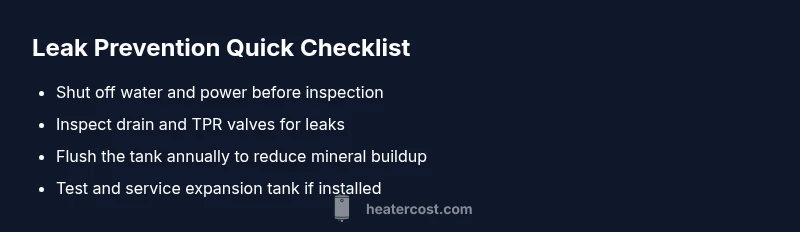
Regular maintenance—annual flushing, inspecting the expansion tank, and testing the TPR valve—significantly reduces leak risk. Install an in-line shutoff valve if you don’t already have one, and consider a drip pan with a safety shutoff for installations in flood-prone areas. Implementing a preventive maintenance schedule can extend the heater’s life and minimize unexpected leaks.
Steps
Estimated time: 60-90 minutes
- 1
Ensure safety: shut off power and water
Locate and switch off the power at the breaker for electric water heaters, or shut off the gas and ensure the thermostat is in the off position for gas models. Then close the cold-water supply valve to stop more water from entering the tank.
Tip: Never bypass safety devices; if you smell gas or hear hissing, evacuate and call emergency services. - 2
Locate the leak source
Dry the area, then observe where moisture originates—drain valve, TPR valve, fittings, or the tank body. Note any puddling or dripping patterns to help determine whether a quick fix is possible.
Tip: Take photos before loosening fittings so you remember original configurations. - 3
Tighten or reseal simple connections
If the leak appears at screws, bolts, or simple fittings, tighten carefully. Use Teflon tape or pipe joint compound where appropriate and allowed by the manufacturer. Re-check after a few minutes.
Tip: Avoid over-tightening, which can strip threads or crack fittings. - 4
Test after a quick fix
Turn the power back on and slowly reintroduce water to the system. Watch the area closely for any signs of renewed leaking. If moisture returns, move to the next step.
Tip: Keep a bucket underneath to catch any residual drips during testing. - 5
Assess tank condition
If the tank shows rust, bulging, or oily water, assume the worst and plan for replacement. A tank with internal corrosion cannot be safely repaired.
Tip: A pro can confirm tank integrity with a leak test and pressure check. - 6
Decide on repair vs replacement
For older units or multiple leaks, replacement is often more cost-effective than repeated repairs. Consider the unit’s age, efficiency, and your home’s needs.
Tip: Ask about energy-efficient models and potential tax credits or rebates. - 7
Schedule professional service
Call a licensed plumber or water heater technician for definitive diagnosis and safe replacement if needed. Provide them with photos and notes from your diagnostic checks.
Tip: Request a written estimate and confirm warranty coverage. - 8
Restore and maintain
Once the leak is resolved, re-test the system, ensure proper drainage, and implement a maintenance plan—annual flushing, pressure testing, and valve inspections—to reduce future leaks.
Tip: Set reminders for annual preventive maintenance.
Diagnosis: Water heater leaking from valve, connections, or tank
Possible Causes
- highLoose or faulty drain valve
- highPressure relief valve (TPR) leaking or failing
- mediumCorrosion or rust inside the tank due to age
- highLoose inlet/outlet connections or damaged pipes
Fixes
- easyTighten the drain valve with a wrench after shutting off power and water, then test for leaks.
- mediumReplace the TPR valve or its discharge pipe if leaking; ensure proper venting and re-test.
- hardSchedule a tank replacement if the interior is severely corroded or the tank shows bulging.
- easyTighten or replace loose fittings and damaged hoses; re-seal with appropriate thread sealant as per manufacturer.
Got Questions?
What should I do first if my water heater starts leaking?
First, shut off power or gas to the unit and close the cold-water supply valve. If safe, drain the tank slightly to observe the leak source. Then call a professional if the leak continues.
Shut off power or gas, close the water valve, and observe. If it keeps leaking, contact a plumber.
Is a leaking water heater dangerous?
A leak can cause water damage and, in some cases, scalding or gas issues. If there is gas smell, evacuate and call emergency services. Always treat leaks as a safety concern.
Leaks can be dangerous—shut off utilities and get help if you smell gas or see large pools of water.
Can I fix a leaking water heater myself?
Some minor leaks from fittings or valves can be addressed by a confident homeowner. However, leaks from the tank or TPR valve often require a professional replacement. Always follow manufacturer guidelines.
Some small leaks are DIY-friendly, but tank leaks usually need a pro.
When should I replace a leaking water heater?
If the tank is corroded, there are multiple leaks, or the unit is older and inefficient, replacement is usually the best option. A professional can assess cost vs. benefit.
If the tank is worn out or leaking a lot, replacement is the safer, more cost-effective choice.
Watch Video
The Essentials
- Act quickly to shut off power and water to stop further damage
- Identify whether the leak is from the tank or a valve—this guides repair vs replacement
- Tighten simple connections first; escalate to professional help if leaks persist
- Regular maintenance reduces leak risk and extends heater life
- The Heater Cost team emphasizes safety and informed decisions for repairs