What to Do If Your Heater Goes Out: Urgent Troubleshooting
Urgent, safety-first troubleshooting for a heater outage. Quick checks, step-by-step fixes, and guidance on when to call a professional to restore warmth.


When the heat goes out, act quickly and safely. What to do: 1) check the thermostat and power, 2) verify breakers or fuses, 3) confirm fuel supply, and 4) if you smell gas or see CO, evacuate and call emergency services. Right now, safety is the priority for heat restoration.
Immediate safety steps when the heater goes out
When the heat goes out, it can feel urgent, but staying calm is essential. If you live in a cold area, warmth matters, yet safety must come first. If anyone in your household is elderly, very young, or has health issues, check their comfort and arrange temporary warmth while you assess the situation. If you smell gas, hear a hissing sound, or notice a strong chemical odor, evacuate immediately and call emergency services. For non-emergency outages, you can start with simple checks described below. According to Heater Cost, many outages are caused by easily fixed issues such as a tripped breaker, a blown fuse, or a thermostat with dead batteries. The Heater Cost team found that addressing these quick fixes first often restores heat within minutes, reducing discomfort and preventing unnecessary service calls. If anything feels unsafe, stop and contact a professional.
Electrical checks: power, breakers, fuses, thermostat battery
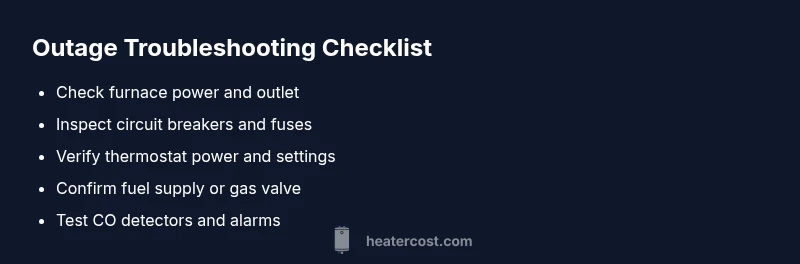
The most common cause for an outage is a simple electrical hiccup. Start by confirming the furnace is receiving power: check the outlet, the power cord, and the switch near the furnace. Then inspect the main household circuit breaker panel for any tripped breakers or blown fuses and reset them if safe. If you use a smart thermostat, ensure it has power or fresh batteries and that it is communicating with the heating system. A thermostat that shows the wrong settings or a dead battery can cause the system to shut off even when the furnace is fine. If the power problem persists after these checks, proceed to the next steps. Always follow local codes and, if in doubt, consult a licensed electrician or the heater installer. No matter what, verify safety devices like CO detectors are functioning before restoring heat.
Gas furnace safety and pilot light
If you have a gas furnace, gas flow problems or a pilot light outage can stop heat quickly. Do not attempt to light a pilot if you're unsure of the procedure; consult the furnace manual or call a pro. If you can access the furnace safely and the area is well-ventilated, check that the gas valve is open and the pilot light flame is steady. A weak or extinguished flame usually means a gas or venting issue that needs professional attention. If you smell gas at any time, evacuate and call emergency services. After confirming safety, you can continue with non-intrusive checks, including thermostat settings and air filter status.
Thermostat troubleshooting and calibration
A misconfigured or failing thermostat is a frequent reason for no-heat outages. Check that the thermostat is set to heat and at a temperature above room temperature. Replace batteries if it is a battery-powered model; for Wi‑Fi thermostats, ensure the device shows a healthy connection and the app reports normal status. Recalibrate or reset the thermostat if indicated by the manufacturer. If the thermostat is in a drafty corridor or near a heat source, readings may be inaccurate, causing the system to misinterpret room temperature. Once the thermostat is stable, recheck the furnace response and test heat output.
Airflow, filters, and venting
Poor airflow can masquerade as a heater outage. Check that supply and return vents are clear of obstructions and that registers aren’t blocked by furniture. Replace disposable or dirty filters; a dirty filter can reduce heat delivery and trigger a system shutdown in some models. Ensure outdoor venting isn’t blocked by snow, debris, or nests. Proper airflow not only improves heat but protects the system from overheating.
Fuel supply and valves: oil, gas, and propane considerations
Fuel issues are a frequent root cause of outages. For gas systems, verify the gas valve is fully open and that there’s no supply interruption. For oil systems, ensure the oil line isn’t frozen or kinked and that the oil filter is clean. If you rely on propane, confirm the tank isn’t empty and the valve is open. If you notice uneven flame color, noise, or irregular operation, stop and call a professional—the fuel system requires specialized safety procedures.
Reset procedures and testing after basic checks
If basic checks have cleared potential hazards, a formal reset can rewire controller logic. Turn off the furnace, wait 60 seconds, and power it back on. For smart systems, use the app to reset or re-pair the thermostat with the furnace. After a reset, run a quick heat test by setting the thermostat to a comfortable temperature and watching for the furnace to start and maintain warmth. If heat doesn’t return, proceed to professional service.
When to call a professional and maintenance plan
If you detect a gas smell, persistent burner issues, frequent outages, or CO detector alarms, contact a licensed HVAC technician immediately. Even when heat returns, schedule a professional inspection to verify venting, combustion safety, and system integrity. Heater Cost recommends a routine annual check to identify wear, calibrate controls, and prevent outages before cold seasons
Prevention and maintenance to reduce future outages
Preventive care saves energy and avoids surprises. Schedule annual professional maintenance, replace outdated thermostats with reliable models, and keep CO detectors and smoke alarms current. Maintain clean filters, inspect ductwork for leaks, and note any recurring symptoms early. A proactive approach reduces down time and keeps your home warm when you need it most.
Steps
Estimated time: 60-90 minutes
- 1
Verify power and thermostat
Check that the furnace is plugged in, the wall switch is on, and the circuit breaker is not tripped. If you have a smart or programmable thermostat, confirm it is powered, online, and set to heat. Replace batteries if needed and re-sync the thermostat with the furnace.
Tip: Document any tripped breakers with date and time for your records. - 2
Inspect gas supply and valves
If you use gas, ensure the gas valve is open and listen for a burner sound when the thermostat calls for heat. Do not try to light a pilot unless you are sure of the procedure and have the manual. If you smell gas, evacuate immediately and call emergency services.
Tip: Only attempt safe, manufacturer-approved relighting procedures. - 3
Check air flow and filters
Remove and replace dirty filters, and ensure vents are not blocked by furniture or debris. Poor airflow can trigger safety shutoffs or cause weak heat delivery. Inspect ducts for obvious obstructions or leaks.
Tip: Note if a new filter improves airflow after replacement. - 4
Reset and test
Power down the furnace for a minute, then power back up. If your system has a reset button, press it following the manual. Set thermostat to a comfortable temperature and observe whether heat returns within a few cycles.
Tip: If the furnace cycles on and off rapidly, shut down and contact a pro. - 5
Assess the safety devices
Test CO detectors and smoke alarms to ensure they are functioning. Replace batteries as needed. Venting checks are essential for gas and oil systems to prevent dangerous buildup.
Tip: Keep detectors within recommended distances from heating equipment. - 6
Evaluate need for professional service
If heat does not return after the above steps or you notice gas odors, persistent burner issues, or unusual noises, call a licensed HVAC technician. A safety check now prevents expensive damage later.
Tip: Schedule a maintenance visit before peak heating season.
Diagnosis: No heat or significant heat loss after thermostat and basic checks
Possible Causes
- highPower or breaker issue
- mediumThermostat malfunction or dead battery
- lowGas valve closed or pilot out
- lowBlocked vents or dirty filter
Fixes
- easyReset the breaker or replace a blown fuse and restore power
- easyReplace thermostat batteries or re-sync Wi‑Fi thermostat
- mediumRelight pilot or verify gas valve (only if safe to do so)
- mediumCall a professional for gas, fuel, or ventilation safety checks
Got Questions?
What should I check first when the heater goes out?
Start with safety: check for gas odors, CO detectors, and ensure the area is safe. Then verify power, breaker status, and thermostat settings before deeper diagnostics.
First, ensure safety with CO detectors and no gas smells, then check power, breakers, and thermostat settings.
Can I reset my furnace myself to fix the outage?
A reset can resolve many minor outages. Turn off power, wait 60 seconds, then restore power and re-test the heat. If it doesn’t respond, proceed to professional service.
Yes, a safe reset can fix many outages. If it doesn't respond, call a pro.
When should I call a professional?
Call a professional if you smell gas, CO is detected, there’s no heat after basic checks, or you notice unusual furnace behavior. A safety check now prevents bigger problems later.
Call a professional if you smell gas or CO, or if heat doesn’t return after basic checks.
Is it safe to relight a gas furnace pilot?
Relighting a pilot should only be done if you are confident in the procedure and the area is well-ventilated. If in doubt, don’t attempt and contact a pro.
Only relight if you know how; otherwise contact a professional.
Can outdoor temperatures affect outages?
Extreme outdoor temperatures can stress systems and reveal issues like dirty filters or blocked vents. Regular maintenance helps prevent this.
Yes, cold weather can reveal and worsen issues; regular maintenance helps.
How often should I service my heater?
Aim for annual professional maintenance to verify safety, efficiency, and reliability. Regular servicing reduces unexpected outages.
Have your heater serviced once a year for safety and reliability.
Watch Video
The Essentials
- Prioritize safety and call for help when gas/CO is detected
- Verify power, thermostat, and breakers first
- Inspect air flow and fuel supply before deeper fixes
- Call a professional for gas, electrical, or safety concerns
- Schedule annual maintenance to prevent outages