Common Problems with Heaters: Troubleshooting and Solutions
Urgent, step-by-step troubleshooting guide on common problems with heaters. Learn causes, quick checks, diagnostics, and maintenance to keep your home warm this season.


Most common problems with heaters start with simple checks you can perform today. First, confirm power is on, the thermostat is correctly set, and the filter is clean. If heat is intermittent, inspect the ignition or burner; for no heat, reset breakers, examine the pilot light, and verify gas or electrical connections. If issues persist, contact a pro for safety and reliability.
Understanding common problems with heaters
The phrase common problems with heaters covers a wide range of issues, from electrical faults to mechanical wear and fuel-supply concerns. According to Heater Cost, most household heating problems fall into a few predictable categories: power and control issues, airflow and filtration, ignition and burner problems, and safety-related shutdowns. Recognizing these categories helps homeowners pick the most efficient first steps and avoid unnecessary repairs. In many homes, simple maintenance can prevent seasonal failures, but neglecting safety-driven shutdowns can lead to dangerous situations. By organizing problems into categories, you can diagnose more quickly and reduce the time you spend in cold spaces. This guide is designed for homeowners, renters, and property managers who want practical, fast guidance rooted in real-world experience from the Heater Cost team.
Common categories of heater problems
- Power/control problems (tripped breakers, faulty thermostat, blown fuses)
- Airflow/ventilation issues (clogged filters, blocked ducts, dirty supply vents)
- Ignition and burner problems (pilot light out, ignition failure, dirty burners)
- Safety-related shutdowns (overheat protections, clogged condensate lines, improper venting)
- Fuel-supply concerns (gas pressure, pilot safety sensor, condensate lockouts)
Addressing each category with a focused approach saves time and reduces the risk of unsafe operation. Heater Cost analysis shows electrical and maintenance issues account for the majority of call-outs in residential systems. Regular inspections and prompt attention to warning signs can dramatically reduce costly breakdowns and energy waste.
Quick checks you can perform today (before calling for service)
- Ensure the unit has power: check the circuit breaker, wall outlet, and power switch on the furnace. If the breaker trips repeatedly, there may be a short or an overloaded circuit.
- Verify thermostat settings: set to the correct mode (heat), appropriate temperature, and ensure batteries are fresh if it’s a programmable thermostat.
- Inspect the air filter: a dirty filter restricts airflow and causes overheating or reduced heat output. Replace if dirty.
- Listen for unusual noises or smells: banging, screeching, or a burning odor can indicate a problem that requires professional attention.
If these checks don’t restore comfort, move to more in-depth diagnostic steps. The goal is to rule out the simplest causes first, as they are usually the quickest fixes and the least expensive.
Ignition and burner issues (gas furnaces and boilers)
Ignition problems are a common reason for no-heat scenarios, especially in colder months. For gas systems, a pilot light that won’t stay lit or an intermittent ignition indicates either a dirty burner, a faulty igniter, or gas-supply concerns. On higher-efficiency furnaces, a failed electronic ignition can mimic a malfunctioning pilot. In many cases, cleaning burners and checking the ignition module resolves the issue. If you smell gas or suspect a gas leak, evacuate and dial emergency services immediately. For safety reasons, do not attempt to service gas lines beyond basic maintenance.
Heater Cost emphasizes that ignition troubleshooting should be done with caution and, if in doubt, with a licensed professional to avoid carbon monoxide risks and gas leaks. Regular annual inspections help catch ignition problems early and keep systems running safely.
Thermostat and controls problems (accuracy and response)
Thermostat faults are a frequent culprit behind irregular heating. A miscalibrated thermostat, a sensor that’s out of range, or a failing relay can cause the heater to run too long, short-cycle, or never reach the desired temperature. Check calibration against a known good thermometer and ensure the thermostat wiring is secure. Smart thermostats may require firmware updates or app recalibration after a power outage. If the thermostat repeatedly misreads temperatures, consider replacing it with a newer model compatible with your system. Heater Cost notes that control reliability often saves more energy than chasing other issues.
Airflow, filtration, and venting (blocked intake/exhaust paths)
Restricted airflow is a major efficiency and comfort killer. A clogged filter, blocked return ducts, or closed registers can cause the system to overheat, trigger safety shutoffs, and reduce heat output. Clean or replace filters every 1-3 months during peak heating seasons. Ensure registers aren’t blocked by furniture or drapes, and inspect exterior vents for obstructions. If your system uses a central air-handler, check the blower wheel for dust buildup. Proper airflow not only improves comfort, but also extends equipment life and lowers energy costs as the system won’t have to work harder to push warm air.
No heat vs insufficient heat vs unusual noises (diagnosing symptoms)
Different symptoms point to different root causes. No heat often means an electrical problem, failed ignition, blocked venting, or a shut-down safety switch. Insufficient heat usually indicates dirty filters, poor insulation, or thermostat miscalibration. Unusual noises—pings, bangs, or squeals—can result from loose belts, an overfed burner, or loose internal components. Use symptom-based deduction: no heat starts with checking power and ignition; intermittent heat points to thermostat or airflow; odd noises demand immediate inspection to avoid mechanical failure. Heater Cost’s practical approach combines symptom awareness with simple tests to avoid unnecessary service calls.
Safety-first: when to call a professional
Some heater problems demand professional attention. If you smell gas, hear continuous banging, see scorched components, or notice persistent carbon monoxide symptoms (headache, dizziness, nausea), evacuate and call emergency services. Do not attempt gas-line work or electrical repairs beyond basic safety shutoffs. For most homeowners, an annual professional inspection and routine maintenance—especially before peak heating season—can prevent many issues and ensure your system is running safely and efficiently.
Maintenance habits to prevent problems (preservation over repair)
Prevention beats repair, as the old adage goes. Schedule annual tune-ups for gas furnaces and boilers, and ensure your system is sized correctly for your home. Replace filters regularly, seal air leaks in windows and walls, and keep outdoor units clear of debris. Use a humidifier when needed to reduce static electricity and improve perceived warmth. A little proactive care reduces the risk of breakdowns during critical cold snaps and helps maintain energy efficiency. The Heater Cost team consistently finds that ongoing maintenance dramatically reduces the frequency and cost of emergency repairs.
How to choose a service pro and budget expectations
When selecting a heating contractor, look for licensed professionals with up-to-date certifications, clear pricing, and strong customer references. Request a written diagnostic report and a breakdown of recommended repairs with estimated costs. Ask about warranties on parts and labor, and ensure the contractor tests for carbon monoxide and proper venting after service. Budget expectations vary by system type (gas, electric, or oil) and the scope of work, but you should plan for initial diagnostic charges plus any replacement parts. Heater Cost suggests getting multiple quotes and avoiding contractors who push unnecessary replacement.
Quick-start troubleshooting checklist (for fast relief)
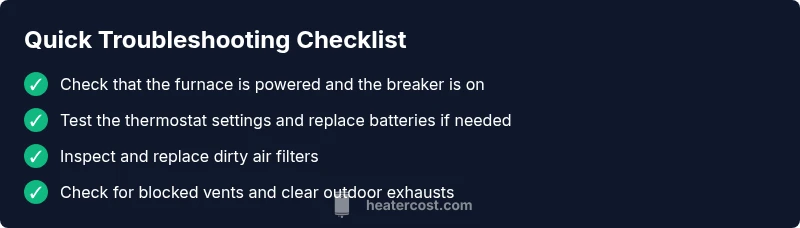
- Verify power, breakers, and the wall switch position
- Confirm thermostat mode, temperature, and batteries
- Inspect and replace the air filter if dirty
- Listen for ignition cues and burner flame; address if you hear unusual noises
- Check venting paths and make sure outdoor exhaust is clear
- If heat is still inconsistent, schedule a professional inspection promptly
Steps
Estimated time: 60-90 minutes
- 1
Verify power and thermostat
Start with the simplest checks: ensure the furnace has power, confirm the power switch is on, and verify the thermostat is in the heat mode with the correct setpoint. If the breaker has tripped, reset it and test again. This step eliminates common electrical causes quickly.
Tip: Keep a small notebook to track thermostat settings and any breaker trips for your service visit. - 2
Inspect air filters and vents
Remove and examine the air filter; replace if dirty or clogged. Check supply and return vents for obstructions like furniture or curtains. Improved airflow reduces overheating and helps the system run efficiently.
Tip: Set a monthly reminder to check filters during the heating season. - 3
Test ignition and burners
If you have a gas furnace, listen for ignition cues or flame when the system attempts to start. Clean visible burners and ensure the flame is steady and blue. If you smell gas or the flame is weak or yellow, stop and contact a pro immediately.
Tip: Never try to manually light or bypass safety devices. - 4
Review thermostat and controls
Recalibrate or replace the thermostat if it’s showing inconsistent readings. Check the wiring and ensure connections are secure. If you’re using a smart thermostat, perform a firmware update and re-pair it to the system.
Tip: Consider a programmable thermostat for consistent temperature control and energy savings. - 5
Check safety switches and venting
Inspect safety switches, such as high-limit cutoffs, and verify venting paths are clear. Blocked vents or restricted exhaust can trigger shutdowns. Correct any blockages before testing again.
Tip: Only perform vent checks from outside the equipment and with power off. - 6
Confirm fuel or electrical supply
For gas systems, verify gas supply is on and pressure is within spec. For electric systems, ensure wiring and fuses are intact. If you’re uncertain about fuel pressure or electrical integrity, stop and call a licensed technician.
Tip: Do not attempt complex gas or electrical work without proper credentials. - 7
Run a safety check and test cycle
After basic fixes, run the system through a full heating cycle. Observe cycle length, heat output, and any error codes. Document any fault codes shown by the furnace's LED or control board.
Tip: Use the error codes as a guide for the service visit; many techs ask for them upfront. - 8
Plan professional service if unresolved
If the heater still won’t start or heat effectively after these steps, schedule professional service. Provide the technician with the symptom details, recent maintenance history, and any fault codes observed.
Tip: Ask about warranty coverage on parts and labor to manage costs.
Diagnosis: Heating system won't start or produces no heat
Possible Causes
- highPower issue (tripped breaker or blown fuse)
- highThermostat miscalibration or sensor failure
- mediumIgnition or burner problems (gas furnace/boiler)
- lowDirty air filter causing restricted airflow
Fixes
- easyReset circuit breaker and verify outlet power to the furnace
- easyCheck thermostat settings, replace batteries, and recalibrate if needed
- mediumInspect ignition components or burner; clean or replace as needed, and consult a pro if gas-related
- easyReplace air filter and inspect ducts for obstructions; schedule professional cleaning if needed
Got Questions?
What are the most common problems with heaters?
The most common issues include power and thermostat faults, dirty filters, ignition or burner problems, and venting or airflow restrictions. Regular maintenance helps prevent many of these problems and keeps your system running efficiently.
Common heater problems are usually power, thermostat, or airflow issues. Regular maintenance helps prevent them and keeps you warm.
What should I check first if my heater won't start?
First check the power supply and the thermostat settings. If those look good, inspect the air filter and ensure the vents aren’t blocked. If the unit still won’t start, consider a professional inspection for ignition or control-board issues.
Start with power and thermostat, then check the filter and vents. If it still won’t start, call a pro for ignition or control issues.
Is it safe to reset a furnace by flipping the breaker?
Resetting the breaker can resolve trips caused by short-term overloads. If it trips again, do not repeatedly reset; this may indicate a bigger electrical issue and requires a professional evaluation.
Resetting the breaker can help once, but if it trips again, get a professional to check the electrical system.
How often should I replace my heater’s air filters?
In general, check monthly during heavy use and replace every 1-3 months depending on filter type, household size, and whether you have pets. Clean filters dramatically improve airflow and efficiency.
Check monthly and replace every 1-3 months depending on use and pets.
When should I call a professional for heater issues?
Call a professional if you smell gas, hear unusual noises that don’t resolve after basic checks, or if the unit fails to heat after safety checks. For carbon monoxide exposure or suspected leaks, leave the home and call emergency services.
Call a pro for gas smells, persistent noises, or no-heat after basic checks. If you suspect carbon monoxide, exit and call emergency services.
Can I fix ignition problems myself?
Ignition issues can be dangerous. Basic cleaning may help, but for ignition and burner problems, rely on a licensed technician to prevent gas leaks and CO hazards.
Don’t fix ignition problems yourself; call a licensed tech to avoid gas and CO hazards.
Watch Video
The Essentials
- Identify the problem category before fixing it
- Prioritize safety and power checks first
- Clear filters and unobstructed vents dramatically improve performance
- Thermostat accuracy matters for comfort and efficiency
- Call a pro for gas or electrical concerns