What Is Wrong With a Hot Water Heater? Troubleshooting
Urgent guide to diagnose and fix a failing hot water heater. Explore common causes, safe checks, step-by-step fixes, and when to call a professional for help.


According to Heater Cost, the most common issues with a hot water heater are thermostat misadjustments, ignition or heating-element problems, and sediment buildup. Start with simple checks: verify power or gas supply, confirm the thermostat is set correctly, and listen for unusual noises. If you see leaks, corrosion, or the unit is very old, plan a professional assessment.
What can go wrong with a hot water heater
A failure to produce hot water can stem from several root causes. In electric models, the most common culprits are a faulty heating element, a tripped breaker, or a thermostat set too low. For gas units, ignition problems, a dirty burner, or a pilot light that won’t stay lit are frequent offenders. Tank-style systems are also susceptible to sediment buildup that insulates the water from the heating elements, reducing efficiency and hot-water output. Leaks around the tank or at connections signal a seal issue that may require repair or replacement. Finally, older units may suffer from corrosion or a failed anode rod, which speeds up wear and can lead to eventual failure. Understanding these categories helps you diagnose quickly and safely.
You may notice cold water, fluctuating temperatures, or strange noises like popping or banging when sediment has built up. Rust-colored water can indicate corrosion. In some cases, the issue is simply that the thermostat is accidentally turned down or the power supply is interrupted. Throughout this guide, we’ll focus on practical steps that homeowners can take before calling a professional. According to Heater Cost analysis, awareness of these failure modes helps families plan safer, faster fixes and decide when replacement is the wiser option.
Safety first: essential precautions
Before touching any components, power down the unit and shut off gas if you’re working with a gas-fired model. Wear eye protection and gloves to guard against hot surfaces and sharp edges. Never open a hot water heater when the tank is pressurized or hot; allow it to cool and depressurize before inspecting valves. If you smell gas or hear a hiss near the unit, evacuate immediately and call emergency services. Keep children and pets away from the area while you perform checks. Remember: water heater issues can escalate quickly if ignored, so always prioritize safety and know when to step back and call a professional.
In addition to safety, keep a written checklist of observations (leaks, noises, water temperature) to share with a technician. This helps you communicate symptoms clearly and speeds up diagnosis. Heater Cost emphasizes safety as the foundation of any troubleshooting effort.
Quick home checks you can perform safely
Start with the basics: ensure the unit is powered and the gas supply is active (for gas models). Check the circuit breaker or fuse for a trip, and reset if appropriate. Verify the thermostat is set to a reasonable temperature and that the sensor probe is intact. Look for visible leaks at connections, drain valve, or around the tank. If your unit is electric, test the electrical connections only if you have training; otherwise leave wiring to a professional to avoid shock or further damage. Finally, inspect the pressure relief valve for signs of leakage, and listen for any abnormal humming or banging noises that indicate sediment or pressure issues. These checks cover the most common, most easily fixable problems and often determine whether a call to a pro is needed.
Diagnostic flow: symptom to diagnosis (quick map)
Symptom: No hot water or low water temperature Causes: [ {"cause": "Thermostat misadjustment", "likelihood": "high"}, {"cause": "Power supply interruption (electric models)", "likelihood": "high"}, {"cause": "Gas supply or ignition problem (gas models)", "likelihood": "medium"} ] Fixes: [ {"fix": "Reset circuit breaker or replace blown fuse", "difficulty": "easy"}, {"fix": "Adjust thermostat to 120-140°F (exact setting per manufacturer)", "difficulty": "easy"}, {"fix": "Ensure gas valve is open and ignition works (gas units)", "difficulty": "medium"} ]
Most common failure modes explained
Thermostat issues are the most frequent cause of cold water. A thermostat that is set too low or one that has drifted can leave water lukewarm or cold entirely. Sediment buildup is a silent performance killer for storage tanks, especially in areas with hard water; it insulates the water and makes heating work harder, sometimes triggering thermostat cycling or element burnout. Leaks around joints or the tank indicate deteriorated seals or corroded tanks, which usually require component replacement or a full unit replacement. For gas units, a failing pilot light or dirty burner can prevent ignition, resulting in no hot water despite power being available. Regular maintenance and timely replacements extend the life of heaters and prevent sudden failures.
When to call a pro and maintenance tips
Knowing when to escalate is critical. If you detect persistent leaks, a strong gas odor, or signs of electrical shock risk, stop trying to fix it yourself and call a licensed technician. Professionals can perform more advanced tests, including element resistance checks, venting assessments, and a tank pressure test. Maintenance tips to prevent future problems include flushing the tank annually to remove sediment, inspecting anode rods, checking the expansion tank, and replacing worn components before they fail. Heater Cost recommends routine inspections, especially if your system is over several years old, to catch issues before they become costly emergencies.
Steps
Estimated time: 45-60 minutes
- 1
Verify power or gas supply
Begin by ensuring the unit is receiving power in electric models, or that the gas supply is open and the pilot/ignition is functioning for gas models. If a breaker tripped, reset it and test hot water after a few minutes.
Tip: Always start with the simplest check before touching the tank. - 2
Check thermostat and settings
Inspect the thermostat setting and accuracy. If adjustable, set to a moderate temperature and test water temperature after a short wait. If the knob is unresponsive or damaged, plan a replacement or professional calibration.
Tip: A misread thermostat is a common cause of no-hot-water issues. - 3
Inspect heating elements or burner
Electric heaters rely on heating elements; gas heaters rely on a burner and pilot. Look for signs of wear, corrosion or debris. Do not touch live electrical parts; call a pro if you’re unsure.
Tip: Avoid touching heating elements directly; they hold heat for a long time. - 4
Evaluate sediment and tank condition
If the water smells bad, looks dirty, or the output is inconsistent, sediment buildup could be the culprit. Consider flushing the tank per manufacturer instructions to remove gathered sediments.
Tip: Flushing requires draining some water; keep a bucket and towels handy. - 5
Check relief valve and expansion system
Inspect the pressure relief valve for leaks and ensure the expansion tank (if present) is properly charged. Malfunction here can cause pressure issues and temperature instability.
Tip: Never block or bypass the relief valve; it’s a crucial safety feature.
Diagnosis: No hot water or insufficient hot water
Possible Causes
- highThermostat misadjustment
- highPower supply interruption (electric models)
- mediumGas supply/ignition problem (gas models)
Fixes
- easyReset circuit breaker or replace blown fuse
- easyAdjust thermostat to a safe, effective setting
- mediumEnsure gas valve is open and ignition operates (gas units)
Got Questions?
What are the most common causes of no hot water in a tank heater?
The most frequent culprits are thermostat misadjustment, power or gas supply issues, and sediment buildup. Additional problems can include a faulty heating element (electric models) or ignition issues (gas models).
Common causes are thermostat, power or gas supply, and sediment buildup. Check these first.
Is sediment buildup normal, and can I flush it myself?
Sediment buildup is common in hard water areas and can reduce heating efficiency. Flushing the tank is possible with guidance from the manufacturer; if you’re unsure, a professional can perform a safe flush.
Sediment buildup happens with hard water; flushing is possible, but consult a pro if unsure.
When should I replace my water heater rather than repair it?
If the tank shows rust, leaks are frequent, or the unit is older with repeated failures, replacement is often more cost-effective than ongoing repairs.
If leaks outpace repair, or the unit is old, replacement may be best.
Can a pilot light going out cause no hot water?
Yes, for gas models a pilot light that won’t stay lit stops heat production. It usually requires resetting or cleaning the burner, and in some cases professional service.
A pilot light out stops heat production; it may need a reset or burner service.
What maintenance can prevent hot water heater problems?
Annual maintenance like flushing, inspecting the anode rod, checking the expansion tank, and testing the pressure relief valve can prevent many common failures.
Regular maintenance helps prevent failures and extends life.
Is it safe to work on a gas water heater myself?
Gas water heaters involve gas lines and ignition; improper handling can be dangerous. If you smell gas or aren’t trained, call a licensed technician.
Gas heaters require caution. If in doubt, call a pro for safety.
Watch Video
The Essentials
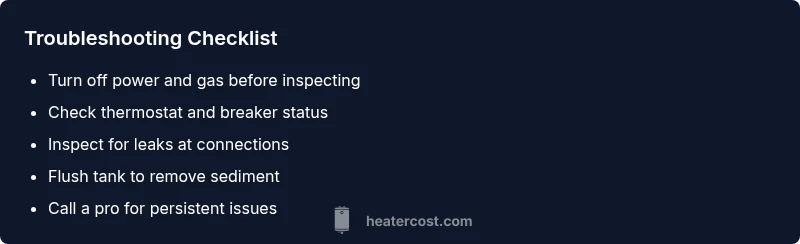
- Turn off power and gas before inspecting
- Check thermostat and breaker first
- Flush sediment if water is discolored or rusty
- Look for leaks around connections or tank
- Call a pro for gas smells or persistent issues