What Happens When a Hot Water Heater Fails: A Practical Troubleshooting Guide
Explore what happens when a hot water heater fails, common causes, symptoms, safety steps, and a practical troubleshooting plan for homeowners, renters, and property managers.


A hot water heater failure typical occurs with no hot water, cold showers, or fluctuating temperatures, sometimes with leaks or popping noises. The most common culprits are electrical supply issues, thermostat or heating element failure, or sediment buildup. Start with safety steps, then check power, gas, and basic components before calling a professional.
Why a hot water heater failure happens
The question 'what happens when a hot water heater fails' is common among homeowners. Hot water heaters are durable, but they wear out. The most common failure modes include corrosion inside the tank, anodes that have dissolved, and fittings that start to leak. Sediment from hard water can accumulate at the bottom of the tank, reducing efficiency and causing overheating or strange noises. In electric models, worn thermostat coils or malfunctioning heating elements can stop heating altogether. Gas models may suffer from pilot-light failures or restricted gas supply. Age, mineral content in your water, and frequent cycling between hot and cold all shorten a heater’s life. Understanding how these issues develop helps you decide between a repair and a replacement, and it informs the maintenance plan you adopt in 2026.
Recognizing the early warning signs
Before a full failure, many water heaters show warning signs. Expect longer wait times for hot water, reduced hot water volume, or water that suddenly becomes discolored or smells sulfurous. You may hear popping, rumbling, or banging noises from mineral buildup at the bottom of the tank. Damp spots or puddles near the base indicate a leak, while a tripped circuit breaker or a warm exterior surface can signal electrical problems. If you notice any of these indicators, don’t ignore them—the sooner you inspect, the more options you have for repairing or replacing with minimal disruption to your household.
Safety first: what not to do
Never ignore a gas smell near the heater. If you suspect a gas leak, leave the area immediately and call the gas company or emergency services. Do not operate electrical switches or appliances near the device while a leak is possible. Do not attempt to disassemble the tank or bypass safety valves. Water heaters operate under pressure and can cause scalds or burns. Wear protective gear if you’re handling hot components, and keep children and pets away during any inspection or maintenance.
Immediate steps you can take if you lack hot water
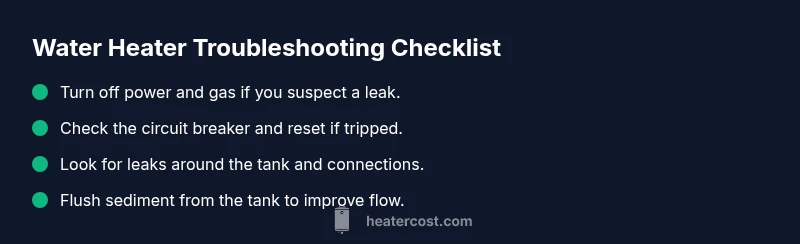
- Turn off power to the unit at the breaker or switch, then switch it back on after a few minutes to reset any simple fault. 2) If you have a gas model, check the gas control valve and try relighting the pilot if you know how to do so safely. 3) Check for obvious leaks and shut off the cold water supply to minimize water loss. 4) If you can access the thermostat, set it to 120°F (49°C) and see if that restores hot water. 5) If there’s still no hot water, move to professional help; do not continue to use the heater in a fault condition.
Common failure modes explained
Electrical issues can manifest as no power to the unit, a tripped breaker, or a blown fuse. A failed thermostat can prevent heating entirely or cause cycling. A burned-out heating element on electric models leaves you with cold water. For gas heaters, a faulty pilot light or gas valve can stop heating, while venting restrictions can cause safety shutoffs. Sediment buildup reduces heat transfer and can make the unit work harder, shortening its life and increasing energy use.
Do-it-yourself diagnostics you can perform safely
Start with the basics: confirm the unit has power and that the breaker is not tripped. If you’re comfortable, test the thermostat with a thermometer, and check the element access panels on electric models for signs of damage. Check the T&P relief valve for corrosion or leaks. Another low-risk diagnostic is flushing a small amount of water from the drain valve to see if sediment is the culprit. If the water remains lukewarm or cold, a more thorough check is needed by a pro.
When to call a professional and what to expect
If there’s any sign of leaks, unusual noises, or a gas smell, contact a licensed plumber or HVAC technician. Professionals will pressure-test the tank, inspect the anode rod, verify the thermostat and heating element, and check venting in gas models. They’ll also assess whether a repair or full replacement offers the best long-term value. Expect a written estimate, a diagnostic report, and a plan for safe disconnection of power or gas during work.
Preventive maintenance to extend life
Schedule annual inspections and flush the tank every 1–2 years to remove mineral buildup. Inspect the anode rod and replace it if it shows heavy wear. Keep the area around the unit clear of clutter and ensure the venting path is unobstructed. Lowering the storage temperature to 120°F (49°C) reduces mineral stress and scald risk while maintaining comfort. These steps don’t guarantee failure-proof operation, but they significantly reduce the likelihood of sudden loss of hot water.
Replacing vs repairing: a practical decision guide
Most homeowners face a choice between repairing a failing tank and replacing it with a new unit. If the heater is more than 10–12 years old, or if multiple components require service in a short period, replacement often provides better reliability and energy efficiency. Consider the total cost of ownership, including installation, permits (where required), and the cost of ongoing repairs. A professional can help you weigh factors such as fuel type, efficiency, and the need for expansion tanks or upgraded venting.
Steps
Estimated time: 60-90 minutes
- 1
Power check and safety review
Turn off power to the unit at the breaker, then restore power after a minute to reset. Look for signs of electrical damage or corrosion. Confirm the outlet or breaker serves only this heater.
Tip: Always start with safety—kill power before touching wiring. - 2
Inspect energy source
For gas units, verify the gas supply valve is open and the pilot is relit if you know how to do so safely. For electric units, check the breaker and fuses; replace if tripped.
Tip: Never force a gas valve or relight a pilot if you’re unsure. - 3
Check for leaks and pressure safety
Look for damp spots around the tank and inspect the T&P relief valve for leaks or discharge. If you see water at the valve, turn off the water supply and call a pro.
Tip: A discharge from the relief valve means the unit is unsafe to run. - 4
Test water temperature and controls
If accessible, test the thermostat with a thermometer and adjust to about 120°F (49°C). Observe whether water heats within a reasonable time.
Tip: Avoid high settings that increase scald risk. - 5
Flush and drain the tank
Carefully attach a hose to the drain valve and flush several gallons to remove sediment. Refill and reheat to test for improved performance.
Tip: Wear eye protection and use a bucket for drainage. - 6
Assess expansion tank and venting
If your system has an expansion tank, confirm it’s properly charged and connected. Inspect venting (gas models) to ensure safe operation.
Tip: Incorrect expansion tank pressure can cause premature failure. - 7
Make a decision and plan
If the heater is old or repeatedly failing, compare repair costs to replacement, including installation and potential energy savings.
Tip: Document the system’s age and past repairs for your records.
Diagnosis: No hot water or inconsistent temperatures, noises, or visible leaks
Possible Causes
- highElectrical issue (breaker, wiring, or thermostat)
- mediumHeating element failure (electric models)
- lowGas supply or pilot light issue (gas models)
- lowSediment buildup causing heat transfer problems
Fixes
- easyReset or replace the circuit breaker; verify power to the unit
- hardTest/replace thermostat or heating element as needed
- mediumRelight pilot or repair gas supply for gas models
- easyFlush sediment and inspect the expansion tank if present
Got Questions?
What are the most common signs that my hot water heater has failed?
Common signs include no hot water, cold water, fluctuating temperatures, noises, and leaks. These symptoms usually point to electrical issues, thermostat/heating element failure, or sediment buildup.
Common signs are no hot water, cold water, and leaks. These usually point to electrical issues, thermostat or heating element failure, or sediment buildup.
Can a leaking water heater cause property damage?
Yes. A leak can damage floors, walls, and cabinetry, and prolonged water exposure may lead to mold. Address leaks promptly and arrange professional repairs as needed.
Yes—leaks can damage floors and walls and may lead to mold; address them promptly.
Is it safe to flush a water heater myself?
Flushing can be done safely with basic precautions, but it involves hot water and pressure. Follow manufacturer instructions and wear eye protection; stop if you see significant corrosion or a leak.
Flushing can be safe if you follow steps carefully; stop if you see corrosion or a leak.
How long should a water heater last?
Most heaters last 8–12 years depending on maintenance and water quality. If yours is older or requires frequent repairs, replacement may be more cost-effective.
Most heaters last 8–12 years; older units or frequent repairs may mean replacement is wiser.
What if I smell gas near the heater?
If you smell gas, evacuate and call your gas provider or emergency services immediately. Do not operate switches or try to relight any pilots.
If you smell gas, leave the area and call emergency services.
Repair or replace when it’s not worth fixing?
If the unit is aging or requires repeated repairs, replacing with a more efficient model often saves money and reduces risk.
If it’s old or needs frequent repairs, replacement is often the wiser choice.
Watch Video
The Essentials
- Shut off power/gas if unsafe
- Check breaker, thermostat, and heating elements first
- Sediment buildup commonly causes issues
- Call a pro for leaks or complex repairs