How to Tell When a Water Heater Is Going Out
Urgent guide to spotting the signs your water heater may be failing, plus practical checks, safe diagnostics, and when to call a pro. Insights from Heater Cost help homeowners act fast.


Common signs of a failing water heater include inconsistent hot water, noises, leaks, rusty water, and rising energy bills. If you notice frequent outages, pilot-light or ignition issues, or leaks, schedule a diagnostic with a professional. Start by checking the thermostat range and the pressure-relief valve.
What It Feels Like When a Water Heater Is Failing
If your hot water seems inconsistent or you notice damp spots around the unit, your water heater could be nearing the end of its life. In many homes, the first hint is not a loud alarm but a shift in routine: longer waits for hot water, or a shower that starts warm and ends cold. According to Heater Cost, the most common clues are a combination of performance changes, noises, and visible leaks. Take note when the problem persists across several heating cycles and becomes more frequent or severe. Early symptoms are often intermittent, but they can quickly worsen if left unaddressed. Tracking patterns helps you decide whether to repair or replace. For many homeowners, this is a sign to start budgeting for a replacement while trying a few low-risk fixes. Keeping a log of hot-water availability and the timing of outages makes it easier to discuss options with a plumber. This proactive approach can save you from cold surprises and costly emergencies.
Common Warning Signs to Look For
Significant signs usually come in clusters rather than in isolation. Look for: - Inconsistent hot water or sudden drops in temperature during showers. - Strange noises such as popping, rumbling, or banging from the tank. - Leaks, dampness, or moisture near the base or connections. - Rusty water or a metallic smell, which can indicate internal corrosion. - Higher energy bills without a change in usage. - A failing thermostat or ignition issues on gas heaters. Regular checks help distinguish a temporary glitch from a genuine failure. According to Heater Cost, witnessing multiple signs over several weeks strongly suggests action is needed before a complete outage. - If you notice water around the tank, don’t ignore it; even small leaks can worsen quickly and threaten surrounding areas. - Early detection can buy time for planning, budgeting, and choosing between repair and replacement.
Causes Behind the Signs
There are several common culprits behind these symptoms. Sediment buildup can insulate heating elements and reduce efficiency, especially in older units. An aging or faulty thermostat, heating element, or ignition system can cause temperature fluctuations or outages. Gas-powered models may suffer from venting issues or a weak gas supply. A leaking tank or faulty pressure relief valve can create dampness and corrosion. In some cases, equipment installed too close to electrical components or poorly insulated pipes contributes to heat loss and higher bills. Understanding these root causes helps prioritize fixes and determine whether replacement is more cost-effective in the long run. Heater Cost notes that while some fixes are DIY-friendly, others require professional inspection to ensure safety and code compliance.
How to Verify Before You Call a Pro
Before dialing a plumber, perform simple checks. Ensure the thermostat is set correctly and not accidentally lowered. Check the circuit breaker for electric models and reset if necessary, ensuring the outlet is powered. For gas heaters, inspect the pilot light or ignition and verify the gas supply and ventilation are functioning. Look for visible leaks or corrosion around connections and the tank. Run a short hot-water test to observe temperature consistency and ensure pressure relief valve operation by lifting its lever carefully (with caution). Document findings with photos and notes to share with a professional. This initial triage can save time and help a technician pinpoint the problem faster.
Step-by-Step Home Diagnostics
- Power down safety: switch off power to the unit and disconnect gas supply if applicable. 2. Check thermostat and settings: ensure a safe, reasonable range and test hot water. 3. Inspect connections and tank: look for leaks, corrosion, and bent components. 4. Test venting and exhaust (gas models): verify clear exhaust paths and proper vent connection. 5. Perform a controlled flush (if you’re comfortable): drain some water to assess sediment and condition of the drain valve. 6. Re-test and monitor: restore power, run hot water, and note any ongoing issues. Pro tip: if you smell gas, evacuate and call emergency services. The Heater Cost team emphasizes safety first and recommends professional help if you’re unsure.
When to Call a Professional
If you notice persistent hot-water outages, loud noises, a damp area around the unit, or a strong gas odor, contact a licensed plumber or HVAC technician promptly. Gas leaks or weak ignition are safety-critical issues that require immediate attention. If you have an older unit showing multiple signs of failure, a professional assessment can determine whether repair or replacement offers better value and reliability. The Heater Cost team also recommends keeping up with annual maintenance to catch problems early and extend equipment life.
Preventive Maintenance to Extend Life
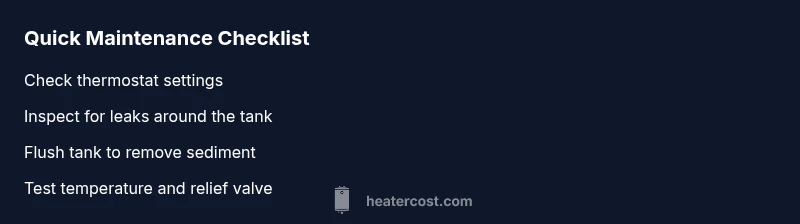
Regular maintenance can reduce the odds of sudden failure. Schedule professional inspections and flush the tank at least once a year to remove sediment. Check the anode rod for corrosion and replace as needed, and inspect the expansion tank and pressure-relief valve for proper operation. Ensure proper insulation of pipes and verify venting in gas systems. Replacing worn components before a breakdown often costs less than emergency replacements. Heater Cost’s guidance underscores that proactive care keeps heat consistent and avoids unexpected outages, especially in colder months.
Steps
Estimated time: 30-60 minutes
- 1
Ensure safety and power down
Begin by turning off power to an electric unit at the main breaker or disconnecting the gas supply if you have a gas water heater. This prevents any shocks or leaks while you inspect. Take note of any immediate hazards in the area.
Tip: If you’re uncertain about the electrical panel, skip to the next safe step and call a pro. - 2
Check thermostat and basic settings
Verify the thermostat is set to a safe, moderate temperature. If it’s too low, hot water can feel tepid; if it’s too high, you risk scalding. After adjustments, run hot water for several minutes to observe changes.
Tip: Small adjustments can make a big difference; avoid drastic changes in one go. - 3
Inspect for leaks and corrosion
Carefully examine the exterior tank, connections, and the drain valve for signs of moisture or corrosion. A slow drip can worsen quickly and point to a developing problem.
Tip: Even a minor leak deserves attention—document with photos for your technician. - 4
Test the drain valve and flush (if comfortable)
With the unit powered, briefly open the drain valve to see if water flows and whether sediment is present. If you’re comfortable, perform a gentle flush to clear minor sediment buildup.
Tip: Do this only if you can safely access the valve without risking burns from hot water. - 5
Check gas components (gas models)
For gas heaters, inspect the pilot light and ignition. If you can’t relight safely or smell gas, evacuate and call the gas company or emergency services.
Tip: Never attempt to fix a gas leak yourself. - 6
Restore power and test results
Reconnect power or gas, then run a test hot-water cycle. Note how quickly water heats, whether temps are stable, and if noises persist. Use this data to decide on repair vs replacement.
Tip: Keep a simple log of observations to share with a professional.
Diagnosis: No hot water or sudden drop in hot-water temperature
Possible Causes
- highThermostat or temperature setting is incorrect
- highElectrical issue or tripped breaker (electric water heater)
- mediumGas supply or pilot light problem (gas water heater)
- mediumSediment buildup or heating element failure
- lowLeaking tank or faulty pressure relief valve
Fixes
- easyReset the breaker or restore power; verify the outlet is supplying electricity
- easyAdjust the thermostat to a safe, recommended range and retest hot water
- mediumInspect pilot light and gas supply; relight if safe (gas heater only); check exhaust vent
- mediumFlushing the tank to remove sediment; follow manufacturer guidance
- hardReplace heating element or water heater tank if leaks or severe failure is present
Got Questions?
What is the most common sign that a water heater is failing?
The most common early sign is inconsistent hot water, often with temperature fluctuations. You may also hear noises or notice leaks. When multiple signs appear together, it’s a strong indicator that action is needed.
Inconsistent hot water and noises are the big clues to watch for.
Can a water heater fail suddenly or slowly?
Water heaters can fail gradually, with performance slowly declining over time, or fail suddenly due to a leak or valve failure. Tracking patterns helps you catch issues early.
It can go either way—watch for gradual change or a sudden leak.
Is flushing the tank worth it?
Flushing helps remove sediment that builds up over time and can improve efficiency and heat delivery. It’s a common maintenance task for extending life.
Flushing removes buildup and helps heat more evenly.
When should I replace vs repair?
Consider replacement if there are frequent outages, multiple major repairs, or if the unit is old and inefficient. If repairs would be near the cost of replacement or more than a typical maintenance cycle, replacement may be more cost-effective.
If repairs keep piling up, replacement may be the smarter choice.
Is it safe to inspect a gas water heater myself?
Basic checks can be done safely, like inspecting for smells and ensuring vents are clear. If you smell gas or feel unsafe, leave the area and call your gas provider or emergency services.
Be safe: don’t mess with gas lines. Call a pro if in doubt.
Watch Video
The Essentials
- Act early when you notice signs to avoid outages.
- Document symptoms to aid diagnosis and decisions.
- Many problems start with thermostat, electrical, or minor leaks.
- Regular maintenance extends life and reduces emergency repairs.