What Causes Heaters Not to Work: A Practical Troubleshooting Guide
A fast, comprehensive troubleshooting guide to identify what causes heaters not to work and fix them safely. Learn step-by-step checks, common culprits, and when to call a professional for gas, oil, or electric heaters.


If your heater won’t heat, start with quick checks: power, thermostat, and safety switches. The most likely causes are a tripped breaker, blown fuse, or thermostat missetting. Reset the breaker, ensure the unit’s power switch is ON, and set the thermostat to a higher temperature. If heat still doesn’t arrive, follow the diagnostic flow below.
What causes heater to not work
According to Heater Cost, understanding what causes heater to not work helps homeowners target quick fixes and prevent wasted energy. The most common culprits are simple, everyday issues that can be resolved without specialized tools. In this section, we’ll break down the primary categories and explain why each one matters, followed by practical, safety-conscious steps you can take today.
Start with the basics: power, pilots, and reset
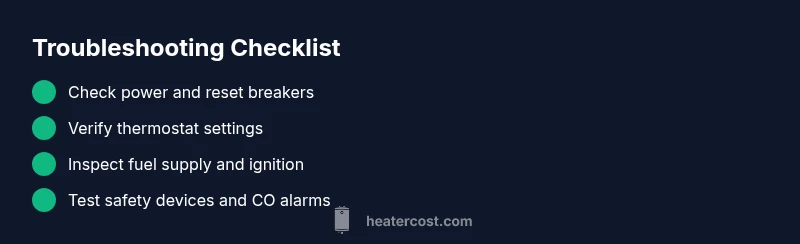
Many failures start with power or control settings rather than a mechanical breakdown. Begin by confirming the unit is receiving power: check the outlet, power cord, and, if applicable, a wall switch. For gas-powered units, verify the pilot or electronic ignition is functioning and that the thermostat is calling for heat. If the unit has a reset button, perform a reset and allow a full restart. These steps address the highest-probability causes first and often restore heat quickly.
Electrical and outlet checks: breakers, fuses, and wiring
A tripped circuit breaker or a blown fuse is one of the most frequent reasons a heater stops working. Locate your home’s electrical panel and look for breakers labeled for the heating system or for the room where the heater is located. If a breaker is tripped, switch it fully OFF, then back ON. Inspect nearby outlets for signs of damage or overheating, and replace any damaged fuses or outlets. If the breaker trips again after reset, there could be an underlying short or overload.
Thermostat and control settings: correct program and calibration
Thermostats control when heat turns on. Missettings, dead batteries (for wireless or programmable models), or a thermostat placed in a drafty location can cause the heater to run too little or not at all. Check that the thermostat is set to a temperature higher than the current room temperature and that any energy-saving modes are disabled when you’re testing. If the thermostat is old or inaccurate, consider replacing it.
Fuel source and ignition considerations: gas, oil, or electric variants
If you have a gas furnace or boiler, verify that the gas supply valve is open and that the line isn’t obstructed. Ignition problems, such as a dirty igniter or clogged burner, can prevent heat from starting. For oil-fired units, ensure the oil supply is adequate and that the burner nozzle is clean. Electric heaters should be checked for internal inline fuses and defective heating elements. In any fuel-related scenario, if you smell gas or suspect a leak, evacuate and call your gas supplier or emergency services.
Safety devices, CO alarms, and venting: don’t bypass safety features
Many modern heaters include safety switches, limit controls, and CO detectors that prevent operation when a fault is detected. If any alarm sounds or a safety switch trips, do not bypass the device. Investigate the fault area, reset only after addressing the root cause, and consider professional service for safety-compliant verification. Poor venting, blockage, or restricted exhaust can also lead to no-heat conditions and dangerous CO buildup.
Maintenance matters: filters, vents, and routine checks
Clogged air filters, dirty vents, or obstructed intake can cause a heater to underperform or shut down. Regularly inspect and replace or clean filters according to the manufacturer’s schedule. Ensure vents and flues are clear of dust, debris, or pet hair. Scheduling annual maintenance helps catch failing components before they fail completely and extends the life of the system.
When to call a professional: safety, complexity, and cost reasons
If you cannot locate a clear cause after the basic checks, or if you suspect gas, oil, or CO-related issues, it’s time to call a licensed technician. Electrical components with visible damage, unusual noises, or a persistent failed start require expert assessment. A professional can diagnose hidden faults, test safety systems, and perform warranty-covered repairs without risking personal injury.
Maintenance to prevent future failures: a quick plan
Create a simple maintenance routine: (1) test the heater monthly, (2) replace filters every 1–3 months, (3) schedule an annual professional check, and (4) keep clear space around the unit. Proactive care reduces the likelihood of sudden breakdowns and keeps heating costs predictable. Regular check-ins also help you spot wear before it becomes a costly repair.
Steps
Estimated time: 45-60 minutes
- 1
Check power supply and outlet
Inspect the wall outlet and cord for damage. Plug into a known-good outlet and reset any wall switches. If the outlet fails, replace or repair the outlet before continuing.
Tip: Use a simple lamp to verify outlet power. - 2
Test thermostat settings
Set the thermostat to a temperature well above the room temperature. If there are dead batteries, replace them. For programmable models, confirm the schedule is not suppressing heat.
Tip: Keep a note of the current setting in case you need to revert. - 3
Reset breakers and fuses
Locate the main electrical panel, reset the heater’s breaker by switching it off then on. Replace any blown fuses and test again.
Tip: If the breaker trips again, stop and call a pro. - 4
Check fuel and ignition (gas/oil units)
For gas, verify gas valve is open and there is no gas odor. For oil, ensure adequate fuel and clean the burner. If ignition is electronic, listen for a click or observe a flame.
Tip: Do not attempt repairs on gas lines yourself. - 5
Inspect safety devices and CO detectors
Make sure safety switches are not engaged and CO detectors function. Reset only after you correct the fault and ensure proper venting.
Tip: CO detectors have a limited lifespan; replace if outdated. - 6
Clean and maintain vents/filters
Remove the filter and clean or replace as recommended. Ensure air paths are clear of dust, pet hair, and debris that can choke airflow.
Tip: Schedule quarterly filter changes for high-use periods. - 7
Test operation and observe safety cues
Turn the unit on and monitor for heat production, unusual noises, or error codes. If anything unusual appears, turn off the unit and seek professional help.
Tip: Document any error codes for the technician. - 8
Call a professional when unsure
If you are uncomfortable with gas, electrical components, or complex systems, contact a licensed technician. They can perform a thorough diagnostic and ensure safety compliance.
Tip: Avoid DIY fixes that involve gas lines or high-voltage components.
Diagnosis: Heater won't turn on or produces no heat after power is confirmed and basic checks are done
Possible Causes
- highPower issue (outlet, plug, or supply)
- highTripped circuit breaker or blown fuse
- mediumThermostat failure or miscalibration
- mediumGas valve closed or fuel supply interrupted
- lowIgnition or safety interlock problem
- lowClogged filters or restricted venting
Fixes
- easyCheck power at the outlet and plug; reset the breaker if it tripped, and replace any blown fuse.
- easyVerify thermostat settings, replace batteries if applicable, and recalibrate if needed.
- mediumConfirm gas supply and valve position for gas heaters; inspect ignition components if present.
- easyClear any blockages in vents/filters and ensure safe ventilation around the unit.
- mediumIf safety interlocks or CO detectors are triggered, address the underlying fault and consult a pro.
- hardIf electrical or fuel system issues persist, contact a licensed technician for diagnosis and repair.
Got Questions?
Why won’t my heater turn on even though the outlet works?
If the outlet is active but the heater won’t start, check the breaker, thermostat, and safety switches. A tripped breaker or miscalibrated thermostat is a common cause. If these steps don’t help, a professional should inspect electrical or gas components.
If the outlet works but the heater won’t start, check power, thermostat, and safety switches. A tripped breaker or miscalibrated thermostat is common. If unresolved, call a professional.
What should I do if the thermostat seems to be the problem?
Replace batteries if required, reset the thermostat, and verify it calls for heat. If it still fails, consider replacing the thermostat or upgrading to a programmable model. A failing thermostat may require professional diagnosis.
If the thermostat is the issue, replace batteries, reset, and ensure it’s calling for heat. If it still fails, replace it or have a professional diagnose it.
Is it safe to reset a furnace circuit breaker myself?
Yes, but only after you’ve checked for obvious hazards like damaged wiring or burning smells. If tripping continues, stop and call a licensed technician. Repeated trips indicate an electrical problem that requires professional service.
You can reset a breaker if it’s safe, but don’t ignore repeated trips. Call a licensed technician if it keeps tripping.
Can a low fuel supply cause a heater not to work?
For gas or oil systems, ensure there is adequate fuel and that the supply lines aren’t blocked. A no-heat condition with fuel issues requires inspection by a professional to safely restore operation.
Yes. If fuel is low or blocked, the heater may not work—have a pro check it.
When should I call a professional for heater issues?
If you cannot identify the cause after basic checks, if you detect gas, burning odors, CO alarms, or unusual noises, contact a licensed technician immediately. They can diagnose safely and verify code compliance.
Call a professional if you’re unsure, smell gas, or hear odd noises. Safety comes first.
How often should I service my heater to prevent not-working issues?
Aim for an annual professional inspection, with quarterly filter checks and monthly visual inspections during peak seasons. Regular maintenance reduces breakdown risk and helps maintain efficiency.
Schedule a yearly professional check, plus quarterly filters and monthly spot checks to prevent issues.
Watch Video
The Essentials
- Verify power and thermostat before deeper diagnostics.
- Avoid bypassing safety systems; call a pro for gas/electrical concerns.
- Regular maintenance reduces failure risk and saves on costs.
- Document symptoms and fixes to guide technicians.
- Prioritize safety and ventilation to prevent CO risks.