What to Do If Your Water Heater Is Leaking: Urgent Guide
Urgent guide for homeowners facing a leaking water heater. Safety-first steps, diagnosis, fixes, and prevention tips from Heater Cost to protect your home.


If your water heater is leaking, prioritize safety: shut off power (electric) or gas supply, then close the cold-water shutoff and drain a small amount to reduce pressure before inspecting fittings. Tighten loose connections, check the drain valve, and test the T&P valve. If you see active dripping from the tank, or you can’t identify the source, call a pro immediately.
Immediate Safety Steps
Water heater leaks demand quick safety actions. First, cut the power to an electric heater at the main breaker, or shut off the gas supply to a gas heater. Then close the cold-water supply valve to halt new water flow. If you hear hissing or notice scorching smells, evacuate the area and contact emergency services. According to Heater Cost, safety is the top priority because water and electricity or gas can create serious hazards. After you’ve stabilized the area, place a bucket or towel under the leak to monitor flow while you inspect components. Remember: if the leak is heavy or you suspect internal tank failure, do not attempt risky DIY fixes.
Common Causes of Water Heater Leaks
Leaking water heaters usually boil down to a few common culprits. Loose or corroded fittings and valves, especially the cold-water inlet and drain valve, are frequent culprits. The pressure-relief valve (T&P valve) discharge line can also leak if the valve or its piping is faulty. Sediment buildup at the bottom of the tank can corrode the tank shell or clog valves, leading to leaks. A cracked or rusted tank is a more serious failure and generally means replacement. Distinguishing between a leak from a connection versus tank failure is key to choosing the right fix.
How to Diagnose the Source of the Leak
Begin by drying the area and visually tracing the drip. Check top and side connections first: inlet and outlet pipes, the occasional relief valve, and the drain valve. If water is only present after the system has recharged, the issue is often a loose connection. Lift the T&P valve lever carefully if you can do so safely to see if water releases; if pressure relief is persistent, the valve or its discharge line could be faulty. Inspect the base of the tank for staining or corrosion to determine if the leak is from the shell. Recording when the leak occurs (hot water usage cycles, pressure) can help identify the culprit.
Quick Fixes You Can Try If It’s a Minor Leak
If the leak comes from a loose valve or fitting, gently tighten with an appropriate wrench while the system is depressurized. For a dripping drain valve, closing the valve and replacing it may solve the issue. If the T&P valve is faulty or discharging excessively, replacing the valve is often necessary. For minor, slow leaks at fittings, applying plumber’s tape or silicone isn’t a guaranteed fix and should be considered temporary at best. Always re-pressurize slowly and check for new drips after each adjustment.
What Not To Do: Warnings and Common Mistakes
Don’t ignore a leak or delay inspection—water and electricity or gas can be dangerous. Avoid using open flames, electrical devices, or attempting to weld or patch a tank crack. Do not bypass the T&P valve or disable safety devices. Never work on a pressurized system without depressurizing it. If you’re unsure about the source or feel heat or gas, evacuate and call a professional. Rushing to fix a tank crack with DIY methods can lead to catastrophic failure.
When to Call a Professional
If the leak persists after basic tightening and valve checks, or if the tank shows signs of rust, bulging, or significant corrosion, it’s time to call a licensed plumber or a water-heater service technician. A pro can safely depressurize, evaluate the tank’s integrity, replace valves or the entire heater, and ensure proper venting and electrical or gas connections. For persistent leaks or replacement, check for warranties and local rebates. The Heater Cost team recommends professional assessment for any suspected tank compromise.
Preventive Maintenance to Reduce Future Leaks
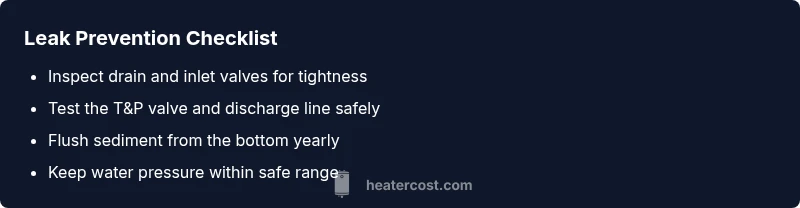
Regular upkeep can significantly reduce leak risk. Schedule annual inspections to confirm fittings are tight and valves operate smoothly. Drain and flush the tank at least once per year to remove sediment that can corrode the tank bottom and damage internal components. Test the T&P valve periodically and replace it if it’s sticky or leaks when tested. Maintain water pressure within the recommended range for your system and consider installing an expansion tank if your plumbing system has high pressure. Proper insulation around the tank minimizes temperature-related stress and condensation.
Realistic Budgeting and Next Steps
Budgeting for leaks involves considering parts, labor, and potential replacement. If the issue is limited to fittings or the drain valve, a repair is typically less costly than a full tank replacement. When the tank shell shows signs of corrosion or there is widespread leakage, replacement is often the most cost-effective long-term choice. Work with a licensed technician who can provide you with a transparent estimate, including parts, labor, and any required permits. Heater Cost analyses emphasize that proactive maintenance can reduce the chance of emergency replacements and save money over the heater’s lifespan.
Steps
Estimated time: 60-120 minutes
- 1
Ensure safety: power off and shut water
Turn off electricity at the breaker or switch for electric heaters, or shut off gas. Close the cold-water supply valve to prevent more water from entering the tank. This step reduces risk as you inspect the system.
Tip: If you smell gas or hear hissing, leave the area and call emergency services right away. - 2
Dry the area and inspect visible components
Wipe the area around valves, fittings, and the tank base. Look for the source of dripping on the drain valve, inlet/outlet connections, or the T&P valve discharge line. Noting the exact location speeds up diagnosis.
Tip: Use a flashlight to inspect hard-to-see connections; moisture can travel along surfaces, masking the true source. - 3
depressurize and test valves
With the system depressurized, gently tighten loose connections. If a drain valve leaks, replace it. If the T&P valve leaks or you see a leak from the discharge line, record the symptom and consider valve replacement.
Tip: Never force valves; excessive force can strip threads and worsen leaks. - 4
Repressurize and monitor
Slowly restore water supply and power. Monitor for new drips over the next hour. If the leak persists or worsens, stop and seek professional help.
Tip: Take a before-and-after photo to discuss with a technician. - 5
Decide on repair vs replacement
If the leak originates from the tank shell or corrosion is visible, replacement is often the most cost-effective option in the long run. For valve or connection leaks, repairs may suffice.
Tip: Check warranty status; some parts are covered and may affect the decision. - 6
Plan for professional service if unsure
If you cannot locate the leak source safely or if the leak continues after basic fixes, contact a licensed plumber or water-heater technician. They’ll depressurize, inspect, and complete safe repairs.
Tip: Ask for a written estimate and expected repair timeline.
Diagnosis: Water pooling around the base of the heater or active dripping from fittings
Possible Causes
- highLoose or faulty inlet/outlet or drain valve connections
- mediumDischarged or faulty pressure relief valve (T&P valve) discharge line
- lowCracked tank or corrosion at the shell
Fixes
- easyTighten loose fittings and inspect valve connections
- easyDepressurize and drain a small amount, then test/replace the drain valve or T&P valve as needed
- mediumReplace faulty T&P valve or damaged discharge piping
- hardReplace the water heater if the tank is cracked or heavily corroded
Got Questions?
What are the most common causes of a leaking water heater?
Most leaks stem from loose valves or fittings, a faulty T&P valve, or sediment buildup. Tank corrosion or cracks are less common but indicate a larger problem and may require replacement.
Common leaks come from fittings, the relief valve, or sediment buildup. A corroded tank usually means replacement is needed.
Is a small drip from the drain valve normal?
A tiny, slow drip after maintenance is not unusual, but a persistent leak from the drain valve indicates a faulty valve that should be replaced. Do not ignore ongoing drips.
A small, brief drip after maintenance can be normal, but ongoing drips from the drain valve should be repaired.
Can I fix a leaking water heater myself?
Minor leaks from fittings can sometimes be addressed by tightening connections. Most repairs involving the tank, T&P valve, or internal components should be handled by a licensed professional to avoid safety risks.
Some small leaks are fixable, but tank or valve work should be done by a pro for safety.
When should I replace my water heater instead of repairing it?
If the tank is corroded, leaking from the shell, or the unit is beyond its expected lifespan, replacement is typically the economical option. If major components fail, a pro can advise on cost-effective replacement.
If the tank is corroded or the unit is old, replacement is usually best.
What signs indicate a failing T&P relief valve?
Frequent leaks from the discharge line, a valve that won’t reseat after testing, or steam and hot water discharge are signs the T&P valve may be failing or incorrectly sized for your system.
Frequent leaks or a valve that won’t reseat after testing suggest a failing T&P valve.
Watch Video
The Essentials
- Act quickly; safety first during leaks
- Identify whether the leak is from fittings or the tank
- Don’t bypass safety devices or DIY a tank crack
- Consult a pro for persistent leaks or tank replacement