What to Do When Your Water Heater Stops Working (2026)
If your water heater stopped working, this urgent troubleshooting guide covers safe checks, quick fixes, and when to call a pro. Learn practical steps to restore hot water and protect your home with Heater Cost.


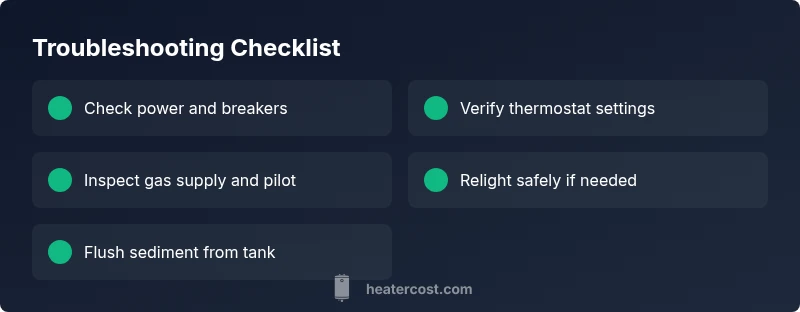
A water heater that stopped working is usually due to a tripped breaker, a faulty thermostat, or an empty gas valve. Start with safety: switch off power to the unit, check the breaker, then test the thermostat temp setting and gas supply. If it still won’t heat, relight the pilot or call a professional.
If your water heater stopped working: safety first
The moment you notice a loss of hot water, stop and assess safety before you do anything else. Turn off power to the unit at the circuit breaker or disconnect switch to prevent shocks. If you have a gas water heater, avoid flames near the unit and ensure good ventilation. Check for obvious signs of leaks around the tank, connections, and the pressure relief valve. If a leak is present, shut off the water supply and call a professional immediately. Do not attempt to tilt or move a hot water tank. Once you’ve confirmed it is safe, proceed with the basic checks described in the next sections. Keep notes of any error codes or blinking lights on the control panel, which can help diagnose the problem. Document the age of the unit and any maintenance history.
Electrical checks you can perform safely
Electrical issues are the most common reason a water heater stops producing hot water. Start by turning off power to the unit, then locate the circuit breaker dedicated to the water heater. Reset the breaker by flipping to off then back to on. If the breaker trips again, do not run the heater; there may be a short or overload. Check for a blown fuse if your panel uses fuses. Some electric models have a reset button on the thermostat or control panel; press it once per manufacturer directions. After these steps, restore power and run hot water to see if it returns. If hot water is still unavailable, the issue may lie with the heating element or thermostat and likely requires professional service. For safety, never bypass the thermostat or bypass fuses; never work on live electrical circuits while standing on wet surfaces.
Thermostat and temperature controls
On electric water heaters, there are usually two thermostats, an upper and a lower. Ensure both are set to 120°F (49°C) as a baseline. If the water is too hot or too cold, adjust gradually and test after 1–2 hours. Some units show error codes when temperature limits are reached; consult the manual for mapping codes to problems. Sediment and mineral buildup can also cause inconsistent temperatures; if you recently adjusted settings with no improvement, plan a tank flush to restore stable heat. Consider upgrading to a higher-efficiency model if aging or frequent thermistor issues occur.
Gas water heaters: pilot light and gas supply
Gas models rely on a standing pilot or electronic ignition. If hot water is not available, check that the gas shut-off valve is fully open and that the pilot light is burning steady. If the pilot is out, follow the manufacturer’s relighting procedure exactly; never use an open flame to check for a restart. If the pilot won’t stay lit, the thermocouple or gas control valve may be faulty and require service. Ensure the room has adequate ventilation and that there are no leaks or smells of gas. If you smell gas, evacuate and call the gas company or emergency services immediately. Do not attempt to repair gas lines yourself.
Mechanical failures and signs to watch
Internal components like the heating element (electric models) or the burner assembly (gas models) wear out over time. Warning signs include unusual noises, frequent temperature fluctuations, or frequent trips of the circuit breaker. The pressure relief valve should not drip constantly; a stuck valve can indicate high pressure or aging tank. The anode rod protects the tank from corrosion; if it is depleted, the tank may fail sooner. In general, if you notice frequent cold snaps in hot water, mineral buildup, or visible damage to the tank, schedule a diagnostic check.
How to relight a gas water heater safely
If your pilot is out, read the owner’s manual before proceeding. Turn the gas knob to the OFF position and wait several minutes to clear any accumulated gas. Turn the knob to the PILOT position, press and hold the reset button (or control head), and light the pilot as directed. Keep holding the reset button for 30–60 seconds after the flame appears to ensure the thermocouple heats. Release slowly and return the knob to the ON position. If the flame goes out again, turn off the gas and call a professional. Never attempt to relight after smelling gas or near a fireplace or other open flame.
Draining, flushing, and sediment removal
Sediment buildup reduces heating efficiency and can cause uneven temperatures. Turn off power and close the cold-water supply to the tank. Attach a drain hose to the tank’s drain valve and open the valve slowly, letting water flow into a bucket until it runs clear. Be mindful of hot water. After draining, lightly flush with fresh water by opening the cold-water inlet for a few minutes. Refill the tank, restore power, and test hot water delivery. Flushing is typically recommended yearly for many homes, especially in hard-water areas.
When to call a professional and what to expect
If basic checks don’t restore hot water, or you encounter gas safety concerns, it’s time to call a licensed plumber or HVAC technician. A pro will diagnose electrical or gas issues, inspect the thermostat and heating elements, and test the venting and gas pressure. Expect a written estimate, a diagnostic check, and a parts list. Meanwhile, gather model numbers, age, and any error codes to speed the service.
Prevention: maintenance to extend life and reliability
Regular maintenance can prevent many outages. Schedule annual inspections, flush the tank to remove sediment, replace anode rods as recommended by the manufacturer, insulate the hot water pipes, and check the pressure relief valve annually. Replace the unit if corrosion, leaks, or significant inefficiency appear. Keeping a maintenance log helps you track replacements and service dates, extending the life of your water heater and ensuring reliable hot water.
Steps
Estimated time: 60-120 minutes
- 1
Ensure safety and power off
Before touching the unit, switch off the power at the main panel or disconnect the dedicated circuit. If you smell gas, leave the area and call for help. Wait a few minutes for any accumulated gas to disperse.
Tip: Safety first: confirm power is off with a non-contact tester. - 2
Check the breaker and fuse
Look for a tripped breaker or blown fuse feeding the water heater. If the breaker is tripped, reset it fully and run hot water to test. If it trips again, do not reset repeatedly.
Tip: If you see scorch marks or a burning smell, stop and call a pro. - 3
Inspect thermostat settings
For electric models, verify the upper and lower heating element thermostats are set to 120°F (49°C) as a safe baseline. If the thermostat is old or shows error codes, consider replacement.
Tip: Always use a thermometer to verify water temperature. - 4
Check gas supply (gas models)
Ensure the gas shut-off valve is open and the pilot light is lit. If the pilot won't light, the thermocouple or gas valve may be faulty or need professional servicing.
Tip: Do not attempt to repair gas valves yourself. - 5
Relight pilot safely
If the pilot went out, follow the manufacturer’s instructions to relight. Wait for the thermocouple to heat before restoring power. If you smell gas, leave the area and call the gas provider.
Tip: Keep flammable items away from the unit. - 6
Look for leaks and pressure issues
Examine connections for drips and the T&P valve for proper operation. A leaking tank or stuck valve requires immediate attention and may indicate replacement.
Tip: A leak can cause water damage quickly; protect floors with towels. - 7
Flush the tank to remove sediment
Sediment buildup can reduce heating efficiency and cause temp fluctuations. Attach a drain hose, open the drain valve, and let water flow until clear.
Tip: Do this only if you feel comfortable; isolate power and water first. - 8
Inspect anode rod and tank integrity
Anode rods protect the tank from corrosion. If the rod is depleted, consider replacement to extend life. Leaks or rust may indicate tank replacement needed.
Tip: This is typically a job for a professional. - 9
Call a pro if unresolved
If hot water remains unavailable after steps or you face gas safety concerns, schedule a professional service and inquire about a diagnostic visit and potential part replacements.
Tip: Document symptoms and any error codes to speed service.
Diagnosis: Water heater stopped working
Possible Causes
- highElectrical power issue (tripped breaker or blown fuse)
- mediumThermostat failure or misadjustment
- mediumGas supply or pilot light problem
- lowHeating element failure (electric models)
- lowThermal cutoff or safety switch opened
Fixes
- easyReset the circuit breaker or replace the blown fuse
- easyTest and adjust thermostat settings
- mediumInspect gas supply and relight pilot (gas models)
- hardInspect heating elements or contact a pro for element replacement
Got Questions?
Why isn’t my electric water heater producing hot water?
Common causes include a tripped breaker, blown fuse, or a faulty thermostat. Check the panel and reset as needed, then verify thermostat settings.
Electric water heater not hot? Check the breaker and thermostat; reset and adjust the temperature as needed.
Can I relight a gas water heater pilot light myself?
Yes, if you follow the manufacturer’s instructions and safety precautions. If you smell gas or the pilot won’t stay lit, call a pro.
You can relight if guided by the manual, but stop if you smell gas or can’t light it.
What maintenance helps prevent water heater failures?
Annual inspection, sediment flushing, checking anode rod, and evaluating insulation reduce failure risk and improve efficiency.
Regular maintenance like flushing and inspecting parts helps prevent failures.
How long should a typical water heater last?
Most residential models last between 8 and 12 years depending on usage and maintenance.
Most water heaters last about 8 to 12 years with proper care.
Is it safe to drain the tank myself?
It’s safe if you shut off power, close the cold-water supply, and drain slowly into a suitable container. Avoid scalding water.
Yes, drain carefully with safety steps; avoid hot water contact.
When should I replace vs repair a water heater?
If the tank shows rust, leaks, or the unit is older than 10–12 years, replacement is often wiser than costly repairs.
If the unit is old or has major issues, replacement is usually best.
Watch Video
The Essentials
- Prioritize safety before any checks
- Start with basic electrical and thermostat tests
- Gas systems require caution; avoid DIY relights if uncertain
- Sediment flush can restore efficiency and heat
- Document symptoms and seek professional help when needed