How to Know If Your Hot Water Heater Is Broken
An urgent, practical guide to tell if your hot water heater is broken, with step-by-step checks, safe testing, troubleshooting tips, and guidance on professional help.


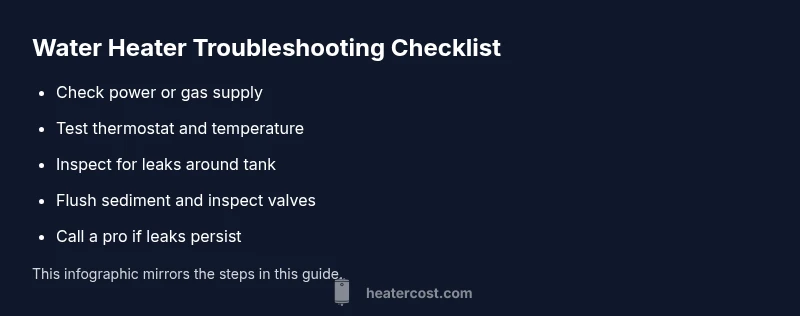
Most hot water heater problems start with simple causes. The quickest check is power: confirm the unit has power or gas supply, then verify the thermostat is set properly. If hot water is inconsistent, listen for pops or banging, which can indicate sediment. Look for leaks at the tank. If none of these fixes resolve the issue, professional service may be needed.
How to know if your hot water heater is broken
If you're wondering how to know if hot water heater is broken, start by identifying common symptoms: no hot water, fluctuating water temperature, leaks around the tank or connections, loud popping or banging sounds, and unusual smells. These signs can indicate different issues, from simple power problems to tank corrosion. The Heater Cost team emphasizes that early detection can prevent property damage and wasted energy. Safety is paramount, so proceed with caution and always follow manufacturer guidelines.
Safety first: quick checks you can do
Before testing anything, ensure your safety. Turn off the power at the breaker or switch off the gas supply if you have a gas heater. Do not touch electrical components with wet hands. Use a flashlight to inspect visible connections for corrosion or moisture. If you smell gas, evacuate immediately and call emergency services. These basic checks can prevent accidents and narrow down whether the problem is electrical, gas-related, or a tank issue.
Electric vs gas: how failures differ
Electric water heaters fail mainly due to malfunctioning heating elements or thermostats, while gas units often suffer from burner or venting problems. For electric models, a loss of hot water with normal gas supply usually points to element or thermostat issues. For gas models, cold or inconsistent water can indicate burner problems or improper venting. Understanding the type of heater helps focus your troubleshooting and avoids dangerous missteps.
Inspect for leaks, corrosion, and sediment signs
Leaks at the tank or connections are red flags that should never be ignored. Tiny pinhole leaks can worsen quickly and lead to water damage. Corrosion around fittings or the tank indicates aging components, while sediment buildup may reduce efficiency and hot water output. Regular inspections of the T&P valve and drain valve are essential, as a faulty valve can cause overheating and leaks. If you notice rusty water, that often signals internal tank deterioration.
Diagnosing power and thermostat issues
Power problems are among the easiest fixes. Start by checking the circuit breaker or fuses; a tripped breaker is a common cause of no-hot-water scenarios. For gas models, verify the pilot light and gas supply. Thermostat misconfiguration, a faulty high-temperature limit switch, or degraded heating elements can lead to temperature fluctuations. Use a thermometer to compare output with the thermostat setting, then adjust as needed.
When to call a professional and cost considerations
If basic checks don’t restore hot water, or you detect persistent leaks, strange odors, or gas smells, professional service is warranted. An expert can safely test electrical components, verify gas connections, and assess tank integrity. Costs vary based on diagnosis and replacement needs, but ongoing issues often justify a professional assessment to prevent further damage and ensure safety.
Maintenance to extend life and prevent failures
Regular maintenance is the best defense against unexpected breakdowns. Schedule annual checks, flush the tank to reduce sediment buildup, inspect the T&P valve, and replace worn hoses or fittings. Insulating pipes and keeping the area around the heater dry helps reduce energy loss and corrosion. The Heater Cost team emphasizes consistent maintenance as a key strategy for reliability and efficiency.
language_id1:1,
Steps
Estimated time: 45-75 minutes
- 1
Power down safely and verify fuel supply
Begin by turning off power at the breaker or switch, and turn off gas if you have a gas heater. Confirm the area around the unit is dry and free of hazards before you touch any components. This step protects you while you inspect the system.
Tip: Always test power with a non-contact tester before touching wires. - 2
Check hot water output and thermostat
Carefully remove access panels if you know how, then test the thermostat setting and water temperature with a thermometer. If temperatures don’t align with the setting, adjust gradually and test again. This helps identify thermostat or sensor problems.
Tip: Record current settings before changing them so you can revert if needed. - 3
Inspect leaks and valves
Look for pooling water, dampness, or corrosion around the tank, fittings, and T&P valve. Tighten loose connections where safe, and replace any leaking parts or seals. Leaks often require professional service.
Tip: Do not force leaks or attempt to seal a cracked tank. - 4
Assess heating elements or burner
For electric heaters, test heating elements for continuity; for gas, check the burner and venting. If elements are faulty or burners won’t ignite, replacement or professional service may be required.
Tip: Electric element testing requires proper tools and caution. - 5
Test system pressure and venting
Ensure the T&P valve functions correctly and that the venting path is clear. A blocked vent can cause overheating and failure. Replace faulty valves and ensure proper drainage when flushing.
Tip: Only perform valve replacement with power off and water drained. - 6
Make a repair vs. replace decision
If multiple components fail or the tank is old, replacement may be more cost-effective than numerous repairs. Factor energy efficiency, safety, and expected lifespan into your decision.
Tip: Ask a pro for an unbiased estimate to compare options.
Diagnosis: No hot water, fluctuating temps, leaks, or noisy operation
Possible Causes
- highPower or fuel supply issue (breaker tripped, gas shutoff)
- mediumThermostat misadjustment or faulty heating element/burner
- lowSediment buildup in tank
- lowTank corrosion or leaking connections
Fixes
- easyRestore power or fuel supply and reset breakers/gas valve
- mediumVerify thermostat setting and replace faulty heating element or burner as needed
- easyFlush the tank to remove sediment (follow manufacturer instructions)
- hardTighten connections and replace leaking components; if tank leaks, consider replacement
Got Questions?
What are the first signs my hot water heater is failing?
Look for no hot water, fluctuating temperatures, leaks, rusty water, and unusual noises. These signs point to potential power, thermostat, or tank issues.
Common early signs are no-hot water, temperature changes, leaks, or odd noises.
Is lack of hot water always a sign the heater is broken?
Not always. Problems can stem from the gas supply, timer settings, or cold water inlet. A systematic check can reveal the root cause.
No—other issues can cause lack of hot water, so diagnose step by step.
Can I inspect leaks myself safely?
Yes, but avoid touching hot surfaces and always shut off power and water first. If you see active leaks, contact a pro.
You can check, but keep safety first and call a pro if unsure.
Repair or replace: how should I decide?
Consider the age, cost to repair, and potential safety risks. A professional can help decide if replacement is more economical.
Weigh the costs and safety; a pro can tell you if replacement is best.
What maintenance helps prevent breakdowns?
Regular flushing, check the T&P valve, inspect connections, and insulate pipes. Schedule annual checkups for reliability.
Keep up with maintenance to reduce surprises.
What should I do if I smell gas near the heater?
Leave the area immediately, avoid switches or flames, and call emergency services. Do not attempt to fix gas problems yourself.
If you smell gas, evacuate and call for help right away.
Watch Video
The Essentials
- Check power and thermostat first.
- Inspect for leaks and sediment before replacing parts.
- Differentiate electric vs gas heater failure to target fixes.
- Call a pro when safety or major components are involved.
- The Heater Cost team recommends proactive maintenance to extend life.