Water Heater Problems: Urgent Troubleshooting Guide
Urgent, practical guidance to diagnose and fix common water heater problems. Learn safe checks, when to replace, and how to prevent future failures with expert tips from Heater Cost.


If your water heater isn’t performing, the most common water heater problems are lack of hot water, inadequate heat, leaks, and strange noises. Start with simple checks: thermostat setting, circuit breaker, gas supply or pilot status, and the age of the unit. If the issue persists, schedule an inspection with a licensed technician.
Understanding Water Heater Problems
Water heater problems can disrupt daily routines and create safety concerns in homes. When a water heater isn’t performing, you might notice cold water, inconsistent temperatures, leaks, or unusual noises. According to Heater Cost, many water heater problems originate from simple settings, aging components, mineral buildup, or improper installation. By recognizing patterns early, homeowners can act quickly, save money, and prevent further damage. This guidance from the Heater Cost team emphasizes safety first, especially when gas lines, electrical connections, and pressurized tanks are involved. The goal is to empower you to identify symptoms, perform safe checks, and know when to call a professional. The term water heater problems is used throughout this guide to keep you focused on root causes rather than temporary fixes.
The water heater is a workhorse behind the scenes—supplying hot water for showers, dishes, and laundry. When it falters, disruption follows. The good news is that many issues respond to basic diagnostics and deliberate, safe fixes. Read on to build a your plan for troubleshooting with confidence and to determine if professional service is warranted.
]] ,
]
diagnosticFlow
Steps
Estimated time: 40-60 minutes
- 1
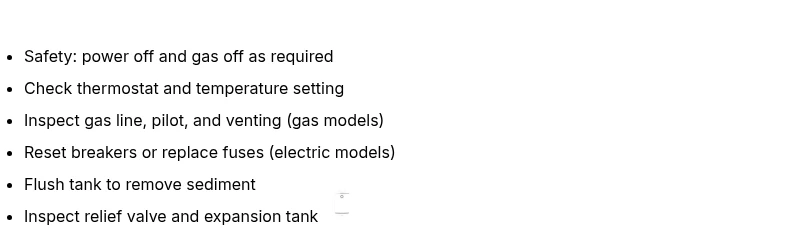
Safety first and power down
Turn off the power at the breaker for electric models or shut off the gas supply for gas models. If you’re working on the water heater, never touch electrical components with wet hands and use insulated tools. Confirm the water shutoff is accessible in case you need to stop water flow.
Tip: If you smell gas, leave the area immediately and call emergency services. - 2
Check the thermostat and temperature
Inspect the thermostat setting. If it’s too low, raise it gradually and wait a few hours to test hot water. For digital thermostats, run a quick diagnostic check if the unit offers one. Document the setting for future reference.
Tip: A common safe target is 120°F (49°C) for most households. - 3
Inspect gas supply or power
For gas models, ensure the gas valve is fully open and the pilot light is lit. If you don’t see a flame, follow the manufacturer’s relight procedure or contact a licensed technician. For electric models, verify that the circuit breaker is on and that the wiring is intact.
Tip: Don’t attempt to repair gas lines yourself; gas work requires licensed professionals. - 4
Reset and test the unit
Reset any tripped breakers or devices. Restore power and listen for the sound of the burner or a humming from the tank as it starts heating. If you hear no sound and still have no hot water, the element or burner may be faulty.
Tip: Document any resets and test after a cooling-off period to avoid scalding injuries. - 5
Drain and flush the tank
If sediment has built up, connect a hose to the drain valve and run cold water through to flush out minerals. Allow the tank to fill, then reheat to test for improved output. This helps restore efficiency and hot water delivery for many older tanks.
Tip: Be mindful of scalding risk and use eye protection when flushing a hot tank. - 6
Check safety relief and expansion components
Inspect the T&P relief valve for signs of leaking or corrosion. Verify that an expansion tank is present if you have a closed-water system. A faulty relief valve or missing expansion tank can cause dangerous pressure buildup.
Tip: Never block or cap the relief valve; it must vent safely.
Diagnosis: No hot water or inconsistent hot water temperatures
Possible Causes
- highThermostat set too low or malfunctioning thermostat
- mediumElectrical issue (tripped breaker or blown fuse) in electric models
- mediumGas supply issues or a off/pilot not lit (gas models)
- lowSevere mineral buildup or aging tank
Fixes
- easyIncrease thermostat to a safe range (commonly 120–140°F / 49–60°C) and test hot water output
- easyReset the circuit breaker or replace a blown fuse, then re-test power to the unit
- easyRelight the pilot or restore gas supply; check for gas leaks and ensure proper venting (gas models)
- mediumFlush the tank to remove sediment; consider professional replacement if the tank is aged
Got Questions?
What are the most common water heater problems?
The most common issues include no hot water, insufficient hot water, leaks, strange noises, and fluctuating temperatures. Many are caused by thermostat settings, aging components, sediment buildup, or installation faults.
Common problems include no hot water, leaks, and strange noises; many stem from thermostat settings or aging parts.
Can I flush my water heater myself?
Yes, flushing can remove mineral buildup and improve efficiency. Shut off power and water, attach a hose to the drain valve, and run cold water through until clear. Follow the manufacturer’s instructions and wear protective gear.
Yes, you can flush it at home, just follow safety steps and the manual.
When should I replace my water heater?
If the tank is old (typically 8-12+ years depending on model), leaks persist, or repair costs approach replacement, replacement is usually the safer long-term choice. Evaluate efficiency and fuel costs as well.
If the tank leaks or is old and inefficient, replacement is usually best.
Is a gas smell dangerous near my water heater?
Yes. A true gas smell requires immediate evacuation and contacting emergency services. Do not operate electrical switches or create sparks while leaving.
If you smell gas, leave the area right away and call emergency services.
How often should I service a water heater?
An annual check is generally advised, including inspection of the thermostat, venting, gas lines, and the pressure relief valve. Regular maintenance helps extend life and performance.
Annual checks keep your heater running smoothly and safely.
What temperature should my water heater be set to?
Most homes set to 120°F (49°C) for safety and efficiency, but higher settings may be needed for households with higher hot water demand. Adjust gradually and test.
A typical safe setting is 120 degrees, but adjust to your needs.
Watch Video
The Essentials
- Take immediate safety steps before troubleshooting.
- Identify whether your unit is gas or electric to guide fixes.
- Regular maintenance helps prevent most water heater problems.
- Call a licensed tech for dangerous conditions or uncertain repairs.
- Document settings and maintenance to track heater health.