Water Heater Not Heating Water: Troubleshooting Guide
Learn how to diagnose and fix a water heater that isn’t heating water. Step-by-step checks, safety tips, and maintenance to restore hot water quickly for homeowners, renters, and property managers.


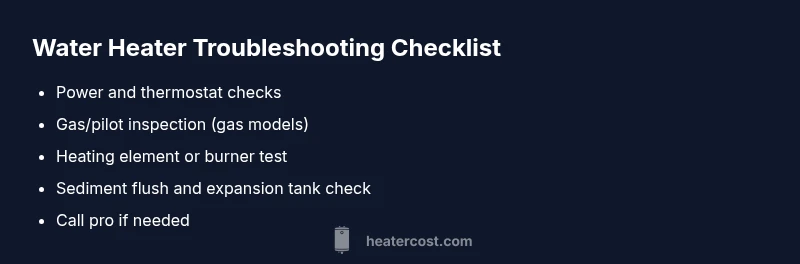
According to Heater Cost, begin with power checks, thermostat settings, and the circuit breaker. Then verify gas supply if applicable, inspect the heating element or burner, and check for sediment buildup. If the problem persists after these quick fixes, contact a licensed technician for a safe, thorough diagnosis.
Why the Issue Happens: What heater not heating water
If you're wondering what heater not heating water means, you’re not alone. This issue often isn’t one isolated fault but a chain of simple problems that prevent heat from reaching your taps. Heater Cost analysis shows that the most common culprits are power or thermostat faults, an off breaker, gas supply problems, or mineral sediment buildup inside an aging tank. By taking a methodical approach, you can identify the root cause without guesswork. In this section we’ll outline the typical failure modes and how to test for them, so homeowners, renters, and property managers can act quickly and safely. Expect practical checks, clear readings to look for, and decisions about when to call a pro. Remember: gradual degradation is common, and early action saves energy and money over time. This guide keeps safety at the forefront while delivering actionable steps you can perform yourself when appropriate.
Common Causes: Why your water won’t heat
- Power or electrical issues (tripped breakers, blown fuse, lost power): Electric water heaters rely on a continuous power supply. A simple breaker reset can restore heat, but if power keeps tripping, there may be an underlying fault or overload.
- Faulty thermostat setting or failure: If the thermostat is set too low or has failed, the heater will not reach the desired temperature.
- Heating element failure (electric models): A burned-out element stops heat production. Replacing the element requires some electrical work and should be handled by a professional if you’re not comfortable with wiring.
- Burner or pilot problems (gas models): A pilot light that won’t stay lit or a gas supply issue prevents ignition and sustained heating.
- Sediment buildup in the tank: Over time, minerals settle on the bottom and insulate the water from the heating element or burner, reducing efficiency and heat transfer.
- Faulty control board or relay (advanced): Electronic controls can fail and prevent heat from being delivered even if the power is on. This often requires a professional diagnosis.
Safety First: Shutoffs and precautions
Your first priority is safety. Always shut off power to electric units at the breaker panel before touching electrical components. For gas units, turn the gas supply off if you smell gas or hear hissing, and vent area to ensure adequate oxygen. Do not operate a tank with a known gas leak or water around electrical components. Use proper PPE (gloves, eye protection) if you’re inspecting internal parts. If you feel unsure at any point, pause and call a licensed professional.
Quick Checks You Can Perform (Safely)
- Power and breakers: Locate your circuit breaker panel and ensure the dedicated breaker for the water heater is ON. If it trips, reset it and observe whether it trips again. If it does, there may be a short or overload that needs an expert inspection.
- Thermostat inspection: Check the dial setting. If it’s markedly low, raise it to the recommended range and test. If the heater still won’t heat, the thermostat could be faulty and require replacement.
- Gas supply (gas models): Confirm the gas supply valve is fully open and that other gas appliances in the home are functioning. If the flame won’t ignite, the issue might be the pilot or the burner.
- Drain valve and sediment: When safe, partially drain a small amount from the drain valve. If you notice gritty sediment, a professional flush may be needed to restore heat transfer.
Diagnosing the Most Common Failure: Electric vs. Gas
Electric water heaters most often fail due to a faulty heating element or a malfunctioning thermostat. Gas models commonly struggle with a pilotLight or burner issue, or an interrupted gas supply. From a diagnostic standpoint, start by confirming power or gas supply, then isolate whether heat is produced at the element/burner. If heat is absent even when power and supply are correct, replace the faulty component. Heater Cost analysis shows that pinpointing the exact failed part saves time and reduces unnecessary replacements. Always follow safety procedures and manufacturer guidelines when testing components.
Preventive Maintenance and When to Call a Pro
Regular maintenance can keep water heaters running efficiently and extend their life. Schedule annual inspections, flush the tank to remove sediment, and test the pressure relief valve. Replace aging components like thermostats and heating elements before they fail completely. If you encounter gas leaks, status lights, or persistent trips after basic checks, stop and call a licensed plumber or HVAC technician. Professional service is essential when dealing with gas appliances, electrical work, or unknown leaks. Preventive care saves energy, reduces the risk of sudden failures, and helps ensure hot water reliability.
Steps
Estimated time: 45-90 minutes
- 1
Power down and verify supply
Turn off the water heater at its switch or the main breaker, then restore power after a minute. Check for a tripped breaker or blown fuse and reset as needed. If power returns but the heater still won’t heat, move to Step 2.
Tip: Always start with power verification to avoid electric shock. - 2
Check thermostat and mode
Inspect the thermostat setting; set to a typical temperature range and test. If it’s already at a proper setting, consider a faulty thermostat and plan for replacement under professional guidance.
Tip: A stuck or faulty thermostat is a common heat issue—don’t ignore it. - 3
Inspect heating element or burner
For electric units, test or replace the heating element. For gas units, verify the burner and pilot light are functioning and the gas valve is fully open. If ignition won’t occur, stop and call a pro.
Tip: Electric work and gas work should be handled by trained technicians. - 4
Prevent sediment buildup
Safely drain a portion of the tank to evaluate sediment and flush if necessary. Sediment can insulate heat and reduce efficiency, especially in older units.
Tip: Follow the manufacturer’s flushing procedure to avoid tank damage. - 5
Test performance and decide on service
Restore power, recheck hot water output, and observe. If heat is still weak or absent after the checks above, schedule professional service for a definitive diagnosis and safe repair.
Tip: Document symptoms and recent maintenance to aid the technician.
Diagnosis: Water heater won't heat water
Possible Causes
- highPower or circuit issue (tripped breaker, faulty outlet, or lost power)
- highThermostat setting incorrect or faulty
- mediumHeating element failure (electric)
- lowPilot light out or gas supply interrupted (gas)
Fixes
- easyReset the circuit breaker and verify power at the outlet
- easyAdjust thermostat to a safe, effective temperature and test
- mediumTest or replace the heating element (electric) or burner/pilot (gas) with professional help
- hardRelight pilot or schedule gas line inspection/repair (professional)
Got Questions?
Why is my water not heating even though the breaker is on?
A persistent heat issue despite power on could indicate a faulty thermostat or heating element, or a wiring problem. If basic resets don’t help, stop and contact a licensed technician to avoid electric shock or further damage.
If the breaker is on but there’s no heat, you may have a faulty thermostat or heating element, or a wiring problem. Contact a licensed technician for a safe fix.
Can sediment cause not heating water?
Yes, mineral buildup can insulate the heating source and reduce efficiency. Flushing the tank and removing sediment can restore heat transfer and improve performance.
Sediment can insulate the heater, making it hard to heat water. Flushing the tank can help restore heat.
Should I relight a pilot or check the gas supply myself?
Relighting a pilot or inspecting the gas supply is potentially dangerous. If you smell gas or cannot safely relight, contact a professional immediately.
Relighting a pilot can be hazardous. If you’re unsure, call a pro.
What maintenance helps prevent future not-heating issues?
Annual checks, periodic flushing, and inspecting the relief valve and thermostats can prevent common failures. Keeping a maintenance log helps schedule timely service.
Regular maintenance and flushing help prevent not-heating issues. Keep a log for reminders.
Is professional service always required for gas heaters?
Gas heaters involve potentially dangerous fuel sources. If you’re unsure, it’s best to hire a licensed technician to inspect and repair safety-critical components.
If you’re unsure about gas work, hire a licensed tech for safety.
How long should it take to fix a simple thermostat issue?
A thermostat replacement can often be completed in a couple of hours, depending on accessibility and part availability. If the unit is old, professional assessment is still recommended.
Thermostat replacement can take a couple of hours; if unsure, call a pro.
Watch Video
The Essentials
- Check power and thermostat first
- Identify whether electric or gas unit to target fixes
- Sediment can block heat transfer; flush if needed
- Call a pro for gas issues or electrical work beyond basic checks
- Regular maintenance prevents future failures