Water Heater Issue Troubleshooting: Quick Fixes & Prevention
This in-depth guide helps homeowners diagnose and fix common water heater issues safely, with a practical flow, quick-answer snippets, and prevention tips.


Common water heater issues usually stem from a faulty thermostat, heating element, or power supply. Start by confirming power to the unit and setting the thermostat correctly, then inspect for leaks or sediment buildup. If the problem persists or you notice gas smells, shut off power/gas and call a professional.
Understanding What a Water Heater Issue Feels Like
When hot water runs out too quickly, temperatures fluctuate, or you notice unusual noises, it’s a signal that your water heater isn’t delivering reliably. In many homes, the root causes are simple and affordable to fix, though some situations require professional help. According to Heater Cost, many common issues arise from thermostat miscalibration, power supply faults, or sediment buildup inside the tank. This section helps you recognize the patterns you’re seeing, so you can prioritize the safest, most cost-effective fixes. Remember: treating a water heater issue promptly can prevent larger problems like leaks, rust, or mold growth around the equipment. As you read, keep in mind your unit type—electric, gas, or tankless—and whether you’ve recently had a service or upgrade.
- Symptoms you might notice: inconsistent hot water temperature, lingering rusty water, reduced hot-water flow, rumbling or banging noises, or a visible leak at the tank or connections.
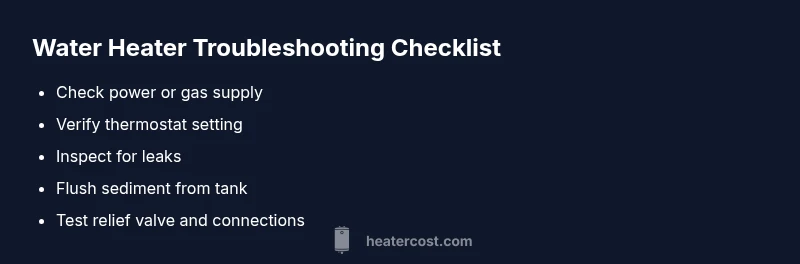
- Quick checks to start with: confirm the unit has power, verify the thermostat is set correctly, inspect for visible leaks, and look for sediment near the drain valve. If your setup is gas-powered, listen for a working pilot light and check the gas valve.
Safety First: Protecting You and Your Home
Electrical and gas components pose real risks if mishandled. Before you touch any part of the system, turn off power at the circuit breaker or remove the disconnect switch for electric heaters. For gas models, turn the gas supply off if you detect the scent of gas or hear a hissing sound that isn’t normal. Water around the base of the tank can indicate a leak or faulty pressure relief valve—do not ignore it, as standing water can lead to electrical hazards or mold growth. Use protective gloves and eye protection when flushing or draining, and keep children and pets away from the work area. The Heater Cost team emphasizes safety as the top priority; if you’re ever unsure, pause, call a professional, and documented instructions in your owner’s manual.
- Always shut off power or gas before starting any inspection.
- Never attempt to disassemble gas controls or the thermocouple if you’re not trained.
- Keep a dry, flat workspace and have absorbent towels ready for any incidental spills.
Diagnostic Flow: From Symptoms to Diagnosis
A structured approach helps you avoid guessing and wasting time. Start with the simplest checks and move toward component-specific tests. If the water heater is not producing hot water at all, focus first on power and gas supply (for gas models). If the unit heats some but not enough water, target thermostats and heating elements. Sediment buildup often mimics more complex problems by reducing efficiency and flow. Throughout the process, compare what you observe with typical failure modes:
- No hot water at all: power, switch, thermostat, or gas supply (gas models)
- Hot water intermittently: thermostat or element cycling, sediment, or a faulty switching device
- Loud noises or banging: sediment or decoupled expansion valve
- Leaks: tank corrosion, loose connections, or failed pressure relief valve
Heater Cost analysis shows that most service calls revolve around thermostat or power issues, so prioritize those checks first. If a mental model of the problem isn’t coming together after a few tests, document your observations and contact a professional for a precise diagnosis.
Common Causes and How to Verify Them
Thermostat miscalibration is a frequent culprit. Verify the set temperature (usually 120–140°F for most homes) and test if adjusting the setting improves hot-water supply. A faulty heating element in electric units can fail to heat water evenly; testing continuity with a multimeter is an option if you’re comfortable with electrical work. Gas water heaters rely on a functioning pilot light and gas valve; a pilot that won’t stay lit or a faulty thermocouple disables heat. Sediment buildup causes reduced efficiency and noisy operation; draining the tank and flushing it clears mineral debris. A malfunctioning pressure relief valve can leak or vent steam; if you suspect this, do not cap the valve—call a plumber.
- Electric heaters: test heating elements and the upper/lower thermostats.
- Gas heaters: ensure the pilot is lit and the thermocouple is clean.
- Tankless models: check flow sensors and heat exchangers for mineral buildup.
Step-by-Step Fixes for the Frequent Problems
- Power and reset: Switch off the circuit breaker, wait 60 seconds, and restore power. If the breaker keeps tripping, there may be a short or overloaded circuit that requires a professional.
- Thermostat check: Remove access panel, verify the thermostat is set within the recommended range, and retest hot water after an hour. If there’s still a mismatch, the thermostat or control board may be faulty.
- Heating element (electric): With power off, test each element for continuity using a multimeter. Replace any open circuits and reassemble carefully.
- Gas controls: For gas units, relight the pilot if needed and confirm the thermocouple is clean. If the pilot won’t stay lit, there could be a gas valve or thermocouple issue.
- Sediment flush: Attach a hose to the drain valve, close the cold-water inlet, drain some water, and then open the inlet to flush out sediment. Refill the tank and restore heat.
- Leaks and valve check: Inspect all connections and the pressure relief valve. Tighten fittings only as needed; if the tank itself shows rust, plan for replacement.
Tip: If you’re unsure about any electrical or gas work, skip to the next safe step and call a professional. The goal is to restore safe operation, not to push the limits of your comfort zone.
Maintenance Tips to Prevent Future Issues
Regular maintenance helps your water heater run efficiently and last longer. Schedule a yearly flush to remove sediment and check the anode rod—replacing a worn anode rod can dramatically extend tank life. Keep the area around the heater clean and dry, and replace worn inlet and outlet hoses before leaks appear. For gas units, have the venting system inspected to ensure proper exhaust and combustion efficiency. If your home uses hard water, consider installing a water-softening system or a scale inhibitor to minimize mineral buildup. Finally, keep critical documentation (manuals, model numbers, warranty details) accessible for future service calls.
- Schedule annual tank flushes.
- Check and replace the anode rod every 3–5 years depending on water quality.
- Inspect ventilation and gas connections for signs of wear or corrosion.
- Consider water-softening solutions if mineral content is high.
When to Call a Pro and Warranty Considerations
Some issues are beyond DIY repair, especially if you detect gas leaks, a persistent electrical fault, or visible tank corrosion. If you smell gas, hear hissing from the gas line, notice carbon monoxide symptoms, or see clear water leaks around the tank, shut off power and gas and contact emergency services and a licensed plumber or HVAC technician. Even when a fix seems simple, professional validation protects your home and warranty coverage. Check your warranty terms and ensure any service work aligns with manufacturer requirements to avoid voiding coverage. The Heater Cost team recommends consulting licensed technicians for complex repairs, particularly on older units or high-efficiency systems.
FAQ-Section Placeholder
Steps
Estimated time: 60-120 minutes
- 1
Power check and safety prep
Turn off the power at the breaker panel or disconnect switch. Confirm there is no live electrical current before touching any components.
Tip: If the breaker trips again, there may be a short; do not push further without an electrical safety check. - 2
Thermostat inspection
Remove the access panel and verify the thermostat is set within the recommended range for your household (often around 120–140°F). Make a small adjustment and wait about 30 minutes to test.
Tip: Note the exact temperature setting to replicate or revert if needed. - 3
Heating element test (electric models)
With power off, remove the element access cover and test each element with a multimeter for continuity. Replace any element showing an open circuit.
Tip: Be sure to drain a portion of water before removing the element to avoid scalding. - 4
Gas controls check (gas models)
Ensure the pilot light is burning and the thermocouple is clean. If the pilot won’t stay lit, do not force the gas valve and seek professional help.
Tip: Only attempt relighting if you are confident in safety procedures. - 5
Sediment flush
Shut off the cold-water supply, attach a hose to the drain valve, and slowly flush the tank to remove mineral buildup. Refill and reheat to test performance.
Tip: Run several gallons to remove debris; expect slightly murky water initially. - 6
Leak and valve check
Inspect all connections and the pressure relief valve for corrosion or leaks. Tighten fittings if needed or replace faulty valves. If the tank shows rust, replacement is likely required.
Tip: Never cap or bypass the pressure relief valve.
Diagnosis: Water not hot or insufficiently hot
Possible Causes
- highPower issue (tripped breaker or switch off)
- highThermostat settings out of range
- mediumFaulty heating element (electric)
- mediumGas supply or pilot issue (gas units)
- lowSediment buildup reducing heat transfer
Fixes
- easyReset circuit breaker and verify power to the unit
- easyAdjust thermostat and test water temperature
- mediumTest/replace heating elements or thermostat as needed
- mediumRelight pilot or service gas controls (if safe to do so)
- easyFlush tank to remove sediment buildup
Got Questions?
What is the first thing I should check when my water heater isn't producing hot water?
Start with power, thermostat settings, and gas supply (for gas models). If there’s no power or the thermostat is mis-set, adjust and re-test before moving on to more complex steps.
Check power and thermostat first; if that doesn’t fix it, inspect the gas supply if you have a gas heater.
Why is there no hot water even though the heater is on?
The issue is often a tripped breaker, a faulty thermostat, or a failed heating element. Verify electrical power, test the thermostat, and check the heating element if needed.
No hot water usually means power, thermostat, or heating element problems.
What safety steps should I take before troubleshooting?
Shut off power at the breaker, cut the gas if you smell gas, and ensure the area is dry. Use protective gloves and eye protection during inspection.
Always shut off power first, and gas if needed, before you start.
When should I call a professional?
If you smell gas, see leaks, suspect wiring damage, or if the tank shows signs of corrosion, contact a licensed technician. For older units, professional advice helps protect warranties.
Call a professional if there’s a gas issue, wiring concern, or visible tank damage.
Can I flush a water heater myself?
Yes, with proper precautions: shut off power/gas, connect a hose to the drain valve, and drain the tank to remove sediment. Follow manufacturer instructions to avoid scalding.
Flushing is doable, but follow steps carefully and pause if unsure.
Watch Video
The Essentials
- Diagnose from simple to complex to avoid unsafe situations.
- Thermostat and power issues are the most common causes.
- Flush sediment regularly to maintain efficiency and lifespan.
- Call a pro for gas-related problems or tank corrosion.
- Maintain a yearly maintenance schedule to prevent incidents.