Common Problems with Water Heaters: Diagnosis & Fixes
Learn to diagnose and fix the most common water heater problems fast. This guide covers no hot water, temperature swings, leaks, noises, and maintenance tips to prevent future failures—with safe, practical steps for homeowners.


Facing no hot water, weak heat, or sudden temperature swings? The most likely culprits are thermostat or gas/electric supply issues, sediment buildup, or a leaky valve. Start with safety checks and simple resets, then inspect for leaks before calling a pro. This rapid guide from Heater Cost helps homeowners diagnose common problems with water heaters and prioritize fixes before service calls.
Understanding the common problems with water heaters
Water heaters are surprisingly simple devices, yet a handful of issues are responsible for most service calls. The symptoms you notice—no hot water, inconsistent temperatures, strange noises, or damp spots near the tank—point to a few repeat culprits. According to Heater Cost, many problems stem from thermostat settings, mineral buildup in the tank, valve leaks, or aging components. Recognizing these patterns helps homeowners triage safely and efficiently. This guide uses clear checks you can perform, prioritizing safety and practicality to reduce unnecessary service visits while preserving comfort. By understanding the lifecycle of a typical storage heater and the impact of water quality, you can better plan maintenance and budget for replacements if needed.
No hot water: immediate checks and fixes
No hot water is one of the most urgent signals your heater isn’t functioning. Start with the simplest checks: verify the power supply for electric units (breaker, fuse), ensure the thermostat is set correctly, and confirm the gas supply and pilot light (for gas models). Sediment buildup can also insulate the water from reaching the outlet, so a basic flush can restore heat transfer. If you observe a tripped breaker, reset it and re-test. If the unit still won’t heat, there may be a fault in the heating element or the thermostat—these parts typically require professional assessment.
Temperature inconsistency and fluctuations
If hot water suddenly gets too hot or not hot enough, suspect the thermostat or a faulty dip tube that mixes cold water into the hot output. Check the thermostat calibration and replace it if readings don’t match the dial. Water temperature can also be affected by pressure levels and the hot water draw pattern in your home. For homes with older tanks, mineral scaling reduces efficiency and alters perceived temperatures. Regular flushing and, if needed, a replacement anode rod can mitigate many of these issues.
Noises, odors, and water quality signals
Rumbling, popping, or banging noises usually indicate mineral buildup. Flushing the tank helps clear sediments that trap water and create noise. A sulfur or rotten-egg odor can mean bacterial activity or sulfur content in the water supply, often reduced by flushing and anode rod replacement. Strange metallic tastes or color in hot water points to corrosion within the tank. Addressing these signals early can prevent bigger failures that lead to leaks or tank replacement. Always consider water quality improvements if you notice recurring mineral issues.
Leaks and drips: locating the source
A leak around the base of the tank often means a compromised tank seal or a failed gasket, while slow drips from connections or valves can usually be tightened or resealed. Inspect the cold-water inlet and hot-water outlet connections, pressure relief valve discharge line, and the drain valve. If the tank itself is leaking, replacement is usually the only option. In the short term, turning off the power or gas and isolating the water supply can prevent further damage, but leaks require professional evaluation to address safety and long-term reliability.
Sediment buildup and efficiency losses
Sediment buildup on the tank’s bottom reduces efficiency and shortens the heater’s life. Flushing removes mineral deposits, restores heat transfer, and can lower energy use—though it doesn’t fix a failing tank. If your water is hard, you may need a periodic flush every 6-12 months. Upgrading to a newer model with a higher efficiency rating or installing a filtration/softening system can significantly extend the life of your heater and reduce ongoing maintenance.
Maintenance essentials: safety, checks, and planning before replacement
Regular maintenance is your best defense against unexpected outages. Simple tasks like annual flushing, inspecting the anode rod, checking electrical connections, and testing the temperature relief valve can catch problems early. Keep the surrounding area clear, verify venting (for gas units) and ensure proper clearances. If you notice ongoing leaks, persistent corrosion, or frequent failures, it may be time to plan a replacement rather than perpetual repairs. The Heater Cost team emphasizes proactive maintenance as the most cost-effective strategy for reliability.
When to call a professional and what to expect
Some issues require licensed help, especially gas safety concerns or suspected internal tank damage. If you smell gas, hear hissing from the gas line, or see active leaks, evacuate and call emergency services. For non-emergency problems, a licensed technician can diagnose thermostat faults, gas valve issues, or anode rod replacement, and perform pressure-relief valve checks. Expect a multi-point inspection, an evaluation of efficiency, and guidance on whether a repair or replacement offers the best long-term value.
Steps
Estimated time: 60-90 minutes
- 1
Power off and safety check
Shut off power to the heater (or gas supply if you smell gas). Close the cold-water inlet valve to stop fresh water from entering the tank. This keeps you safe while you inspect basic components.
Tip: Never work on gas appliances with a gas smell; evacuate and call emergency services. - 2
Verify thermostat settings
Ensure the thermostat is set to an appropriate temperature (120-140°F is common). If the dial doesn’t align with the setting, recalibrate or replace the thermostat.
Tip: Take a note of current settings before changing anything for easy reversal. - 3
Test hot water output
Turn on a hot water faucet to see if water starts flowing warm. If not, you may have a faulty heating element or ignition issue on gas units.
Tip: If you’re on a shared system, verify other fixtures aren’t drawing excess hot water. - 4
Inspect fuel or electrical supply
For electric units, check the breaker and wiring; for gas units, verify the gas valve is open and the pilot light is lit. Reignite if safe to do so.
Tip: Only reignite pilot lights if you’re comfortable and follow manufacturer instructions. - 5
Flush the tank
Attach a hose to the drain valve, run water out until it runs clear, and refill slowly to prevent air pockets. This removes accumulated sediment.
Tip: Do not rush the flush; ensure the power is off during this step. - 6
Check for leaks and corrosion
Inspect inlet/outlet connections, the pressure relief valve, and tank exterior for dampness or rust. Tighten fittings or replace gaskets as needed.
Tip: If you see active rust or a leaking tank, plan replacement promptly. - 7
Replace anode rod if needed
If the anode rod is severely corroded, replace it to slow tank corrosion and extend life.
Tip: Anode rods are a maintenance item—check them during yearly service. - 8
Decide on repair vs replacement
If tests show persistent failure or the tank is old and inefficient, evaluate whether a cost-effective replacement is better long-term.
Tip: Keep a maintenance log for future reference.
Diagnosis: Water heater not delivering hot water or showing inconsistent temperatures
Possible Causes
- highPower issue or tripped electrical circuit
- highThermostat miscalibration or faulty thermostat
- mediumSediment buildup in the tank
- lowLeaking valve or tank corrosion
- lowGas supply or ignition issue (gas models)
Fixes
- easyCheck electrical outlet, reset tripped breaker, and confirm thermostat setting
- mediumTest to ensure the thermostat matches the human touch and replace if readings are off
- easyFlush the tank to remove mineral buildup and restore heat transfer
- mediumTighten connections, inspect for leaks, and replace corroded valves or seals
- hardInspect gas line, pilot or ignition—call a pro if gas issues are suspected
Got Questions?
Why is there no hot water coming from my water heater?
No hot water is usually caused by a simple issue like a tripped breaker, a thermostat problem, or an empty gas supply. Start by verifying power or gas and adjusting the thermostat. If the issue persists, the heating element or igniter may be faulty and require professional testing.
No hot water is typically due to power or gas issues, or thermostat missettings. Check the breaker, gas supply, and thermostat, then seek a professional if it remains unresolved.
What causes water to be too hot or too cold?
Temperature swings often come from a miscalibrated thermostat, a failing dip tube, or mineral buildup affecting heat transfer. Check the thermostat and consider flushing and inspecting for sediment buildup. If the problem continues, the thermostat or heating element may need replacement.
Temperature swings can come from a bad thermostat, dip tube, or mineral buildup. Check settings, flush, and replace components as needed.
Why does my heater make banging noises?
Banging or rumbling noises are usually caused by sediment collecting at the tank bottom. Flushing the tank helps, and upgrading to a higher efficiency unit later can reduce scale. If noises persist after flushing, a professional inspection is recommended.
Banging often means sediment is built up. Flush the tank, then consider professional checks if it continues.
Is a leaking water heater dangerous?
A leak near the base or valves can indicate corrosion or a failing seal. While minor leaks may be contained, persistent leaks require professional assessment and usually replacement for safety and reliability.
Leaks can be serious; have a pro assess and plan replacement if the tank shows corrosion or persistent drips.
How often should I flush my water heater?
Most manufacturers recommend flushing annually, but hard water or heavy sediment can shorten intervals. Regular flushing helps maintain efficiency and extend the heater’s life. If you notice more sediment, flush sooner.
Flushing once a year is typical, but hard water might require more frequent flushing.
When should I replace a water heater?
Replace when repairs exceed a reasonable portion of a new unit’s cost, or when the tank shows significant rust, leaks, or inefficiencies. A newer model can save energy and avoid frequent breakdowns.
Think replacement when repairs pile up or the unit becomes unreliable or inefficient.
Watch Video
The Essentials
- Diagnose root causes before proposing fixes
- Regular flushing extends heater life and efficiency
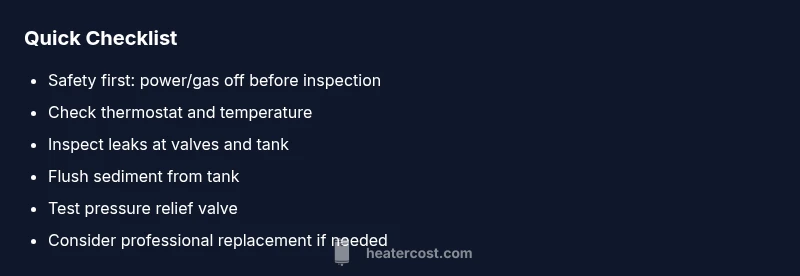
- Safety first: shut power/gas before inspection
- Know when to call a pro and what to expect
- Keep a maintenance schedule to prevent problems