Water Heater Not Getting Hot: Troubleshooting & Fixes
Urgent, step-by-step guide to diagnose and fix a water heater not getting hot. Quick checks, diagnostic flow, safe fixes, and prevention tips for electric and gas models.


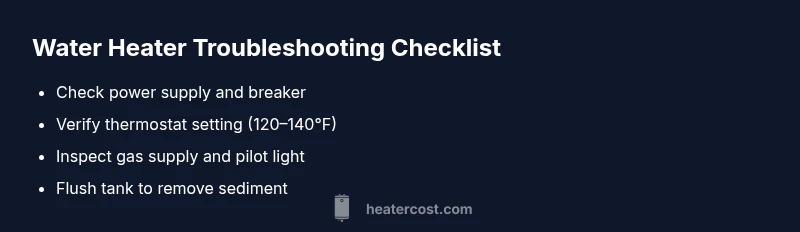
Most likely, your water heater isn’t hot due to a power issue, an incorrect thermostat setting, or a blocked burner/pilot. Start by checking the power supply and circuit breaker, then verify the thermostat is set to a hot enough range (around 120–140°F). If these don’t fix it, proceed with safe, deeper checks.
Immediate Causes and Quick Checks
When a water heater won’t heat, start with the simplest culprits you can verify safely: power, thermostat, and burner status. In electric models, a tripped breaker or an unplugged unit can cut power to the element. In gas models, the burner may not ignite if the gas supply is off or the pilot light is out. These issues are the most common and quickest to verify, and addressing them often restores hot water quickly. Also consider sediment buildup, a faulty thermostat, or a failing heating element as potential contributors. The goal is to quickly identify issues you can fix safely, while knowing when to escalate to professional help.
Tip: For safety and clarity, label wires and take a quick photo before opening any panel.
Electric vs Gas: What Changes Troubleshooting
Electric and gas water heaters share the basic goal of heating water, but the paths to heat differ and so do the fixes. Electric units rely on heating elements and a thermostat that controls power to those elements; a blown fuse or a tripped breaker disables heat entirely. Gas units depend on a continuous gas supply and a working pilot/burner. If the pilot won’t stay lit or the burner won’t ignite, the heater won’t heat water. Understanding the type you have helps you apply the correct troubleshooting steps and avoid unsafe attempts.
Simple, Safe Checks You Can Do First
Before you dive into complex tasks, perform these checks safely and methodically. Verify the power at the outlet or disconnect box and reset the breaker if it tripped. Check the thermostat setting (ensure it is at least 120°F, but not higher than 140°F for safety). For gas heaters, confirm the gas valve is open and the pilot light is burning; if not, relight following the manufacturer’s instructions. Inspect the drainage valve and pressure relief valve for obvious leaks or damage. If you smell gas at any time, stop and call your gas company or emergency services.
Testing Plan: How to Narrow It Down
A structured approach helps you distinguish power, thermostat, and fuel-supply issues. Start with the power supply: is the unit receiving power? Move to the thermostat: is it set correctly, and does the unit respond to temperature changes? Then check the fuel supply: for gas units, is the gas valve open and is the pilot light steady? For electric units, check the heating elements for continuity if you have the tools and training. If the unit is older, consider sediment buildup or a failing element as a secondary cause.
Common Fixes You Can Try (With Safety in Mind)
- Reset power: switch the breaker off, wait 30 seconds, and switch it back on. - Adjust the thermostat to a safe hot range (120–140°F) and test. - For gas units: ensure the gas valve is open and attempt to relight the pilot per manual. - For electric units: if one element fails, the other may still heat water; testing element continuity is best left to a pro. - If sediment is present, a flush can improve heat transfer and water temperature.
Always turn off power at the circuit breaker before touching electrical components. Do not attempt to repair gas lines yourself unless you are qualified.
When to Call a Professional: Safety Limits and Liability
If you notice a burning smell, gas odors, or if the unit leaks water, stop immediately and contact a licensed technician. If troubleshooting steps don’t resolve the issue, or if you’re uncomfortable with electrical or gas components, professional service is the safer choice. A qualified technician can diagnose electrical faults, gas ignition problems, or motherboard/thermostat failures with proper tools and safety protocols.
Maintenance Tips to Prevent Future Cold Water
Schedule an annual check of your water heater, especially before winter months. Flush the tank to remove mineral buildup, inspect the anode rod for corrosion, and replace worn components (thermostat, burner, or heating element) as needed. Consider a professional inspection if your unit is over 8-12 years old, or if you notice frequent temperature fluctuations or noises. Regular maintenance improves efficiency and prolongs heater life.
Shortlist of Quick Troubleshooting Scenarios and Likely Solutions
- No hot water on electric heater: power issue or failed heating element – check breaker and element continuity. - Cold water after short run: thermostat may be set too low or element is failing – verify settings and test elements. - Gas heater pilot goes out: relight and check thermocouple; if it goes out again, a faulty thermocouple or gas valve may be at fault. - Sediment issues: flush tank; if sediment is heavy, professional cleaning may be required.
Steps
Estimated time: 60-120 minutes
- 1
Power check
Locate the circuit breaker or disconnect switch for the water heater. If the breaker is tripped, flip it fully to off, then back to on. Confirm the unit powers up by listening for subtle hums or feeling for heat at the panels after a minute.
Tip: If the breaker trips again, there may be an electrical fault requiring a pro. - 2
Thermostat verification
Access the thermostat and confirm it’s set between 120°F and 140°F. If you have a dual-element electric heater, test both elements. After adjusting, run hot water for several minutes to verify improvement.
Tip: Don’t set above 140°F; higher temps can scald and waste energy. - 3
Gas supply check
For gas heaters, ensure the gas valve is fully open and the pilot light is lit. If the pilot won’t stay lit, relight following the manual. If lighting fails, this could indicate a thermocouple issue or gas valve problem.
Tip: If you smell gas, leave the area and call the gas company immediately. - 4
Pilot and burner inspection
With the gas heater, if the burner doesn’t ignite, you may need to service the burner assembly or thermocouple. For electric models, check the upper and lower heating elements for continuity if you have the tools or a licensed technician.
Tip: Never bypass safety switches; they protect you from carbon monoxide and burns. - 5
Sediment flush (if needed)
Shut off power and cold-water supply, hook up a hose, and drain the tank per manufacturer guidance. Open the cold-water supply briefly to rinse, then close and refill. Allow time for the tank to reheat.
Tip: Sediment buildup is more common in hard water areas; consider a yearly flush schedule. - 6
Re-test hot water
After completing the above steps, turn the power back on and let the system recover. Run hot water from a faucet for several minutes to confirm consistent heat. If not, proceed to Step 7.
Tip: If hot water only returns after long draw, the tank may be undersized for demand. - 7
Professional evaluation (step-up fix)
If the unit still won’t heat, a pro should inspect the heating element/burner, thermostat circuits, and gas controls. They can diagnose complex electrical or gas-metering issues safely and legally.
Tip: Avoid DIY fixes that involve gas lines or electrical components beyond your comfort level. - 8
Plan for replacement if needed
If the heater is old (typically 8–12+ years for electric, 10–15+ for gas) or frequently failing, replacement may be more cost-effective than continued repairs. Compare installed price ranges and energy efficiency ratings.
Tip: Factor future energy costs and potential tax credits when choosing a replacement model.
Diagnosis: Water heater doesn't get hot or only lukewarm water
Possible Causes
- highPower issue (tripped breaker or unplugged unit)
- highThermostat set too low or malfunctioning
- mediumGas supply off or burner pilot light out (gas models)
- mediumFaulty heating element or burner (electric/gas)
- lowSediment buildup reducing heat transfer (electric/gas)
- lowThermocouple or safety switch fault (gas)
Fixes
- easyReset the breaker or restore power to the water heater
- easyIncrease thermostat to a safe hot setting (120–140°F) and test
- mediumCheck gas valve and relight/reignite pilot if needed; ensure burner fires
- hardInspect or replace heating element or burner assembly (professional)
- mediumFlush the tank to remove sediment; consider replacing anode rod (professional)
Got Questions?
What is the first thing I should check if my water heater isn't hot?
Start with power: ensure the unit has power and the breaker hasn’t tripped. Then confirm the thermostat is set correctly and test the hot water after adjustments.
First, check the power and thermostat. If the breaker is on and the thermostat is set to a hot level, retest the hot water after a few minutes.
Why does my water heater sometimes deliver cold water even after adjusting the thermostat?
The thermostat could be malfunctioning or out of calibration. It may also be a sign of aging heating elements or combustion issues in gas models.
A faulty thermostat or aging heating elements can cause inconsistent hot water even after adjusting settings.
Is it dangerous to relight a gas water heater pilot light?
Relighting the pilot is generally safe if you follow the manufacturer’s instructions. If you smell gas or feel dizzy, leave the area and call the gas company immediately.
Relighting can be safe with instructions, but never ignore gas smells—leave the area and call your gas provider.
Can mineral sediment affect hot water production?
Yes. Sediment builds up at the bottom of the tank and insulates heat, reducing efficiency. Flushing the tank periodically can restore heat efficiency.
Sediment can insulate heat. Flushing helps restore heating efficiency.
When should I call a professional for a water heater issue?
Call a pro if you smell gas, the pilot won’t stay lit, electrical components spark, or troubleshooting steps don’t resolve the problem.
If you smell gas or the pilot won’t light, or if troubleshooting fails, contact a professional.
What maintenance can prevent future problems?
Annual flushing, inspecting the anode rod, and testing the thermostat help prevent cold water issues and extend the unit’s life.
Regular flushing and a thermostat check can prevent cold water and extend life.
Watch Video
The Essentials
- Check basics first: power, thermostat, and gas supply.
- Know your heater type to apply correct fixes.
- Always shut off power before any inspection.
- Call a pro for gas smells, leaks, or persistent issues.