Electric Water Heater Troubleshooting: Not Heating Water
Struggling with 'electric water heater hot water not working'? This step-by-step guide helps homeowners diagnose power, thermostat, and element issues, with safe fixes and maintenance tips to restore reliable hot water fast.


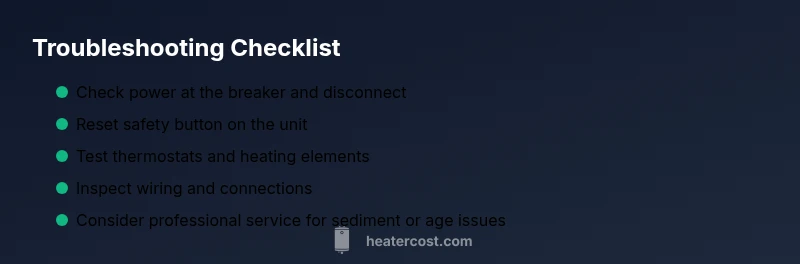
Most likely causes are a power issue or a failed heating element. Quick fixes: 1) verify the circuit breaker is on and reset any tripped GFCI. 2) locate the heater’s reset button and press it. 3) if power returns but there’s no hot water, test the thermostats and upper/lower heating elements or call a pro.
Why electric water heater not working: common causes
When your electric water heater hot water not working, several issues could be at play. The most common are power problems like a tripped circuit breaker or a blown fuse, plus control problems such as a faulty thermostat or burned-out heating element. If you’re asking, why is my electric water heater not heating water, start with power checks and safety steps. Heater Cost analyses consistently show that power issues are the leading reason for a cold-water surprise in many homes. While the exact fault can vary, understanding how the unit is wired helps narrow down the culprit quickly and safely.
Quick at-home checks you can perform safely
Before you call in a pro, run through these at-home checks (only when the power is OFF and you’re following basic safety rules):
- Confirm the main circuit breaker for the water heater is ON. A tripped breaker is the most common reason your electric water heater hot water not working. Reset if needed.
- Check for a separate disconnect switch near the unit and ensure it’s in the ON position.
- If your home uses a GFCI outlet or a dedicated outlet for the heater, test and reset as applicable.
- Listen for any buzzing or signs of an electrical issue when you restore power. If you smell burning, power should be cut immediately and a pro called.
If the power is present but you still have electric water heater hot water not working, you may be facing internal components that need professional attention.
Reset buttons, thermostats, and temperature settings
The reset button on many electric water heaters is a safety feature that can trip when the unit overheats or detects a fault. Locate the reset button on the thermostat panel (often a small red button). Press it firmly and hold for 3–5 seconds, then release. If the unit resets, allow it to reheat and test. Check the thermostat settings; most homes default to about 120°F (49°C). If the temperature is set too low, you’ll experience weak hot water or no hot water at all. Keep in mind some models have separate upper and lower thermostats—if one is faulty, you may still have lukewarm water or no hot water.
Inspect heating elements and electrical connections
If the power supply and resets are working, the heating elements could be the next culprit. Electric water heaters typically have upper and lower elements. A failure in either element can result in inconsistent or no hot water. Access panels and insulation must be removed carefully and power should remain OFF during inspection. Use a multimeter to test element resistance (follow manufacturer guidelines). Loose or corroded connections at the terminal blocks can also trigger a no-hot-water condition. If you’re uncertain about testing resistance or handling wiring, contact a licensed electrician or water-heater technician.
Sediment buildup and age-related issues
Even when power is available and components seem fine, mineral sediment can accumulate over time, reducing heating efficiency and causing cycling or short-cycling of the elements. This can lead to a condition where hot water is slow to heat or not hot enough. Sediment buildup is more common in hard-water areas and after several years of service. Flushing the tank, checking the anode rod (where applicable), and inspecting the expansion tank can help mitigate these issues. If you’re dealing with electric water heater hot water not working due to mineral buildup, a professional flush may be the most effective fix.
When to replace vs. repair: making a budget-friendly call
Deciding whether to repair or replace depends on the age of the unit, the cost of replacement parts, and the frequency of failures. Repeat issues with thermostats or heating elements often justify replacement. If the unit is more than a decade old, or multiple failures recur within a short period, investing in a new electric water heater may save money and prevent future outages. A knowledgeable technician can provide a clear assessment of whether a repair or a replacement is the better long-term choice.
Preventive maintenance that saves hot water reliability
The most reliable path to avoiding future interruptions is proactive maintenance. Schedule an annual or biannual inspection for the heater and perform simple tasks yourself, such as annual flushing to remove sediment, verifying the expansion tank is intact, and ensuring wiring remains snug and free of corrosion. Keeping the thermostat at a safe, moderate setting and replacing aging components before failure can help prevent the frustrating scenario of the electric water heater hot water not working when you need it most. Regular checks also minimize energy waste and extend the life of the unit.
Steps
Estimated time: 30-60 minutes
- 1
Power off and safety check
Shut off power at the main breaker and the local disconnect. Confirm there is no voltage at the heater terminals before touching any wiring. This prevents electric shock and damage to components.
Tip: Use a non-contact tester to verify power is truly off before touching wires. - 2
Verify power supply
Inspect the house circuit breaker and any fuses dedicated to the water heater. If a breaker has tripped, reset it firmly; if it trips again, that’s a sign of a more serious issue.
Tip: If the breaker repeatedly trips, do not keep resetting—this indicates an underlying fault. - 3
Check the reset button
Remove the access panel per the manufacturer instructions and locate the reset button. Press firmly for 3–5 seconds, then release. Restore power and see if hot water returns.
Tip: If the reset button repeatedly trips, this points to overheating or component failure that requires professional service. - 4
Test thermostats and elements
With power off, access the thermostat panels and, if comfortable, test upper and lower elements for continuity using a multimeter. Replace any element that reads open circuit or shows signs of degradation.
Tip: Always follow the manual; improper testing can cause further damage. - 5
Inspect wiring and connections
Check all terminal blocks for looseness, corrosion, or burnt insulation. Re-seat or replace damaged wiring and secure connections before re-energizing the unit.
Tip: Never work on live wires; ensure the entire circuit is de-energized before handling cables. - 6
Flush or inspect sediment issues
If you suspect mineral buildup, drain the tank and flush according to the manufacturer guidelines. Consider a professional service if sediment is heavy or if the unit is older.
Tip: Flushing should be done with care to avoid splashing hot water or causing damage to piping. - 7
Restore power and test
Close access panels, restore power, and run hot water to see if the issue is resolved. If not, proceed to replacement options or call a licensed technician.
Tip: Document what was tested for future reference or warranty purposes. - 8
Decide on replacement vs repair
If multiple failures occur or the unit is aging, consider replacement to avoid repeated outages. A technician can provide a cost-effective assessment.
Tip: Ask about energy efficiency and potential tax credits before purchasing a new unit.
Diagnosis: No hot water from electric water heater
Possible Causes
- highPower issue (tripped breaker, blown fuse, faulty disconnect)
- highTripped reset button or unsafe thermostat settings
- mediumFaulty upper or lower heating element
- mediumLoose wiring or corroded connections at terminal blocks
- lowSediment buildup or aging components
Fixes
- easyReset the circuit breaker/fuse and the water heater's disconnect; verify power is present
- mediumReset the thermostat and replace any faulty high-temperature limit switch if needed
- mediumTest and replace a faulty heating element or thermostat as required
- easyInspect wiring connections for looseness or corrosion and tighten/repair as appropriate (power OFF)
- hardIf sediment or age-related issues are present, perform a professional tank flush or component service
Got Questions?
Why did my electric water heater stop working suddenly?
Sudden stops are often due to a tripped breaker, a blown fuse, or a tripped reset button. Thermal or electrical faults in thermostats and heating elements are common culprits. Always start with power checks before exploring internal components.
The most common reasons are a tripped breaker or a reset button trip. Start with power checks, then inspect the thermostat and heating elements if safe to do so.
Is it safe to reset the thermostat on my electric water heater myself?
Yes, if you follow the manufacturer’s instructions and ensure power is off while you access the controls. Set the thermostat to the recommended temperature (usually around 120°F) and test. If the problem recurs, contact a professional.
Yes, reset can be safe when you follow the manual and cut power first. If it keeps tripping, call a pro.
What should I do if there’s still no hot water after power is restored?
If power is present and hot water remains unavailable, the issue could be a faulty heating element or thermostat. Testing and replacement may be needed, which is best done by a licensed technician to avoid injury.
If power returns but there’s no hot water, the heating element or thermostat might be bad. Call a pro for testing and replacement.
Can mineral buildup cause the heater to stop heating water?
Yes, sediment can insulate elements and reduce heating efficiency. A professional flush or inspection can restore performance and prevent future problems.
Sediment buildup can reduce heating. A proper flush or professional check can fix this.
When should I replace instead of repair my electric water heater?
If reliability is consistently poor, parts are failing repeatedly, or the unit is very old, replacement may be more cost-effective than ongoing repairs. A technician can advise based on condition and efficiency.
If it keeps failing or is old, replacement may be wiser. A technician can tell you the best option.
Should I hire a professional for this issue?
If you’re uncomfortable with electrical testing, disassembly, or handling heating elements, it’s safest to hire a licensed plumber or electrician. They can diagnose safely and properly replace components if needed.
If you’re unsure about electricity, call a licensed professional for safety.
What maintenance can prevent this problem in the future?
Regularly flush the tank to reduce sediment, inspect electrical connections, and replace aging components before failure. Keeping the unit clean and well-maintained reduces the chance of sudden outages.
Flush regularly, check connections, and replace aging parts to prevent future outages.
Is there a safety risk with shutting off power to the heater?
Shutting off power is standard safety practice before maintenance. Always use the main breaker and verify power is off before touching wiring to avoid shocks.
Power off before maintenance to stay safe.
Watch Video
The Essentials
- Start with power checks to rule out a common failure point
- Use the reset button and thermostat settings to reset the unit safely
- Test heating elements and wiring only if you’re comfortable and safe
- Consider preventive maintenance to extend life and reliability
- If uncertain, contact a licensed technician for diagnosis