Water Heater Leak Top: Urgent Troubleshooting for Homeowners
Urgent guide to diagnosing and fixing leaks at the top of a water heater. Learn safety steps, how to identify sources, and when to call a pro for leaks around the top.


Water heater leaks at the top are usually caused by loose fittings, a faulty pressure-relief valve, or a deteriorating tank connection. Start with an immediate safety step: shut off power or gas and close the cold-water supply, then inspect visible connections. If the leak persists after tightening basic fittings, contact a licensed plumber.
What water heater leak top means for homeowners
Water heater leak top refers to leaks around the upper portion of the unit—the fittings, drain valve, and pressure-relief valve area. For homeowners, these leaks are urgent compared to incidental condensation and can indicate loose connections, a failing valve, or corrosion near the top of the tank. According to Heater Cost, addressing top leaks promptly protects your home's foundation and reduces energy waste. The Heater Cost Team emphasizes safety first: shut off power or gas, close the cold-water supply, and keep children away from the area. Early detection can prevent structural damage and costly repairs down the line.
If you notice dampness around the top casing, make notes of any nearby valves and try to observe moisture patterns over a few hours. Do not ignore a sustained drip that persists after basic tightening, as this can progress into a larger leak or tank failure. This is especially critical in homes with older units or hard water, where mineral buildup can accelerate corrosion.
Common causes of top-leak symptoms
Leaks at the top of a water heater can stem from several sources, and identifying the right one is key to an effective fix. Common causes include loose connections at the inlet/outlet fittings, a worn or failing pressure-relief valve (T&P valve) that discharges in normal operation or due to pressure spikes, a loose drain valve, or corrosion at the top of the tank where metal meets plumbing. Additionally, frequent pressure fluctuations or an expanding tank due to temperature swings can aggravate seals and joints near the top.
Watch for water streaks following the path of the pipes—the path can help locate the source. Condensation around cold-water pipes tends to be mistaken for a leak, but persistent moisture that mirrors out onto surrounding surfaces beyond a cold-day breeze is more likely a real leak. Regular inspections and a home water test can help you differentiate between temporary humidity and a true leak at the top.
Quick safety checks you can perform today
Before you touch any hardware, prioritize safety. Here are quick checks you can perform to assess risk and prep for a repair:
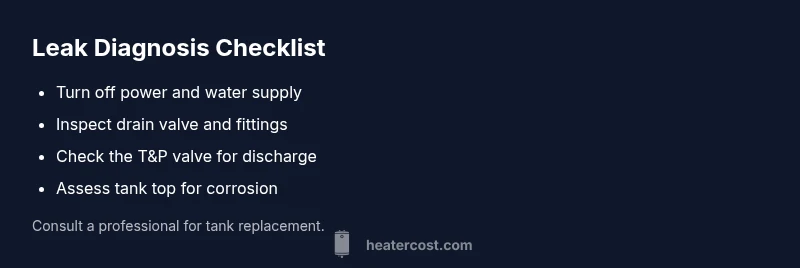
- Turn off the power (electric) or gas supply to the heater. Do not operate the unit while wet.
- Shut off the cold-water supply to stop incoming water.
- Inspect visible connections around the top for looseness or corrosion and dry nearby surfaces to assess consistency of moisture.
- Check the pressure-relief valve area for discharge, recent steam, or mineral crusts that indicate valve wear.
- If you smell gas or hear hissing from the heater, evacuate the area and call emergency services or a licensed professional immediately.
If you identify a loose fitting, you may be able to tighten it carefully with a wrench after ensuring the system is depressurized. If the leak continues or you are unsure about any step, it’s safer to stop and call a pro. Safety first.
How to determine the source of the leak: tank vs valve vs pipe
Diagnosing top-leak sources requires a systematic approach. Start by cleaning the area and drying it completely to observe new drips. Then:
- Tighten or reseat the drain valve connections if you see moisture at the drain port.
- Examine the T&P valve. If it leaks during or after a water-heating cycle, this could indicate overpressure or a faulty valve.
- Inspect threaded joints and inlet/outlet fittings for corrosion or wear; replace gaskets or tighten where appropriate.
- Look for corrosion along the tank neck or at the top seam—this is a strong indicator of tank failure and usually means replacement is necessary.
- If moisture appears from the top but not around fittings, the tank lining or neck could be compromised.
Document findings with photos for reference when you talk to a professional. Remember, if the leak is rapid or accompanied by gas smells or raised pressure, seek professional help immediately.
Repair vs replace: making the right call
The decision to repair or replace a water heater leaking from the top hinges on several factors. If the leak comes from fittings or valves, replacement parts and re-seating can be cost-effective and quick. However, if the tank shows visible corrosion, pitting, or the neck seam is compromised, the tank is likely beyond reliable repair and replacement is advised. Age matters: most residential water heaters have a typical lifespan of 8-12 years, but harder water or poor maintenance can shorten this.
Consider cost, efficiency, and safety. A small top leak from a valve or fitting might be resolved with a valve replacement or re-seating the connection. If a tank replacement is needed, discuss efficiency upgrades (e.g., a more energy-efficient model, better insulation) with a professional to balance upfront costs with long-term savings.
Preventive maintenance to minimize future leaks
Prevention helps protect your investment and reduces the risk of future top leaks. Core practices include:
- Schedule annual inspections of the T&P valve and drain valve.
- Use a dielectric unions or leak-stop compounds where applicable to reduce corrosion risk at threaded joints.
- Flush the tank annually to remove mineral buildup that accelerates corrosion in hard water areas.
- Install an expansion tank if you have a closed water supply or recurring pressure spikes to reduce valve wear.
- Keep a maintenance log with dates of inspections, part replacements, and flushing to track the health of your heater over time.
Proactive care can significantly extend the life of your water heater and reduce emergency repair costs.
Quick safety checks you can perform today (repeated for emphasis)
- Ensure the power or gas is off before touching any electrical components.
- Verify that the cold-water inlet valve is fully closed when working on connections.
- Avoid forcing fittings; use proper tools and protective gear.
- If in doubt, do not attempt a high-risk repair—professional service is the safest choice.
Final considerations and next steps
A leak at the top of your water heater is a warning sign that should not be ignored. If you’re unsure about the source after basic checks, or if the leak recurs after tightening, arrange a professional assessment promptly. A licensed plumber or a heating technician can confirm source, replace worn valves, and help determine whether a repair or full replacement offers the best long-term value. In some cases, a contractor can also check for underlying issues like mineral buildup in the supply lines or inadequate insulation that may contribute to heat stress on the system.
Steps
Estimated time: 60-120 minutes
- 1
Power off and shut the water supply
Turn off the electrical power at the breaker or switch, or shut off gas to the unit. Close the cold-water supply valve to stop incoming water. This depressurizes the system and reduces the risk of scalding or electric shock while you inspect.
Tip: Wear rubber-soled shoes and use a flashlight to inspect carefully. - 2
Inspect visible connections
Check the drain valve, inlet/outlet fittings, and the T&P valve area for moisture, corrosion, or loose threads. Dry the area with a cloth to observe fresh leaks.
Tip: Use a wrench carefully—over-tightening can damage threads. - 3
Tighten or reseat fittings
Gently tighten any loose fittings by hand, then with a wrench if needed, ensuring a snug fit without stripping threads. Recheck after a few minutes for fresh moisture.
Tip: Do not force; if it resists, stop and move to the next step. - 4
Check the T&P valve operation
Lift the T&P relief valve lever briefly to ensure it moves freely and reseats. If there is leakage when you release it, the valve may be sticking or worn and should be replaced by a pro.
Tip: Discharge water may be hot; use gloves and keep face away. - 5
Relieve pressure and test
Turn the water back on slowly to pressurize the system, then observe the top area for new leaks. If moisture appears, stop and escalate to professional service.
Tip: Testing in small increments helps isolate the source. - 6
Decide on repair vs replacement
If leaks persist despite tightening or valve replacement, or if corrosion is visible on the tank, plan for professional assessment and potential tank replacement.
Tip: Obtain a written estimate and discuss energy-efficient options.
Diagnosis: Visible water pooling or dampness around the top of the water heater
Possible Causes
- highLoose or faulty drain valve connections
- highFaulty or discarging pressure-relief valve (T&P valve)
- mediumTank neck or top seam corrosion
- lowCondensation mistaken for a leak (harmless)
Fixes
- easyTighten the drain valve and visible inlet/outlet fittings after depressurizing the system
- mediumReplace the faulty T&P valve or reseat it if discharge is due to improper seating
- hardReplace the leaking tank neck or entire tank if corrosion is observed
- easyAddress condensation by insulating cold-water pipes and ensuring proper drainage
Got Questions?
What causes a leak at the top of a water heater?
Top leaks are typically caused by loose or worn fittings, a faulty pressure-relief valve, or corrosion at the top seam. Loose connections may be resolved with tightening or reseating, while a failing valve or corroded tank may require replacement.
Top leaks usually come from loose fittings, a bad relief valve, or corrosion near the top. Tighten connections first, and call a pro if the leak continues.
Can I fix a leaky T&P valve myself?
You can inspect and reseat the T&P valve, but replacing it or diagnosing a persistent leak should be done by a licensed plumber. Use caution as the valve handles hot water and pressure.
You can reseat a leaking T&P valve, but replacement and deeper diagnosis should be done by a pro.
Is condensation around my water heater a leak or normal?
Condensation can occur on cold days or with humidity, but persistent moisture that drips or pools is a leak. Compare patterns over time and observe if moisture follows a pipe path or appears around the tank itself.
Condensation happens, but persistent dripping is a leak. Monitor patterns and watch for tank-based moisture.
When should I replace rather than repair a leaking heater?
If the tank shows visible corrosion, pitting, or the top seam is failing, replacement is usually the better option. Consider age, energy efficiency, and replacement costs when deciding.
If the tank shows corrosion or the top seam is failing, replacement is often best.
What maintenance helps prevent top leaks?
Annual valve inspections, periodic flushing to remove mineral buildup, and pressure management with an expansion tank can reduce leak risk and extend heater life.
Regular valve checks, annual flushing, and safe pressure management help prevent leaks.
Should I hire a plumber or a general handyman for leaks?
For safety and compliance, hire a licensed plumber or heating technician, especially for gas units or tank replacement. They have the training to handle pressure and electrical risks properly.
A licensed plumber is the safer choice for leaks, especially with gas units or tank work.
Watch Video
The Essentials
- Shut off power and water at first sign of a top leak
- Most leaks originate from valves or fittings, not the tank itself
- Tighten or replace faulty components before tank replacement
- Call a licensed plumber for persistent leaks or gas-related issues
- Perform regular maintenance to prevent future leaks