Reasons Why Water Heaters Fail: Quick Troubleshoot
Discover common reasons why water heater is not working and how to diagnose them quickly. Heater Cost guides homeowners through practical, safe fixes and cost-aware steps to restore hot water.


Most often, a water heater stops working due to power or fuel issues, thermostat or sensor faults, mineral buildup, or leaks. Quick checks to start: verify the unit is powered, ensure the circuit breaker or gas supply is on, and look for obvious leaks or corrosion. If these basics don’t restore hot water, follow the diagnostic flow for a deeper check.
Common Causes of Water Heater Failures
Understanding the reasons why water heater is not working helps homeowners spot the problem quickly. In most homes, failures fall into predictable categories that affect electric and gas models alike. Heater Cost analysis shows the four most common culprits: power or fuel issues, thermostat or sensor faults, mineral buildup, and leaks. Each cause has distinct signs and safe, practical fixes. This guide helps you recognize the pattern, decide on do-it-yourself steps, and know when to reach out for professional help. By starting with the right category, you can speed hot water restoration and avoid unnecessary expenses. This is about the reasons why water heater is not working and what to do. Expect to differentiate between electrical and gas-specific issues and tailor fixes to your model while staying safe and compliant.
Safety First: Power, Gas, and Electrical Checks
Safety is non-negotiable when dealing with water heaters. Before you touch the unit, cut power at the breaker or switch off the gas supply and let the system cool. In many homes the quickest fixes come from simple power or fuel checks: confirm the circuit powering the heater is intact, verify the thermostat is set within a safe range, and inspect the area for moisture, corrosion, or signs of a gas leak. Heater Cost analysis shows that many callouts are resolved by resetting a tripped breaker or turning a valve back on. If you smell gas, hear hissing, or see flame irregularities, evacuate and call a licensed pro immediately.
Thermostat, High-Limit Switch, and Sensors
Thermostats and safety sensors regulate temperature and prevent overheating. A faulty thermostat can cause water to stay cold or overheat, while a malfunctioning high-limit switch may cut power unexpectedly. Signs include inconsistent water temperature, burner cycling, or absent hot water. For electric models, an aging or degraded sensor can misread temperature and limit heating. On gas units, ignition-related sensors can fail, leaving the burner off. In most cases, checking the thermostat setting, performing a soft reset, and testing sensors with a multimeter or manufacturer app (if available) can reveal the issue.
Sediment Buildup and Mineral Scale
Water hardness and mineral content gradually form sediment at the bottom of the tank. Over time, this reduces heating efficiency and can cause noisy operation or uneven water temperature. Sediment acts as an insulating layer, forcing the unit to work harder and sometimes overheat a safety switch. Draining and flushing the tank removes mineral scale and extends life. This is a common, avoidable pitfall for older units, especially in hard-water areas. If you notice a cloudy drain valve, rusty water, or reduced hot-water flow, sediment buildup is a likely culprit.
Leaks, Pressure, and Expansion Tanks
Even small leaks can indicate a larger problem with pressure relief valves, fittings, or lines. A leaking tank not only wastes energy but can lead to mold and structural damage. Check the T&P valve for dripping, inspect connections, and look for wet spots around fittings. If you notice excessive pressure (temperature- and pressure-relief valve tripping, frequent popping sounds), address pressure issues promptly. Some homes include an expansion tank; if it’s waterlogged or absent, improper pressure can stress the heater and plumbing. Addressing leaks quickly prevents bigger failures.
Gas Water Heaters: Ignition and Burner Issues
Gas-fired models rely on a steady gas supply and a clean burner. Issues such as a shut-off valve, a reignited pilot light, or a dirty burner can prevent ignition and keep water cold. If you smell gas or hear a continuous hissing sound, leave the area and call your gas company or a licensed technician. For safe relighting, follow the manufacturer’s procedure exactly and ensure good ventilation. Persistent ignition problems often require professional cleaning or replacement of parts like the thermocouple or control module.
When to Call a Professional
Some problems are beyond DIY repair. If you have intermittent hot water but never reach the right temperature, or if you detect gas odors, severe leaks, or scorching smells, contact a licensed plumber or HVAC technician. Complex fixes—such as replacing heating elements, burners, or pressure-relief components—require specialized tools and knowledge. A pro can safely perform precise testing, verify venting and code compliance, and provide a long-term solution. Regular maintenance contracts can also catch issues before they fail.
Preventive Maintenance to Avoid Future Failures
Proactive maintenance saves money and extends heater life. Schedule annual flushes to prevent sediment buildup, inspect anode rods, test pressure relief valves, and verify thermostat accuracy. Use a water-softening system if minerals are persistent in your area. Keep clearances around the unit, and replace worn valves or gaskets before leaks develop. Heater Cost recommends maintaining a service log to track repairs and parts replaced for quick future reference.
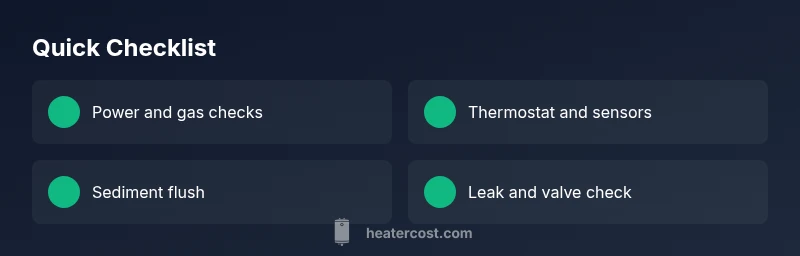
Quick Diagnostic Checklist You Can Print
- Check the power supply and breaker.
- Verify gas supply and pilot status (gas units).
- Inspect for visible leaks and corrosion.
- Test thermostat and reset as needed.
- Flush the tank to remove sediment if flow is weak.
- Look for abnormal noises or unusual smells and address safely.
Steps
Estimated time: 45-90 minutes
- 1
Power safety and initial check
Shut off power at the disconnect switch or breaker and ensure the area around the heater is dry. If water is present, dry the area and postpone operation. Confirm the main gas valve is open for gas models and prepare for testing.
Tip: Always consider turning off the main water supply before opening any access panel. - 2
Verify power or gas supply
For electric heaters, check the outlet and breaker. For gas heaters, listen for the burner flame and check the gas valve. If the breaker is tripped, reset it; if the flame won’t light, stop and call a pro.
Tip: If you smell gas, evacuate and call the utility immediately. - 3
Reset thermostat and test temperature
Return access panel and reset the thermostat; set to a safe, moderate temperature (120-130°F / 49-54°C). Allow the unit to reheat for a short period and observe if hot water returns.
Tip: Document current settings before making changes so you can revert if needed. - 4
Inspect heating elements or burner
Electric units should have the heating elements tested and replaced if necessary. Gas units may require burner cleaning or replacement of the thermocouple or ignition module. If components look corroded or failed, replace with manufacturer-approved parts.
Tip: Only perform element or burner work if you have the proper tools and knowledge. - 5
Flush and drain to remove sediment
Attach a hose to the drain valve and open slowly to flush out mineral buildup. Drain a portion, then refill and reheat to verify improved heating. This step helps with low flow or weak heat.
Tip: Never force the drain valve; drain in a controlled, safe manner and collect water in a container to inspect sediment. - 6
Check for leaks and valve conditions
Inspect all fittings, relief valves, and the expansion tank. Tighten connections if you can do so safely, replace worn gaskets, and consider upgrading to a proper expansion tank if needed.
Tip: If you see active leaks, isolate the unit and call a professional to avoid water damage.
Diagnosis: No hot water or water not hot enough
Possible Causes
- highPower issue (tripped breaker or blown fuse)
- mediumGas supply off or pilot light out (gas heaters)
- mediumThermostat or high-limit switch defective
- lowSediment buildup in tank
- mediumLeaking element or ignition/ burner problem
Fixes
- easyReset circuit breaker and restore power
- easyRelight pilot or verify gas valve is open (do not force), then test burner
- easySet thermostat to recommended temperature and perform a soft reset
- mediumDrain and flush tank to remove sediment buildup
- hardInspect or replace heating element (electric) or ignition components (gas)
Got Questions?
What should I check first when my water heater won't heat?
Start with safety and basic power or gas checks. Verify the breaker, gas valve, and pilot status, then confirm the thermostat setting. If hot water remains unavailable, move to deeper diagnostics.
First, check safety and basic power or gas status. Then verify breaker and pilot, adjust the thermostat, and proceed with deeper diagnostics if needed.
Can I relight a gas water heater’s pilot light myself?
Yes, if you follow the manufacturer’s relighting procedure and do not smell gas. If you’re unsure or smell gas, leave the area and contact the gas company or a pro.
You can relight if you follow the manual and don’t smell gas. If unsure or you smell gas, call a pro.
Why does my water heater make banging noises?
Banging noises usually indicate sediment buildup. Flushing the tank and ensuring proper water flow typically reduces the noise, while persistent sounds may require component inspection.
Banging noises often mean sediment is present. Flushing helps, but if it continues, have a pro check the heater.
Is mineral buildup the cause of low hot water?
Yes, mineral buildup can reduce heating efficiency and flow. Regular flushing and, if needed, professional cleaning restore performance and extend the unit’s life.
Mineral buildup reduces heating efficiency. Flushing helps restore performance and may require a pro for deeper cleaning.
How often should I flush my water heater?
Most systems benefit from an annual or biennial flush, depending on water hardness. Regular flushing keeps sediment from insulating the tank and maintains efficiency.
Flush annually or every couple of years depending on hard water. It keeps the heater efficient.
When should I replace my water heater?
If your unit is over 10-15 years old, leaks recur, or repair costs approach a sizable fraction of replacement cost, replacement is often more cost-effective in the long run.
Consider replacement if the unit is old, leaking, or costs keep rising—replacement is often cheaper long-term.
Watch Video
The Essentials
- Identify the problem area before acting
- Prioritize safety and power/gas checks
- Flush sediment to restore efficiency
- Replace faulty components when necessary, not improvise
- Schedule annual maintenance to prevent failures