Repair Electric Water Heaters: A Practical Home Guide
A comprehensive, step-by-step guide to diagnosing and safely repairing electric water heaters for homeowners, renters, and property managers. Learn how to test heating elements, diagnose thermostat issues, verify electrical connections, and decide when professional help is needed.


You will diagnose common electric water heater problems, verify safety, and perform basic repairs you can do yourself. We'll walk you through testing the heating element, inspecting the thermostat, checking connections, and confirming the electrical panel is correctly wired and protected. This guide emphasizes safety and when to call a pro for complex issues.
Why Electric Water Heater Repairs Matter
According to Heater Cost, electric water heaters are popular for their simple controls and reliable performance, but they still require timely maintenance and occasional repairs to avoid cold showers and emergency replacements. When you address issues early, you can extend the life of the unit and reduce overall energy waste. In this guide, we'll cover how to diagnose common faults, perform safe, basic repairs, and understand when professional service is advisable. You'll learn how to identify root causes, evaluate the risk, and make informed decisions about parts and labor. This information is designed for homeowners, renters, and property managers who want practical, cost-aware guidance without guesswork. By following these steps, you can take confident, incremental action and minimize downtime while preserving system safety.
The Heater Cost team notes that most basic fixes involve non-destructive checks and component replacement only after confirming it’s necessary.
Safety First: Is It Safe to Repair?
Safety comes first when working on an electric water heater. Always shut off power at the main breaker before touching any wires, and use a non-contact voltage tester to confirm there is no live current. Wear safety goggles and gloves, and keep the work area dry to reduce shock risk. The Heater Cost Team emphasizes strict lockout/tagout practices and never bypass safety features. If you smell burning, hear crackling, or notice damaged wiring, stop immediately and seek professional assistance. This section also covers what you can do safely without opening the tank—such as inspecting external connections and checking the discharge pipe for leaks.
Common Electric Water Heater Issues
Typical issues include no hot water, fluctuating or too-hot water, frequent tripping of the circuit breaker, and weird noises coming from the unit. Some symptoms point to a faulty heating element, a malfunctioning thermostat, loose electrical connections, or mineral buildup that reduces efficiency. The Heater Cost analysis suggests starting with non-destructive checks: verify power, inspect accessible wiring, and test the element resistance. If you notice water leaks around connections or the tank shows signs of corrosion, plan for professional service. This section also outlines how to distinguish between an electrical problem and a plumbing fault.
Diagnostic Tools and Checks
Diagnostic work hinges on safe testing. Use a digital multimeter to measure resistance across heating elements and to verify voltage at the terminals. A 240V supply is typical for most electric water heaters, but regional configurations can vary. Inspect thermostat settings and wiring for loose terminals or signs of heat damage. A visual check can identify corrosion on element flanges or age-related wear. Remember to document findings with photos for reference if you decide to hire a pro. According to Heater Cost, methodical testing reduces guesswork and improves repair outcomes.
When to Call a Professional
There are times when professional service is the safest option: persistent breaker trips, observed electrical burning smells, obvious water leaks, or if you’re uncomfortable with high-voltage work. If replacement parts are needed (heating elements or thermostats), a licensed technician can ensure correct sizing, compatibility, and safe installation. This section provides clear criteria to help you decide between DIY fixes and professional help, balancing cost with safety and long-term reliability.
Proactive Maintenance to Prevent Breakdowns
Preventative care extends the life of an electric water heater. Schedule periodic inspections, flush the tank to reduce mineral buildup, and verify the thermostat is set within safe ranges (not too hot). Keep external connections clean and dry, replace corroded components, and test the unit annually. Regular maintenance can reduce the likelihood of sudden failures and costly emergency calls. Heater Cost’s guidance highlights that small, consistent maintenance yields better longevity and efficiency over time.
What to Expect During Repairs
Most basic repairs involve diagnosing the fault, replacing a faulty component, and testing the system before returning it to service. Expect a window of a few hours for non-destructive fixes and longer if a full element or thermostat replacement is required. A professional will verify electrical safety, test for leaks, and confirm that the unit heats water to the intended temperature. This section provides a realistic picture of the repair process and helps you plan accordingly.
Troubleshooting Flowchart
If you’re unsure where to start, follow this simple flow: (1) Power off at the main breaker and confirm with a tester; (2) Check the breaker and reset if needed; (3) Validate 240V supply at the heater terminals; (4) Test the heating element resistance and thermostat readings; (5) Inspect and reseat wiring; (6) Replace faulty components and re-test. If any step reveals a safety concern, stop and call a professional. This flow keeps you oriented and reduces unnecessary disassembly.
Final Notes on Safety and Next Steps
Repairing an electric water heater involves electrical and plumbing knowledge. If you’re ever in doubt about safety, stop and seek professional help. For homeowners who pursue DIY paths, prioritize safety, follow manufacturer guidance, and document every step for future maintenance. The goal is reliable hot water with minimal risk.
Tools & Materials
- Non-contact voltage tester(Verify power is off before touching wires)
- Digital multimeter(Test element resistance and measure voltage)
- Screwdrivers set (flat-head and Phillips)(For access panels and terminal screws)
- Nut drivers or socket set(For element terminals and panel nuts)
- Electrical tape(Insulate exposed conductors and repairs)
- Safety gloves and safety goggles(Protect hands and eyes from shock and splash)
- Bucket and towels(Catch water during any draining or valve work)
- Replacement heating element (optional)(Only if diagnosed as faulty)
- Replacement thermostat (optional)(Only if diagnosed as faulty)
- Wire stripper/pliers (optional)(Useful for re-terminating conductors)
Steps
Estimated time: 60-90 minutes
- 1
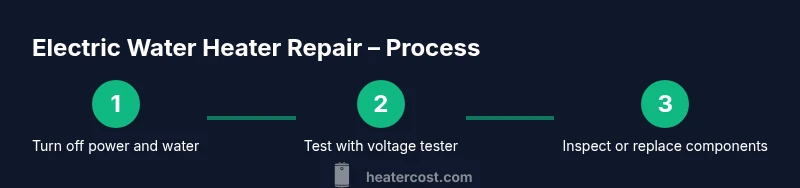
Turn Off Power and Water Supply
Go to the main electrical panel and switch off the dedicated breaker for the water heater. Close the cold water supply valve to reduce pressure and prevent leaks. This step minimizes the risk of electric shock and water injury during inspection.
Tip: Double-check with a tester before touching any wires. - 2
Verify Breaker Is Off and Ready
Confirm the breaker is in the OFF position and test at the heater terminals to ensure there is no voltage present. If you see any voltage, stop and reassess safety before proceeding.
Tip: If the panel shows signs of buzzing or warmth, wait and call a professional. - 3
Test Heating Element with Multimeter
Remove access panel and disconnect the heating element leads. Use the multimeter to measure resistance across the element. Compare readings to the manufacturer’s specification; a reading of infinity or a continuity failure usually means a faulty element.
Tip: Document resistance readings with photos for later reference. - 4
Inspect Thermostat and Wiring
Check thermostat settings and test the wiring for loose connections or signs of damage. Tighten terminals and replace any corroded or burnt wiring. This step helps ensure consistent heating control.
Tip: Only replace wiring if you’re comfortable and sure of compatibility. - 5
Replace Faulty Components if Needed
If testing indicates a faulty element or thermostat, replace with compatible parts following the manufacturer’s instructions. Re-secure all connections and re-check insulation.
Tip: Use exact part numbers and torque requirements to avoid damage. - 6
Restore Power and Test
Reconnect everything, remove the water supply blockage, and restore power. Run hot water from a faucet to verify proper operation and check for leaks. If temperature control is off, adjust the thermostat gradually and retest.
Tip: Allow the system to stabilize before final assessment.
Got Questions?
Can I repair a water heater electric myself?
Basic checks and non-safety-critical repairs are possible for some homeowners, but avoid handling high-voltage work or significant component replacements unless you’re confident in your skills. If in doubt, consult a licensed professional.
You can handle basic checks if you’re sure about safety, but for high-risk steps, call a pro.
What are signs of a failing heating element?
Symptoms include no or inconsistent hot water, sudden temperature drops, or longer recovery times. If resistance readings are abnormal on a multimeter, the element may be failing.
No hot water or inconsistent temperatures can point to a bad heating element.
How do I reset a tripped breaker safely?
First, switch the breaker fully off and then back to on. If it trips again, there may be an underlying fault that requires inspection by a professional.
Flip it off, then on again. If it trips again, call a pro.
When should I replace instead of repair?
If repairs are frequent, the unit is old, or replacement parts are expensive or hard to source, replacement may be more cost-effective and reliable long-term.
If repairs keep coming back, replacement might be smarter.
Is it safe for a homeowner to replace a thermostat?
Thermostat replacement involves handling live terminals and should be done with caution. If the thermostat is accessible and you have a wiring diagram, you can proceed, but consider professional help if uncertain.
It’s doable if you’re comfortable with wiring; otherwise, hire a professional.
How often should I flush the tank to reduce mineral buildup?
Flushing frequency depends on water hardness and usage. A routine yearly or biannual flush is a common recommendation to prevent mineral buildup and extend unit life.
Flush yearly or as advised by your manual to reduce mineral build-up.
Watch Video
The Essentials
- Identify root cause before replacing parts.
- Always shut off power and water before work.
- Use proper PPE and test equipment for safety.
- Document steps and readings for future maintenance.