Troubleshooting a Problem with Heater: Fast Fix Guide
A thorough, action‑oriented troubleshooting guide for homeowners addressing a problem with heater. Learn safe checks, common causes, and when to call a pro in 2026.


If your problem with heater isn’t delivering heat or keeps cycling, start with the simplest checks: power at the outlet, thermostat settings, and a clean air filter. These are the most common causes of a problem with heater. If none resolve it, follow the step-by-step diagnostic flow to identify the culprit and apply the safe fix.
Why a problem with heater happens
Heating systems are robust, but a handful of everyday issues trigger a problem with heater. Most faults start with simple causes that homeowners can address safely. According to Heater Cost, many problems trace to three broad categories: power and control signals, airflow/combustion, and aging components. When any of these fail to operate as intended, the system may fail to heat evenly or shut down to protect itself.
Common scenarios include a tripped circuit or blown fuse, a thermostat that reads incorrectly, a dirty air filter, or restricted airflow from blocked vents or ductwork. Gas furnaces rely on a safe ignition and a steady gas supply; a dirty flame sensor or a failing igniter can prevent startup. Electric heaters can trip breakers or overheat due to blocked sensors. In all cases, the goal is to pinpoint the symptom and map it to a likely cause so you can apply the right safety-first fix. This section provides a practical, non-technical framework you can use today to narrow down the root cause of a problem with heater without risking safety.
Safety first: quick checks you can perform safely
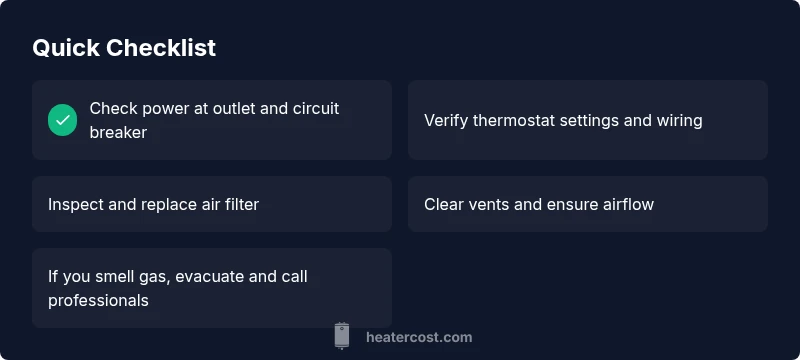
Safety must come first when you troubleshoot a problem with heater. Before you touch any components, power down the unit and verify it is fully off. Then perform these checks:
- Inspect the power source: ensure the outlet or hard-wired circuit is supplying power; test with another device if you’re unsure.
- Check the circuit breaker or fuse box: reset any tripped breakers and replace blown fuses.
- Verify thermostat settings: confirm it is in the heat mode and set higher than ambient temperatures; replace batteries if it uses a remote sensor.
- For gas heaters: do not attempt to light a pilot if you smell gas or hear a hiss—evacuate and call the gas company immediately. Install and test a CO detector if you don’t already have one.
- When in doubt, pause and call a professional rather than risking a hazardous situation.
These steps are the fastest way to rule in or out simple causes and are safe to perform in most homes.
Common causes and practical checks
Most problems with heater fall into a handful of common causes. Use this quick checklist to guide your inspection:
- Power issue: Confirm the unit is plugged in (if applicable) and the outlet works. A tripped breaker or blown fuse is the most frequent electrical culprit.
- Thermostat issues: Ensure wiring is intact, settings are correct, and if it uses batteries, replace them. A miscalibrated thermostat can prevent proper heating or cause short cycling.
- Dirty air filter: A clogged filter reduces airflow, causes overheating, and prompts safety shutoff. Replace or clean according to manufacturer guidance.
- Airflow restrictions: Check supply/return vents and clear any obstructions—dust, furniture, or closed dampers reduce heat delivery.
- Ignition and burner problems (gas furnaces): A dirty flame sensor, faulty igniter, or gas valve issue can prevent ignition. Only a licensed professional should service gas components.
- Age and wear: Worn bearings, relay failures, or failing motors can cause noise, inefficiency, and intermittent heat. Consider maintenance history and potential part replacement needs.
If you identify a likely cause through these checks, you’ll know whether a simple maintenance task (like a filter change) is enough, or if a professional service is required.
Interpreting symptoms and matching to causes
Different symptoms point to different culprits. Use these patterns to map what you’re seeing to a probable cause:
- No heat at all or system won’t start: power issue, thermostat misread, or ignition/gas supply problem.
- Heat on but uneven or weak: clogged filter, restricted vents, or improper thermostat calibration.
- Short cycling or rapid on/off: thermostat misread, oversized unit for space, or restricted airflow causing overheating.
- Odd odors or smoke: electrical issue, mold or dust burn-off during startup, or gas leak risk (gas furnaces require immediate attention).
- Unusual noises (rattling, squealing): blower or motor wear, loose components, or ductwork interaction.
By correlating symptoms with these common causes, you can prioritize fixes and decide if it’s safe to DIY or if a pro is needed. Remember: if you smell gas or hear abnormal noises near gas lines, shut everything off and call professionals right away.
When to call a professional
Some problems with heater are beyond safe home repair. You should contact a licensed technician if:
- You detect a gas smell, hear a hiss, or suspect a gas leak.
- The system emits carbon monoxide indicators or if your CO detector alarms.
- You cannot safely restore power, or if the breaker repeatedly trips after basic checks.
- Ignition or burner problems persist after cleaning or filter changes.
- You notice persistent unusual noises or excessive vibration.
Professional service protects your home and ensures code-compliant repairs. If you’re unsure at any point, it’s prudent to schedule an inspection.
Maintenance to prevent future problems
Prevention is cheaper than major repairs. Implement a simple maintenance routine to reduce the odds of future problems with heater:
- Schedule annual professional tune-ups to check safety controls, ignition, heat exchanger integrity, and overall performance.
- Replace or clean filters regularly; consult the manufacturer’s guidance on frequency based on use and environment.
- Keep air intakes and exhausts clear; ensure outdoor vents, returns, and ductwork are free from obstruction.
- Monitor for warning signs such as rising energy bills, uneven heat, or abnormal cycling patterns, and address them early.
- Test safety devices (CO detectors, low-oxygen shutoffs) to ensure they function properly.
Following these practices helps maintain efficiency, keep your family safe, and extend the life of your heating system.
Steps
Estimated time: 30-60 minutes
- 1
Power down safely and inspect the area
Turn off the heater and switch off the circuit breaker to the unit. Check for obvious hazards, such as loose wires or scorch marks, and ensure the area around the heater is clear. This step reduces risk before you begin any hands‑on checks.
Tip: Use a flashlight to inspect dark corners; wear gloves if you’re touching dusty components. - 2
Check power and reset the system
Verify the outlet or hardwired connection supplies power. If you have a reset button, press it firmly and wait a few minutes for the system to reboot. A simple power cycle can resolve many transient faults.
Tip: If you’re on a GFCI outlet, test that outlet to ensure power is stable before proceeding. - 3
Test thermostat settings and wiring
Ensure the thermostat is set to heat and higher than room temperature. If a battery‑powered unit, replace batteries and re‑sync with the furnace if required. Confirm there’s no loose wiring or tripped sensors.
Tip: Take a photo of wiring before adjusting; this helps you restore correct connections. - 4
Inspect and replace the air filter
Locate and remove the air filter; clean if reusable or replace with a new one according to manufacturer guidance. A clogged filter reduces airflow and can trigger overheating and shutdown.
Tip: Check both supply and return filters if your system has multiple access points. - 5
Check airflow paths and vents
Look for blocked vents, closed dampers, or blocked ducts. Clear obstructions and ensure airflow is free from obstructions both inside and outside the home. Restricted airflow is a common cause of intermittent heat.
Tip: Vacuum dust from registers to improve air quality and flow. - 6
Gas safety check or professional call
If your system uses gas and you smell gas, evacuate immediately and call the gas company. If ignition or burner issues persist after basic steps, contact a licensed HVAC tech. Do not attempt risky gas repairs yourself.
Tip: Document any odor, a pilot light status, and times you tried fixes to share with the pro.
Diagnosis: Heater won't start or stops heating mid-cycle
Possible Causes
- highPower issue (outlet, breaker, fuse)
- highThermostat or settings error
- mediumDirty or clogged air filter
- mediumBlocked vents or restricted airflow
- lowFaulty ignition or burner (gas furnaces)
- lowGas supply valve closed or gas line issue
Fixes
- easyCheck outlet and circuit breaker; reset if tripped
- easyConfirm thermostat is set to heat; replace batteries if needed
- easyClean or replace the air filter; ensure blower is unobstructed
- easyInspect vents and ducts for obstructions; clear debris
- mediumIf ignition/burner fails, or you smell gas, call a pro; do not attempt risky repairs
- mediumFor gas furnaces, verify gas supply is on; if you detect gas, evacuate and contact the gas company
Got Questions?
What is the most common cause of a heater not starting?
Power loss, thermostat issues, and dirty filters are the most frequent culprits. Start with power, thermostat, and filter checks before moving to more complex problems.
Most heaters fail to start because of power, thermostat settings, or a dirty filter. Begin with the quick checks.
Should I reset the thermostat to fix timing issues?
Resetting the thermostat can help in some cases. Check batteries, re‑pair if required, and confirm it’s set to heat in the right mode.
Reset the thermostat and ensure it’s set to heat.
Is it safe to operate a heater if I smell gas?
No. If you smell gas, evacuate immediately and call the gas company or emergency services. Do not operate electrical devices.
If you smell gas, leave the area and call the gas company.
When should I call a professional for a problem with heater?
Call a licensed technician if basic checks don’t restore heat or if there are gas, CO, or electrical hazards present.
If it persists or involves gas or electrical risks, hire a pro.
What maintenance reduces heater problems?
Regular tune-ups, timely filter changes, safe ignition tests, and vent cleaning go a long way toward preventing issues.
Regular maintenance helps prevent problems.
Watch Video
The Essentials
- Inspect power, thermostat, and filters first.
- Clear vents and ensure proper airflow.
- Call a pro for gas/CO or electrical hazards.
- Schedule regular maintenance to prevent problems.