Heater Troubleshooting: Fixing a Heater That Doesn’t Work
Urgent, practical steps for homeowners to diagnose and fix a heater that doesn't work, with safety checks, diagnostic flow, and guidance on when to call a professional.


Start with the basics: verify power to the unit and the thermostat settings, then check the breakers and fuses. If the heater still won’t run, move through a safe diagnostic flow and try simple fixes like relighting the pilot or resetting the furnace. If heat isn’t restored, contact a licensed technician. This quick guide helps you act quickly and safely.
Why a heater doesn't work: the big picture
When a heater doesn’t work, homeowners often feel overwhelmed. In most homes, the root cause isn’t a mysterious fault but a handful of common, fixable issues: power supply problems, thermostat misconfigurations, airflow restrictions, or a failed ignition. According to Heater Cost, the majority of heating failures stem from simple, everyday problems that most homeowners can identify with a careful, methodical approach. A furnace or heat pump works through a sequence: power, controls, ignition, and airflow. If any link in that chain breaks, you either get no heat or flickering, inconsistent warmth. This guide focuses on the most frequent failure points and offers a safe, practical plan for troubleshooting. We’ll emphasize safety first and show how to decide when a professional is required. The Heater Cost team found that many non-urgent failures are resolved with inexpensive, straightforward fixes, so start with these steps before assuming a major repair.
lengthNote”:“100-300 words”},{
Safety first: shut off power and assess risk
Safety is non-negotiable when troubleshooting a heater. Before you touch any component, switch the unit off at the main breaker and, for gas furnaces, shut off the gas supply if you can do so safely. Wear gloves and eye protection, and keep children and pets away from the work area. If you smell gas, hear a hissing sound, or suspect a gas leak, evacuate and call emergency services. With power isolated, you reduce the risk of electrical shock and accidental ignition. This block highlights the high-impact safety checks that prevent injuries and dangerous situations during DIY troubleshooting. The Heater Cost team emphasizes that safety saves time and money in the long run.
lengthNote”:“100-300 words”},{
Quick checks you can perform safely
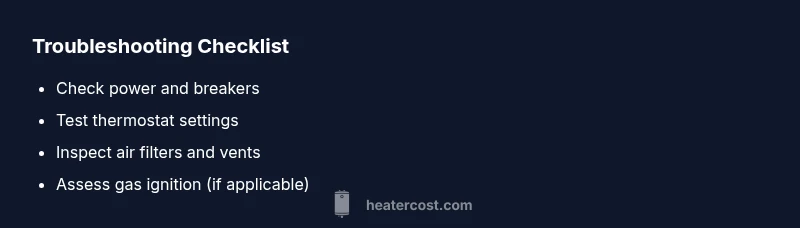
These checks are designed to be quick and safe, addressing the most common reasons a heater doesn’t work. Start with the simplest steps and progress to slightly more involved ones if needed.
- Power and breakers: confirm the unit is receiving power. Look for a switched outlet near the furnace and ensure its switch is ON. Check the main breaker panel for a tripped breaker or blown fuse and reset or replace as needed.
- Thermostat settings: verify the thermostat is set to Heat and the temperature is comfortably above room temperature. If the display is dim or unresponsive, the thermostat may need replacement or wiring inspection.
- Airflow and vents: inspect supply vents and return grills for blockages. Clear furniture, drapes, or debris that restrict airflow. A restricted flow can trigger safety shutoffs and reduce heat output.
- Filters and ducts: a dirty or clogged filter forces the system to work harder and can cause overheating or shutdowns. Replace the filter if it looks dirty and consider a duct inspection for leaks or obstructions.
- Pilot light and ignition (gas models): check the pilot light or electronic ignition. If the flame is weak, flickers, or won’t ignite, ignition components or gas flow may be the issue. If you’re not comfortable with gas components, stop here and call a pro.
- Condensate and sensors: modern high-efficiency units rely on condensate drains and safety sensors. Ensure the condensate line isn’t blocked and sensors aren’t covered by ice or debris. A blocked drain can trigger a shutdown to protect the system.
lengthNote”:“150-200 words”},{
System-specific considerations: electric vs gas vs heat pump
Different heater types have distinct failure modes. Electric furnaces rely on electric resistance coils, control boards, and transformers; a thermostat or relay can fail, or the contactor may stick. Gas furnaces hinge on ignition and gas supply; if the pilot or ignition system malfunctions, heat won’t reach your home. Heat pumps, which move heat rather than generate it, can stall in very cold weather or when auxiliary heat isn’t engaged. Understanding the system you own helps you target the right checks:
- Electric furnaces: check the thermostat, wiring, and transformer; inspect the control board for tripped relays.
- Gas furnaces: confirm gas supply, pilot/ignition, and safety switches are functioning; watch for error codes on the furnace panel.
- Heat pumps: test the outdoor unit, reversing valve, and defrost cycle; verify indoor thermostat settings and auxiliary heat operation.
By recognizing the system‑specific failure points, you can avoid chasing incorrect causes and apply the correct fixes more quickly. The Heater Cost team notes that many non-urgent problems are resolved by straightforward, model-specific adjustments.
lengthNote”:“150-180 words”},{
Maintenance to prevent future outages
Prevention beats emergency fixes. Establish a simple maintenance routine that reduces the odds of a future failure and keeps your home warmer year-round. Regular care also extends equipment life and preserves energy efficiency.
- Schedule annual professional inspections to catch wear, loose connections, and safety issues before they fail.
- Replace filters every 1-3 months based on usage and filter type; a clean filter improves airflow and efficiency.
- Clean and inspect the blower motor and belts (if accessible) for signs of wear or noise.
- Test safety devices and limits during routine checks to ensure the system will shut down safely if something goes wrong.
- Install and test carbon monoxide detectors in living spaces if you have gas heating equipment; replace batteries regularly.
- Keep your outdoor unit clear of debris and ensure a clear path for airflow to maintain efficient operation.
A proactive approach reduces the likelihood of a non-working heater and helps you stay warm when temperatures drop.
lengthNote”:“140-180 words”},{
When to replace vs repair: understanding thresholds
Deciding between repair and replacement depends on age, efficiency, and the cost of the fix. If your furnace or heat pump is more than 10-15 years old, frequent repairs, rising utility bills, or the cost of a major part replacement begin to tilt the balance toward replacement. Upgrading to a higher-efficiency unit can reduce heating costs over time, even if upfront installation is higher. Consider the home’s overall energy profile, insulation quality, and climate when making this choice. The Heater Cost team recommends running a cost-benefit analysis that weighs immediate repair costs against projected energy savings and potential reliability improvements over the next 5–10 years.
lengthNote”:“120-160 words”},{
Troubleshooting flow in practice: quick reference
Use this practical flow to guide your actions when the heater doesn’t work. Start with the simplest checks and escalate only as needed.
- Step 1: Is there power? Check breakers, fuses, and the unit switch.
- Step 2: Is the thermostat accurate and responsive? Reset or replace if needed.
- Step 3: Are airflow paths clear and filters clean? Replace filters and clear vents.
- Step 4: Gas/ignition issues? Only if you’re comfortable; otherwise, call a pro.
- Step 5: If the above steps don’t restore heat, schedule a professional inspection promptly.
Following this flow minimizes risk and helps you arrive at a safe, effective solution quickly. The Heater Cost team emphasizes documenting whatever you observe for the technician, including error codes, strange smells, or unusual noises.
lengthNote”:“140-170 words
Steps
Estimated time: 30-60 minutes
- 1
Power down and safety check
Turn off the thermostat, switch off the unit, and trip the main breaker if needed. Confirm there’s no power to the system before you begin any inspection. This minimizes the risk of shock or accidental ignition.
Tip: Always start with safety; a quick 30-second check saves you from bigger problems later. - 2
Test the thermostat and power source
Verify the thermostat is set to Heat and that the display is active. If the thermostat is hard-wired, check nearby wires for loose connections and secure them. If you suspect a faulty thermostat, consider replacing it.
Tip: If the thermostat display is blank, you may need a new device or a battery replacement for a programmable model. - 3
Inspect airflow pathways
Check all supply vents and returns for obstructions. Remove furniture or debris, and replace or clean the air filter if it’s dirty or clogged. Restricted airflow is a common reason for heat loss and shutdowns.
Tip: A clean filter can improve efficiency and heat delivery in minutes. - 4
Check ignition or pilot (gas models)
For gas systems, inspect the pilot light or ignition module. If you see a weak or flickering flame, follow the manufacturer’s relighting steps if you know them, or skip to professional help to avoid gas exposure.
Tip: Never force a gas valve or ignition sequence if you’re unsure. - 5
Assess the condensate drain and sensors
High-efficiency units rely on an unobstructed condensate drain and functional safety sensors. Make sure the drain isn’t blocked and sensors aren’t iced over or dirty.
Tip: A blocked condensate line can trigger a shutdown; clear any obstructions promptly. - 6
Attempt a safe restart
After addressing the above items, restore power and set the thermostat to heat. Listen for normal burner operation or the fan cycling on. If heat returns, monitor for repeat issues.
Tip: If you hear unusual noises or smell gas, shut down and call a professional. - 7
When to call a professional
If you’ve completed these steps and the heater still doesn’t work, it’s time to schedule a professional inspection. Electrical, gas, and control-board issues require licensed expertise to ensure safety and proper operation.
Tip: Document any symptoms, error codes, or smells to share with the technician.
Diagnosis: Heater won't start or produces weak/no heat
Possible Causes
- highPower issue (tripped breaker or blown fuse)
- highThermostat misconfiguration or faulty thermostat
- highAirflow restrictions (blocked vents/dirty filter)
- mediumIgnition failure or pilot light out (gas models)
- mediumGas supply issues or low gas pressure
Fixes
- easyReset the breaker or replace the blown fuse
- easyTest/adjust the thermostat wiring or replace the thermostat
- easyReplace dirty air filters and clear all vents
- mediumRelight the pilot or inspect ignition sequence (gas models)
- hardCheck gas supply and safe ignition; if unsure, call a licensed technician
Got Questions?
Why won’t my heater turn on after a power outage?
Power outages can trip breakers or reset thermostats. Check the main breaker, reset tripped breakers, and verify the thermostat is responsive after power is restored.
Power outages can trip breakers or reset the thermostat. Check the breaker, reset it, and verify the thermostat works again before proceeding with other checks.
Can a dirty air filter stop my heater from working?
Yes. A clogged filter restricts airflow, causes overheating, and can trigger safety shutoffs. Replace the filter and test heat delivery.
A clogged filter blocks airflow and can cause the system to shut down for safety. Replace the filter and test the heat again.
Is it safe to relight the pilot light myself?
Relighting a pilot light is often safe if you follow the manufacturer’s instructions. If you’re unsure or smell gas, stop and call a professional.
Relighting a pilot light can be risky if you’re not sure how. Follow the manual or contact a pro if you’re unsure.
When should I call a professional for a heater not working?
If you suspect gas issues, unusual smells, electrical problems, or repeated failures after basic checks, professional service is advised.
If you detect gas smells or the heater still won’t work after basic checks, call a licensed technician.
What affects the cost of repairing a non-working heater?
Costs vary by part and labor, with larger repairs costing more. A local technician can give a clear estimate after inspecting the unit.
Repair costs depend on the part and the time needed. Get an estimate from a local pro after inspection.
Watch Video
The Essentials
- Start with power and thermostat checks.
- Clear airflow blocks and replace dirty filters.
- Call a pro for gas/ignition or electrical issues.
- Regular maintenance prevents future outages.