Most Common Heater Problems: Quick Fixes & Prevention
Discover the most common heater problems homeowners face, plus quick fixes, safety tips, and proactive maintenance to keep your system running efficiently. Learn from Heater Cost to diagnose, fix, and prevent issues.


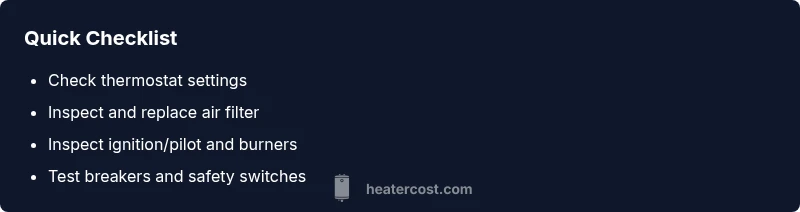
The most common heater problems are a faulty thermostat, a dirty air filter, ignition or pilot issues, dirty burners, blown fuses, or a faulty limit switch. Start by replacing or cleaning the filter and confirming thermostat settings, then check the power supply and ignition if accessible. If the unit still won’t run or you hear popping noises or smells, call a licensed HVAC pro.
Why Understanding the Most Common Heater Problems Saves Money
Understanding the most common heater problems is essential for homeowners, renters, and property managers who want reliable heat without surprise bills. When you know where trouble tends to originate, you can act quickly, reduce energy waste, and avoid emergency repairs. According to Heater Cost, proactive checks on filters, thermostats, and ignition systems can dramatically reduce callouts and wasted energy over a heating season. This knowledge translates to lower operating costs and longer equipment life. By recognizing warning signs early—uneven heating, unusual noises, or odd smells—you gain control over home comfort and budget. In short, knowing the common heater problems helps you diagnose faster, fix smarter, and plan maintenance with confidence.
Common Heater Problem Categories
Heaters fail for a handful of predictable reasons. Categorizing issues helps you triage without guessing:
- Thermostat and controls: calibration drift, loose wiring, bad sensors.
- Air filtration and airflow: dirty filters, clogged ducts, restricted return air.
- Ignition and burner: pilot light out, ignition electrodes fouled, burner fouled.
- Electrical and safety components: blown fuses, tripped breakers, faulty limit switches.
- Fuel and venting: gas supply issues, vent blockages, poor draft.
- General wear and aging: worn bearings, degraded seals, corroded components.
Each category has its own quick checks and recommended schedules. Addressing the easy items first often restores comfort and efficiency with minimal cost. The Heater Cost team emphasizes safety: never bypass safety devices or ignore gas smells or unusual flame behavior. Regular maintenance dramatically reduces the frequency of these problems.
How to Diagnose Thermostat and Temperature Settings
A misbehaving thermostat is a top culprit in many households. Start by:
- Verifying the thermostat is set to the correct mode and a suitable temperature.
- Checking for loose or damaged wires at the thermostat and furnace control board.
- Testing calibration with a room thermometer; if the reading differs by more than a few degrees, calibrate or replace the unit.
- Ensuring the furnace isn’t cycling too rapidly due to rapid-on or anti-short-cycle features.
If settings are fine but temperatures won’t align, the thermostat itself may be failing. In many cases, a simple replacement yields immediate comfort improvements. If you’re renting, confirm with your landlord before replacing, and consider a smart thermostat for easier diagnostics.
Checking Air Filters and Airflow for Efficiency
Air filtration is a simple yet powerful lever for performance. A clogged filter reduces airflow, causes the furnace to run longer, and may trigger safety shutoffs. Steps:
- Inspect the filter monthly; replace if dirty or clogged. Use a filter with the correct MERV rating for your system.
- Check return air paths and ensure vents aren’t blocked by furniture or drapes.
- Vacuum the furnace cabinet area to remove dust buildup around burners and blower wheels.
- Schedule routine replacements every 1–3 months depending on use, pets, and allergies.
Improved airflow lowers energy usage and extends equipment life. If you notice reduced airflow despite a clean filter, inspect ductwork for leaks or blockages. A professional duct cleaning or sealing can pay off in energy savings.
Ignition, Pilot, and Burner Troubleshooting
Ignition or ignition electrodes can accumulate grime, leading to failed lighting. Common symptoms include a no-heat call, delayed lighting, or intermittent operation:
- For gas furnaces, check the pilot light and main burner flame for a steady, blue flame. A yellow or flickering flame suggests oxidation or dirty burners.
- Clean ignition electrodes per manufacturer instructions and ensure the flame sensor is clean.
- If your furnace uses an electronic ignition, listen for the sparks; if there’s no spark, verify wiring and transformer output.
- When in doubt, turn off gas supply and power before inspecting gas components and contact a licensed HVAC professional if the issue persists.
Burners and ignition are critical for safe operation; professional service is recommended if you smell gas or see flame anomalies.
Electrical Issues and Safety Components
Electrical faults are common and potentially dangerous. Symptoms include intermittent heat, tripped breakers, and blown fuses. Check:
- The furnace breaker and main service panel for trips or corrosion.
- All accessible fuses and wiring connections to ensure secure contacts.
- The furnace limit switch and pressure switches for proper operation.
- Any exposed wiring or melted insulation; replace damaged cables and schedule a pro if you’re unsure.
Electrical work is hazardous. If you’re not confident about handling high-current circuits, hire a licensed technician for safety and compliance.
When to DIY vs When to Call a Pro
Many issues can be diagnosed and fixed by capable homeowners, especially simple filter changes or thermostat replacements. However, safety-critical tasks—gas appliances, electrical wiring, carbon monoxide risk, or uncertain ignition problems—should be handled by a pro. If you smell gas, hear banging or popping noises, or see soot, shut off power and contact emergency services while calling a professional. Regular maintenance by a technician is the best prevention, and many problems become easier to fix when diagnosed early.
Preventive Maintenance to Avoid Future Problems
Preventive maintenance saves money and reduces disruption. Create a simple seasonal routine:
- Replace air filters on a schedule and inspect ductwork for leaks.
- Listen for unusual noises and address minor changes promptly.
- Schedule annual professional tune-ups to clean burners, check ignition, and test safety devices.
- Keep the area around the furnace clean and clear of clutter to improve airflow.
- Consider a smart thermostat with built-in diagnostics to catch anomalies early.
A proactive approach reduces the odds of unexpected breakdowns and improves overall efficiency. The Heater Cost team recommends pairing maintenance with a simple budget for replacement parts as components wear with age.
...
Steps
Estimated time: 25-40 minutes
- 1
Power down and safety check
Shut off furnace power at the disconnect switch and circuit breaker. If you smell gas, evacuate and call emergency services. Ensure you wear eye protection and gloves when inspecting components.
Tip: Always start with safety: power off and gas secured before touching any furnace parts. - 2
Check and replace air filter
Remove the filter and inspect for dirt and debris. Replace with a filter of the same size and correct MERV rating. Ensure the filter is seated properly to avoid bypass.
Tip: A clean filter improves efficiency and can stop short cycling immediately. - 3
Verify thermostat settings
Confirm the thermostat is set to heat, at a higher temperature than room, and that it isn’t in emergency/auxiliary mode. If readings don’t match room temperature, recalibrate or replace.
Tip: Consider a smart thermostat with remote diagnostics for easier troubleshooting. - 4
Inspect ignition and burners
Follow the furnace manual to access ignition electrodes and burner paths. Clean surfaces with a soft brush; remove buildup and ensure flame paths are clear. Avoid touching hot surfaces.
Tip: Only perform ignition work if you’re comfortable; otherwise skip to professional help. - 5
Test cycling and safety devices
Turn power back on and observe furnace cycling. Listen for ignition sound; check for abrupt shutoffs or unusual noises. If faults persist, call a technician for a safe diagnostic.
Tip: Document any error codes or blinking lights for the technician.
Diagnosis: Heater won't start or shuts off unexpectedly
Possible Causes
- highPower issue
- highThermostat failure
- mediumDirty air filter
- mediumIgnition/pilot problem
- highTripped breaker or blown fuse
Fixes
- easyCheck the circuit breaker and outlet; reset or replace if tripped or damaged.
- easyTest the thermostat settings and calibration; replace if readings are off.
- easyInspect and replace the air filter; ensure proper airflow and return airflow.
- mediumInspect ignition or pilot assembly; clean or replace as needed.
- easyIf issues persist or gas smells are present, shut down and call a pro immediately.
Got Questions?
What are the most common heater problems homeowners face?
Thermostat faults, dirty filters, ignition or pilot issues, dirty burners, blown fuses, and faulty safety switches top the list. Regular maintenance and prompt checks help prevent these issues from escalating.
Common issues include thermostat faults, dirty filters, ignition problems, dirty burners, and blown fuses. Regular maintenance helps prevent them.
How often should I replace furnace air filters?
Most homes benefit from replacing filters every 1 to 3 months, depending on usage, pets, and allergies. Check monthly and replace when dirty to maintain airflow and efficiency.
Replace filters every 1 to 3 months, depending on use and pets. Check monthly and replace when dirty.
Is it safe to relight a pilot light myself?
Relighting a pilot light can be safe for some furnaces with proper instructions, but many modern units use electronic ignition. If you smell gas or are unsure, turn off gas and call a pro.
Relighting may be safe for some models, but if you smell gas or aren’t sure, contact a pro.
When should I call a professional?
Call a professional if you detect gas smells, if the furnace won’t light after basic checks, if you see burn marks, or if the unit emits smoke. Chronic issues should also be evaluated by a technician.
Call a professional if you smell gas, or if basic checks don’t fix the problem.
Can preventive maintenance reduce future heater failures?
Yes. Regular maintenance reduces failure risk and improves efficiency by cleaning components, testing safety devices, and ensuring proper airflow. Schedule annual tune-ups and monitor for unusual noises.
Regular maintenance lowers failure risk and keeps efficiency high. Schedule annual tune-ups.
What should I do if my furnace trips the breaker?
A tripped breaker may indicate an overload or a short. Reset the breaker, but if it trips again, shut off power and call a professional to inspect wiring, motor, or control board.
If the breaker trips again after reset, contact a professional to inspect wiring and components.
Watch Video
The Essentials
- Identify root causes by category: thermostat, filters, ignition, electrical.
- Prioritize safety; shut off power and gas before inspecting.
- Regular maintenance reduces emergent heater failures.
- Call a pro for gas, combustion, or electrical issues.