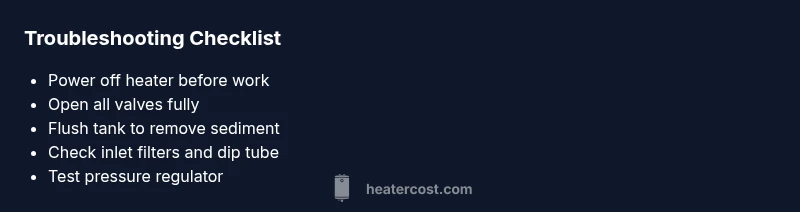
Low Pressure from Water Heater: Troubleshooting Guide
Urgent, practical troubleshooting for low pressure from a water heater. Learn quick checks, tank flushing, valve tests, regulator inspections, and when to call a professional for safe, effective fixes.


Low pressure from a water heater is typically caused by mineral buildup, valve restrictions, or a faulty regulator. Start with basic checks and flushing, then test valves and the regulator. For persistent issues, professional help is advised.
What causes low pressure from a water heater
Low pressure from a water heater is usually a symptom of one or more issues in the heating system or the surrounding plumbing. According to Heater Cost, the most common reason hot water pressure drops is sediment buildup at the tank’s bottom and along hot-water lines. When minerals in hard water settle out, they form a gritty sludge that constricts flow, especially in older tanks and in sections where the piping bends or narrows. Another frequent factor is a partially closed supply valve or a clogged screen on the inlet; even a small obstruction can dramatically reduce flow. In some homes, a defective pressure regulator or a faulty expansion tank can also choke the supply, particularly if the home relies on a PRV to hold pressure in the hot-water line. Finally, if the rest of the house has lower pressure, the issue may not lie with the heater at all but with the main water line or a shared service line. Understanding these causes helps you rank your next steps and avoid unnecessary fixes.
Check the basics before draining or replacing parts
Before you touch any valve or drain, perform a quick reality check to avoid waste and hazards. First, power off the unit if it’s electric, or switch off the gas supply if you have a gas water heater. This reduces the risk of electric shock or gas leaks while you work. Next, locate the main cold-water supply valve and any local shutoffs on the heater’s inlet and outlet, and verify they are fully open. A partially closed valve can masquerade as low pressure. Inspect the inlet screen or filter for debris, such as mineral flakes or sediment, and remove any obvious obstruction. Check if the problem occurs with both hot and cold water; if cold water also has low pressure, the issue is likely in the home’s supply rather than the heater. If hot water pressure only is affected, focus on the heater’s connections, tank, and internal components. These quick checks set you up for safe, effective fixes.
Inspect the water heater inlet, outlet, and dip tube
Once basics are cleared, examine the heater’s hardware. Start with the cold-water inlet and hot-water outlet connections for signs of leaks, corrosion, or loose fittings. A loose fitting can cause pressure drops and air pockets. Remove any sediment around the inlet with a soft brush and re-tighten fittings to the manufacturer’s torque specification. If your model uses a dip tube, check that it’s intact and properly positioned; a broken dip tube can cause mixing of cold water into the hot line, reducing perceived pressure at fixtures. If you notice rust or mineral scale on fittings or the tank neck, plan for replacement of damaged components. Wear eye protection and use a dedicated wrench to avoid stripping threads. While this step won’t fix every problem, it rules out the simplest causes and reduces the risk of leaks during later work.
Flush the tank and remove sediment
Sediment buildup is a common culprit, especially in hard-water areas. Attach a garden hose to the drain valve and place the other end in a safe drain. Open the drain valve and let some water flow to clear out sediment, then briefly flush with cold water to stir loose deposits. Close the valve, refill the tank, and re-pressurize the system. If you notice a lot of grit or cloudy water, repeat the flush after turning off the unit and re-checking the inlet filtration. This process can restore hot-water flow and protect tank components from abrasion. Always run a short test to confirm improved pressure before restoring normal operation.
Flush and bleed hot water lines in the house
If sediment remains, the issue may be in hot-water lines beyond the tank. Open a hot-water faucet at a distant location to bleed air from the system while you refill the tank. Do this gradually to avoid scalding. If pressure improves only briefly before dropping again, it’s a sign the problem persists deeper in the plumbing or within the tank. Consider running a thorough whole-house flush or consulting a professional if mobilizing the system seems daunting. Bleeding air can help restore a steady hot-water flow and reduce air pockets that mimic pressure loss.
Test overall home water pressure
Pressure issues can be localized to the heater or affect the entire home. Use a pressure gauge on an exterior hose bib or the cold-water outlet to measure static pressure. In most homes, a healthy range is roughly 40–60 psi. If your baseline is significantly lower, the problem may originate with the main supply, PRV settings, or distant branches. If the entire house shares low pressure, focus on the main supply line, utility pressure, or a worn regulator rather than the water heater alone. If only hot water is weak, you’ve probably narrowed the culprit to the heater, its valves, or the hot-water piping. Regular pressure checks can help catch declines early.
Check the pressure reducing valve and regulator
A failing or misadjusted pressure reducing valve (PRV) can cap hot-water pressure even when the main supply is adequate. Locate the PRV—often near the main shutoff—and verify it is delivering the expected range. If it looks corroded or the readings are consistently low, adjust cautiously following the manufacturer’s guidelines or replace the valve. If you don’t have the tools or confidence to calibrate, a licensed plumber can perform a safe, precise adjustment. A properly set regulator protects the entire system from pressure surges and improves hot-water consistency. Remember: too high pressure can damage fixtures; too low can leave you with weak showers.
When to replace or upgrade equipment
If your water heater is over ten years old, or if you repeatedly encounter sediment buildup and valve issues despite proper flushing and valve checks, replacement becomes a cost-effective option. Older tanks accumulate mineral scale that’s hard to remove completely, and a failing regulator or damaged dip tube may indicate broader wear. Consider models that emphasize sediment resistance, longer warranties, and efficient energy usage. When evaluating replacement, compare capacity, energy source (gas or electric), and installation costs. A well-chosen replacement can restore steady pressure, reduce scaling, and offer reliable hot water for years.
Safety and when to call a professional
Water heater work carries risks, including electrical shock, gas leaks, and scalding hazards. If you smell gas, hear hissing, notice corrosion around connections, or see leaking pressure valves, evacuate and call your gas company or a licensed plumber immediately. Do not attempt risky repairs beyond basic valve checks and flushing. If you’re unsure about valve tightness, PRV adjustments, or tank integrity, seek professional assistance. A pro can safely diagnose hidden leaks, test the regulator under load, and ensure correct valve sequencing.
Preventive maintenance plan to avoid future pressure issues
Create a simple yearly routine to prevent future pressure problems. Schedule a tank flush before the heating season, inspect and replace anode rods as recommended by the manufacturer, and test the pressure relief valve for proper operation. Replace inlet screens and filters according to water quality and usage. Keep a log of pressure readings, flushing dates, and any valve replacements. Small, consistent maintenance reduces dramatic pressure drops and extends heater life.
Common mistakes to avoid
Avoid using harsh cleaners that can corrode fittings, neglecting to shut off power or gas before servicing, and skipping the initial valve and screen checks. Do not ignore small leaks or noises in the hot-water line, as these often point to developing issues. Finally, resist the urge to over-tighten connections or force fittings, which can cause leaks or rupture threads. A calm, methodical approach saves time and money while protecting your home.
Steps
Estimated time: 60-120 minutes
- 1
Power down and isolate the heater
Turn off power to an electric heater at the breaker or switch off the gas supply for a gas heater. This minimizes the risk of shock or gas leaks while you work. Set the thermostat to off if accessible to reduce heating load during maintenance.
Tip: Always verify power with a non-contact tester before touching electrical components. - 2
Check the main and appliance shutoffs
Ensure the main cold-water supply valve is fully open and that any local shutoffs on the heater’s inlet/outlet are open. A partially closed valve can masquerade as low pressure and is a common, easily-fixed cause.
Tip: If you’re unsure which valve controls the heater, trace from the cold-water line entry to the tank. - 3
Inspect inlet screens and fittings
Remove the inlet filter/screen and check for rust, sediment, or debris. Clean gently and reassemble snugly without overtightening. Look for any loose or corroded fittings around the inlet and outlet connections.
Tip: Keep a small container to catch drips and wear eye protection. - 4
Drain and flush the tank
Attach a hose to the tank’s drain valve, place the other end in a safe drain, and open the valve to flush. Let water run until clear, then close and refill the tank. This removes mineral buildup that constricts flow.
Tip: Avoid flushing with the heater full of water to prevent scalding risk when you reenergize the system. - 5
Bleed hot-water lines to remove air
Open a hot-water tap furthest from the heater and slowly bleed air as the tank re-pressurizes. Close the tap once steady water flow returns. This step helps restore consistent hot-water flow.
Tip: Bleed gradually to prevent splashing and scalding hazard. - 6
Test the pressure regulator and main supply
If the pressure remains low, locate the pressure regulator (often near the main shutoff). Check for proper setting, signs of wear, or leaks. Adjust within the recommended range (usually 40–60 psi) or replace if faulty.
Tip: Never bypass the regulator; it protects your plumbing from high pressure. - 7
Re-test hot-water pressure
Restore power/gas, run hot water in several fixtures, and observe pressure consistency. If problems persist, you may be dealing with a failing tank, broken dip tube, or a larger plumbing issue.
Tip: Document readings to compare over time. - 8
Decide on replacement or pro help
If the heater is old, heavily corroded, or repeatedly loses pressure despite fixes, replacement can be more cost-effective than ongoing repairs.
Tip: Ask a pro for an upfront diagnosis and a written estimate. - 9
Document maintenance and schedule future checks
Create a simple maintenance calendar for annual flushing, filter checks, and regulator tests. Regular upkeep reduces the chance of sudden pressure drops.
Tip: Keep a log; it helps you spot trends quickly.
Diagnosis: Hot water pressure is low or variable when the heater is running, while cold water pressure may be normal
Possible Causes
- highMineral buildup in the tank or hot-water lines
- mediumPartially closed valves or clogged filters
- mediumFaulty pressure regulator or aging expansion tank
- lowOverall home water pressure is low
Fixes
- easyOpen all service valves fully, then flush the tank to remove sediment
- easyClean or replace inlet filters and screens; recheck fittings for tightness
- mediumInspect or replace the pressure regulator/expansion tank; adjust to 40-60 psi if needed
- hardIf pressure remains low after checks, contact a licensed plumber for a full system assessment
Got Questions?
What causes low hot water pressure after flushing the tank?
Flushing removes sediment but can reveal ongoing issues like a restricted main supply, a faulty regulator, or a damaged dip tube. If pressure remains low after a flush, reassess both the heater components and the broader plumbing system.
Sediment removal helps, but if pressure stays low, recheck the regulator or main supply.
Is the issue more likely with the heater or the home's plumbing?
If cold water pressure is normal but hot water is weak, the heater or its lines are the likely culprits. If both hot and cold pressure are low, the problem probably lies in the overall plumbing or utility supply.
Hot-water trouble points to the heater or its piping; full-house pressure points to the main supply.
Can sediment damage a water heater?
Yes, sediment can abrade heating elements, reduce efficiency, and cause uneven heating or pressure issues over time. Regular flushing helps prevent damage.
Sediment buildup can wear parts and lower efficiency; flushing helps prevent that.
Should I replace the pressure regulator to fix low pressure?
If testing shows the regulator is failing or consistently outside the target range, replacing or recalibrating the regulator is often necessary. A professional can ensure correct pressure settings.
If the regulator is faulty, replacement is usually needed to restore proper pressure.
Why is cold water pressure normal but hot water weak?
This usually points to a heater-specific issue, such as sediment buildup, a failing dip tube, or valve problems in the hot-water line.
If cold water is fine but hot water is weak, focus on the heater and hot-water piping.
How often should I flush my water heater to prevent low pressure?
Most experts recommend flushing once a year, especially in areas with hard water. More frequent flushing may be needed for high-usage homes or heavily mineralized water.
Annual flushing helps prevent buildup and keeps pressure steadier.
Watch Video
The Essentials
- Check both heater and home water pressures.
- Flush sediment and clean valves to restore flow.
- If pressure regulator or tank is aging, consider replacement.
- Call a professional for persistent or hazardous issues.