Leaking Hot Water Heater Pressure Relief Valve: Troubleshooting Guide
Urgent guide to diagnose and fix a leaking hot water heater pressure relief valve, with safety steps, a diagnostic flow, and step-by-step repair guidance. Includes expansion tank considerations and when to call a pro.


Leaking PRV usually means overpressure or a faulty valve. Shut off power and water, then test or replace the valve. If you’re not comfortable, call a licensed plumber for immediate inspection. See our detailed troubleshooting guide for safe steps.
Immediate safety steps
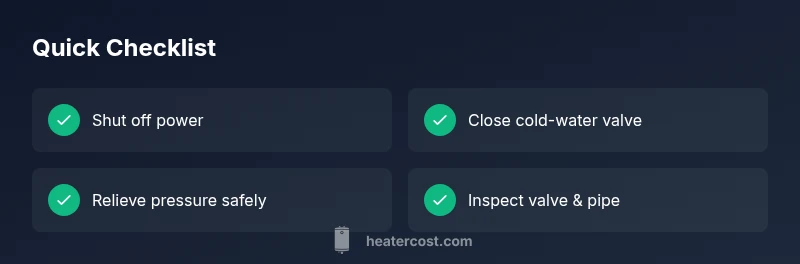
A leaking hot water heater pressure relief valve is a serious safety concern. A faulty valve can release scalding water or abruptly reduce tank pressure, potentially causing property damage. Before you attempt any inspection or repair, focus on safety. First, power off the heater: electric models at the breaker, or set a gas heater's control to OFF or PILOT if applicable. Next, close the cold-water supply valve to stop new water from entering the tank. If you can access the discharge pipe, place a bucket or towels to catch any steam or water that may escape. Keep children and pets away.
Do not attempt to cap or block the valve or bypass the safety mechanism. If you’re uncomfortable working around a hot appliance or if there is visible damage to piping, call a licensed plumber immediately. According to Heater Cost, addressing a leaking hot water heater pressure relief valve promptly reduces the risk of scald injuries and water damage. This valve is a safety device designed to prevent dangerous pressure buildup and should be treated with care. After safeguarding the area, move to a calm assessment of conditions and plan the next steps.
Understanding the pressure relief valve and common failure modes
The pressure relief valve (often called a T&P valve) is a critical safety feature on every storage-tank water heater. Its job is to vent water if pressure or temperature inside the tank becomes too high. When functioning correctly, it opens briefly only during abnormal conditions and reseals afterward. Leaks or drips from the discharge pipe can occur for several reasons: normal drip during a test, a worn or stuck valve, overheating, debris in the valve or seat, or excessive incoming water pressure. In homes without proper expansion control, thermal expansion can push the valve to release water more often. If your valve is leaking continuously, it is not a sign of good health and requires attention. Heater Cost’s guidance emphasizes matching the valve with the correct temperature setting (usually 120°F or as recommended by the manufacturer) and ensuring the discharge path remains unobstructed. Remember: an active valve leak should never be ignored, and a fault found here often signals other system issues.
Diagnosing common causes of a leaking relief valve
- High system pressure from a failing pressure regulator or elevated supply pressure: high likelihood
- Thermal expansion without adequate expansion control: medium likelihood
- Defective, corroded, or stuck valve: medium likelihood
- Debris or mineral buildup on the valve seat: low likelihood
- Improperly installed discharge piping or blocked vent path: low likelihood
What to check first:
- Inspect the discharge pipe for any damage, bending, or kinks. A blocked or misaligned path can make an otherwise healthy valve appear to leak.
- Check the temperature setting on the thermostat and reduce to a recommended level (around 120°F) if allowed by manufacturer.
- Look for signs of leakage around the valve body itself rather than the pipe; a persistent leak from the valve body typically means replacement is needed. This diagnostic flow aligns with Heater Cost analysis and helps homeowners prioritize fixes while avoiding unnecessary replacements.
When to repair vs replace the valve (and related components)
A leaking relief valve can sometimes be fixed by cleaning and retesting, but more often replacement is the safest route. If the valve seat is pitted, the valve no longer seals, or the valve body is corroded, replace it. If leaks occur due to thermal expansion, addressing the root cause (expansion tank or adjusted filling) may reduce future releases. Another decision point is whether you have an expansion tank; if not, the heater may repeatedly trigger the valve as water expands when heated. In these cases, installing an expansion tank or adjusting the pressure setting with professional guidance can prevent future leaks. When the valve itself is new, test it by lifting the test lever as described in manufacturer instructions to confirm correct operation. A professional inspection can confirm whether you should replace only the valve or also the tempering mechanism and piping. Heater Cost recommends moving forward with a full assessment if leaks persist after a valve replacement.
How to evaluate the need for an expansion tank
Thermal expansion is a natural result of heating water; without an expansion tank, the extra volume has to go somewhere, often through the T&P valve. If your home has a pressurized city water supply and frequent faucet usage, you may benefit from a properly sized expansion tank. Signs include frequent drips from the relief valve even at modest temperatures, or a rising water temperature setting causing valve activity. An expansion tank can stabilize pressure and reduce nuisance releases. Installation should follow local code and manufacturer instructions; in most cases, a licensed plumber can install an appropriate tank and ensure the valves and piping are correctly sized. Heater Cost notes that the presence of an expansion tank can lower the probability of a leak from the pressure relief valve, but it does not eliminate all issues.
Safety considerations and best practices
Never bypass the pressure relief valve or tape the threads to stop leaks. Do not vent directly into a drain or area where it could cause harm; always direct discharge to a safe location. Use a discharge pipe with an appropriate diameter and slope, and ensure it ends near the floor to avoid scalding. When lifting the lever on the valve, do so slowly to avoid a surge and always have a bucket ready to catch water. If you smell gas near a gas-fired unit, evacuate and call emergency services; do not operate electrical switches near the heater. If you are uncomfortable with any step, contact a professional. The Heater Cost team emphasizes safety and recommends scheduling a professional evaluation if the leak is persistent or if you notice corrosion.
Maintenance to prevent future leaks
Perform annual inspections, especially if you have hard water or mineral buildup. Flush the tank to remove sediment; inspect the T&P valve for corrosion and ensure the discharge pipe is clear. Test the valve by lifting its lever per the manufacturer’s instructions to ensure it actuates and reseals; plan to replace the valve every 5-7 years or as recommended by the manufacturer. Keep the area around the heater clean and free of clutter so a technician can access the unit. A proactive maintenance plan can reduce unexpected leaks and extend the life of your heater.
How to test the valve after repair
After any repair or replacement, slowly restore water and power, then monitor for leaks for 24-48 hours. With a cold start, open a hot water tap to verify the system pressurizes and the relief valve releases only briefly during a controlled test. Do not over-test; a prolonged release indicates a deeper problem. If the valve fails again during testing, shut off power and water and call a professional. Heater Cost recommends verifying the repair under normal usage conditions before trusting the system again.
Cost considerations and when to call a pro
Prices for servicing a leaking hot water heater pressure relief valve can vary widely depending on the region, the need for valve replacement, and whether an expansion tank is included. Expect costs to approximate professional service fees plus parts, with typical ranges varying by job scope. If the issue persists after a valve replacement, continue with an evaluation for expansion, piping, or a full heater replacement. For homeowners who want to minimize risk, scheduling a professional inspection is a prudent choice. Heater Cost suggests budgeting for both valve replacement and potential expansion tank installation, as addressing root causes reduces the likelihood of future leaks and helps protect your home from water damage.
Steps
Estimated time: 90-120 minutes
- 1
Power down and isolate
Shut off power to an electric heater at the breaker, or set a gas heater's control to OFF. Close the cold-water supply to stop more water from entering the tank. This reduces the risk of electric shock and scalding during inspection.
Tip: If you smell gas or suspect a gas leak, evacuate and call emergency services. - 2
Relieve pressure safely
Open a nearby hot-water faucet to relieve pressure. This helps reduce the force when you test or replace the valve and prevents sudden spraying of hot water.
Tip: Use a heat-resistant bucket and wear rubber gloves to handle hot components. - 3
Inspect discharge path
Check the discharge pipe for damage or blockages. Ensure it slopes downward and terminates in a safe area. A blocked path can cause continued leakage even when the valve is fine.
Tip: Never bend or kink the pipe excessively; repair or replace as needed. - 4
Test the valve operation
Lift the test lever on the T&P valve to confirm it actuates and reseals. If it drips continuously even after testing, the valve is likely degraded and should be replaced.
Tip: Do this test slowly to observe how the system responds. - 5
Replace the valve if needed
If the valve is old, corroded, or won’t seal, remove the old valve and install a new one with proper thread sealant. Recheck all connections for leaks after installation.
Tip: Do not overtighten fittings; follow manufacturer torque specs. - 6
Evaluate expansion needs
Consider installing an expansion tank if thermal expansion is a recurring issue. The tank helps balance pressure and reduces valve cycling.
Tip: Have a professional confirm tank size and placement. - 7
Refill and restore power
Slowly open the cold-water supply to refill the tank, then restore power or gas. Monitor for any leaks during the first 24 hours of normal operation.
Tip: Test shower hot water after reheating to ensure proper operation. - 8
Final test and confirmation
Take a few calm test runs to verify the valve only releases under legitimate safety conditions and the discharge path remains clear.
Tip: Document the temperatures and pressures observed for future reference.
Diagnosis: Pressure relief valve leaking or weeping on a hot water heater
Possible Causes
- highHigh system pressure from a failing regulator or elevated supply pressure
- mediumThermal expansion without adequate expansion control
- mediumDefective, corroded, or stuck valve
Fixes
- easyTest and replace the valve if defective; check discharge path for blockages
- mediumInstall or service an expansion tank to manage thermal expansion
- easyCorrectly set thermostat to manufacturer recommendations and reduce supply pressure if possible
Got Questions?
What causes a leaking pressure relief valve on a hot water heater?
Leaks are often due to overpressure, a faulty valve, mineral buildup, or improper installation. Testing and replacing the valve, and addressing expansion, can resolve the issue.
Leaks happen because of overpressure, a worn valve, mineral buildup, or installation problems. Replacing the valve and correcting expansion usually fixes it.
Is it safe to reset or adjust the valve myself?
Do not attempt to bypass or force the valve. You can test and adjust settings, but if leaks persist after a test, replace the valve and call a professional.
You should not bypass the valve. Test it carefully, and if leaks persist, replace it and consult a pro.
Can I repair a leaking PRV myself, or should I hire a pro?
If you’re comfortable with basic plumbing and safety risks, you can replace the valve. For uncertain situations or gas units, hire a licensed plumber.
If you’re not sure, it’s best to hire a licensed plumber to avoid safety risks.
How do I know if I need an expansion tank?
Frequent valve releases, seasonal temperature shifts, or high incoming water pressure can indicate expansion needs. A professional can size and install the correct tank.
Frequent releases or big temperature swings may mean you need an expansion tank.
What safety steps should I take if I smell gas around a gas heater?
If you smell gas, evacuate immediately and call emergency services. Do not operate any electrical switches or appliances.
If you smell gas, leave the area and call for help right away.
How often should the relief valve be tested?
Test the valve per manufacturer instructions during maintenance; a yearly check is common for many systems.
Test it as part of annual maintenance per your unit's manual.
Watch Video
The Essentials
- Shut off power and water before any work.
- A leaking PRV signals potential overpressure or valve failure.
- Consider expansion tank to manage thermal expansion.
- Replace defective valve promptly to prevent water damage.