Is My Water Heater Too Small? Troubleshooting Guide
Learn how to tell if your water heater is undersized, diagnose the signs, and practical steps to fix or upgrade. A clear, urgent guide for homeowners.


Is my water heater too small? The most common sign is hot water running out during peak use. Start by evaluating your household’s peak demand, then check thermostat settings and drain valve for sediment. If hot water runs out quickly even with modest use, your system is likely undersized, and upgrading or adding a supplemental heater is often the right fix. See our full troubleshooting guide for next steps.
Is my water heater too small? Understanding sizing and demand
Is my water heater too small? If you’ve ever stood under a cold spray while the shower steam fades, you’re not alone. Sizing a water heater isn’t about the tank label alone; it’s about how many fixtures you use at the same time and how long you demand hot water. According to Heater Cost, the right size hinges on peak usage patterns, recovery ability, and how you schedule showers, laundry, and dishwashing. The goal is to meet demand without exhausting supply during busy mornings or busy evenings. Friction between demand and capacity is a common reason families feel disappointed with their hot water setup, and the fix is often practical rather than dramatic.
How water heater sizing works: capacity, demand, and recovery
Water heaters are sized to meet peak demand rather than a single moment of use. A larger dwelling with multiple bathrooms and appliances drawing hot water simultaneously will require more recovery capacity—the rate at which the heater can heat incoming cold water to the desired temperature. Conversely, smaller homes or apartments with moderate daily routines can often run comfortably on a smaller unit. Important concepts include peak-hour demand and the distinction between a “tank size” and “actual usable hot water.” The Heater Cost team notes that a mismatch between demand and capacity is a leading cause of running out of hot water, especially when many people need hot water in the morning.
Signs your water heater is undersized: quick rundown of symptoms
Look for clear signs that your heater isn’t meeting demand: hot water runs out faster than expected; you experience temperature swings during concurrent use (showers and laundry); recovery after draws takes a long time; and you notice longer wait times between hot water draws at the tap. These indicators point to insufficient volume or insufficient heating rate. If you consistently see one or more symptoms, it’s a strong signal that you should assess whether your current unit matches your home’s usage profile.
Quick checks you can do today: safe, simple, and effective
Start with non-invasive checks you can perform without tools. Verify that the thermostat is set to a comfortable, safe temperature and not too low. Inspect the dip tube and pressure relief valve for signs of wear or leaking. Check insulation on hot water pipes—the better insulated, the less energy is wasted. Look for sediment buildup by listening for pops or cracks during heating, or by inspecting the tank’s interior if you have access. If you notice corrosion or leaks, you should call a professional before continuing with any larger adjustments. These checks help you rule out simple issues before considering a larger system upgrade.
Estimating your household hot water demand: a practical approach
Begin by listing all hot-water draws that occur in parallel on a typical morning (shower, sink, washing machine, dishwasher). Evaluate how long each draw lasts and how often two or more draws happen at once. This rough appraisal will help you gauge whether your current unit’s capacity is being stretched. The goal is not to impose a rigid rule but to identify whether there is consistent overlap between high-demand activities that could justify upsizing or adding a secondary heater. This approach aligns with practical guidance from Heater Cost analyses focused on real-world usage rather than rigid specifications.
Diagnostic flow: symptom → diagnosis → actions you can take
If you notice hot water depletion, start with simple checks (thermostat, sediment, insulation). If problems persist, assess whether your household demand exceeds your unit’s capacity. A professional assessment can confirm whether upsizing to a larger tank, or adding a second heater or a point-of-use option, is the best long-term fix. The diagnostic flow helps you separate easy, safe fixes from bigger, costlier upgrades. Throughout, keep safety in mind and avoid high-risk modifications without guidance.
Step-by-step fixes: practical paths to restore reliable hot water
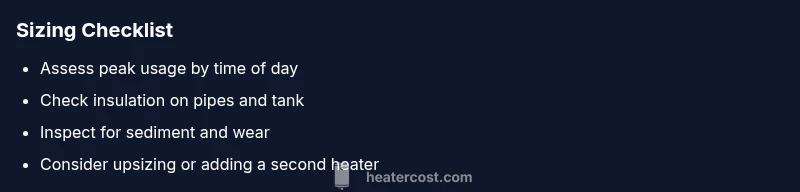
- Confirm demand vs. capacity: review how many fixtures run hot water at once. 2) Tighten thermostat where safe and appropriate, staying within manufacturer recommendations. 3) Flush sediment and replace an aging anode if needed. 4) Improve insulation on pipes to minimize heat loss. 5) If problems persist, evaluate upsizing or supplementing with a secondary heater. 6) Schedule a professional evaluation for installation or complex upgrades. Each step builds toward restoring reliable hot water without unnecessary replacement.
Safety, maintenance, and prevention: guardrails for the long term
Never work on live electrical components or pressurized tanks without proper training. If you’re unsure, call a licensed plumber or HVAC tech. Regular maintenance—flushing the tank, checking the anode, inspecting valves, and keeping venting unobstructed—helps prevent premature sizing issues. Consistent maintenance also improves energy efficiency and reduces the chance you’ll face hot-water shortfalls in the future. Keeping an eye on your household’s changing needs will guide you toward a sizing plan that stands the test of time.
Steps
Estimated time: 1-2 hours
- 1
Assess peak demand
List every hot-water draw that occurs concurrently during typical peak times and estimate how long each draw lasts. This helps determine whether your current unit can meet simultaneous needs.
Tip: Write down a typical weekday and weekend pattern to spot gaps. - 2
Check thermostat and safety devices
Ensure the thermostat is set within a safe, practical range and that safety devices aren’t limiting heat output. Do not exceed manufacturer recommendations.
Tip: Avoid extreme temperature settings; small changes can make a big difference. - 3
Inspect for sediment and wear
Shut off power and water, drain a small amount to check for sediment, and inspect the anode rod. Replace if degraded.
Tip: Sediment buildup reduces heating efficiency and could shorten tank life. - 4
Improve insulation
Wrap or upgrade insulation on the first ten feet of hot-water pipe and consider insulating the tank if not already done.
Tip: Better insulation reduces standby heat loss and may delay the need for upsizing. - 5
Test potential fixes before upgrading
Try a combination of modest changes (thermostat adjustment, pipe insulation, minor maintenance) to see if hot water availability improves.
Tip: Document results to decide whether an upgrade is warranted. - 6
Plan for upsizing or adding a secondary heater
If hot water shortfalls persist, evaluate options: a larger tank, a heat pump model, or a point-of-use heater for high-demand zones.
Tip: Consult a licensed professional to compare options and install safely.
Diagnosis: Hot water runs out during peak use or showers/localized demands
Possible Causes
- highHigh peak demand from multiple simultaneous hot-water draws
- highUndersized tank for household size
- lowThermostat set too low
- mediumSediment buildup reducing heating efficiency
- lowDip tube failure or valve issues
Fixes
- easyCheck and adjust temperature within safe range and per manufacturer guidelines
- mediumFlush sediment from the tank and inspect the anode plate
- easyInsulate hot water pipes to reduce heat loss
- hardConsider upsizing the tank or adding a supplemental heater (professional install advised)
- mediumHave a professional inspect venting, expansion tank, and overall system health
Got Questions?
What are common signs that a water heater is undersized?
Common signs include hot water running out quickly, temperature fluctuations when multiple uses happen, and long recovery times. If the issue occurs during typical peak use, sizing is likely the root cause.
If hot water runs out quickly or you notice temperature swings when other fixtures are in use, your heater may be undersized. Look for patterns during peak usage.
Can I fix an undersized water heater without replacing it?
Often, improvements like adjusting the thermostat, improving insulation, flushing sediment, and staggering hot-water usage can help. If these steps don’t resolve the issue, upgrading or adding a second heater is usually necessary.
You can try simple tweaks first, but if hot water runs out often, upgrading is usually required.
How do I estimate my home’s hot-water demand?
List all fixtures that use hot water and consider how many are used at once. Multiply by typical usage times to gauge peak demand and compare with your system’s capacity.
Make a quick list of fixtures and how long they run hot water at once to judge demand.
Is upsizing expensive or worth it?
Upsizing can be cost-effective in the long run if it eliminates frequent shortfalls and reduces energy waste. Costs vary by region and system type; consult a pro for a precise estimate.
Upsizing often pays off over time by avoiding constant hot-water shortages.
Should I consider a hybrid or tankless option?
Hybrid and tankless options can provide better efficiency and on-demand hot water. They require professional installation and can involve higher upfront costs but save energy in the long term.
A hybrid or tankless system can be a good fit if you want more reliable hot water with efficiency, but it needs a pro to size and install.
Watch Video
The Essentials
- Assess demand first, not just tank size
- Upgrading or supplementing is common for larger households
- Regular maintenance protects against premature sizing issues
- Consult a pro for major upgrades and safety**