How Big Should My Water Heater Be? A Sizing Guide
Learn how to size your water heater for your home. This guide covers household size, peak usage, tank vs. tankless, and practical steps to avoid cold showers and energy waste.


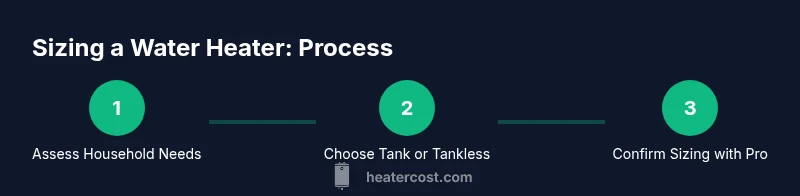
Sizing your water heater means matching capacity to peak hot-water demand. Start by counting simultaneous uses (showers, baths, appliances) and household size, then choose a tank size (typically 40-50 gallons for 1-2 people, 50-60 for 3-4, 75-80 for 5+). Tankless options use GPM flow at your desired temperature rise. For accuracy, consult a pro or use a sizing calculator.
Understanding Your Hot Water Demand
Sizing begins with a clear picture of how much hot water your household actually uses during peak moments. Start by listing the people living in the home and the fixtures that typically run at the same time: showers, baths, washing machines, dishwashers, and occasional outdoor uses in winter. The goal is to estimate the amount of hot water you need in a single hour (the peak hour). A water heater sized for this peak reduces the chance of an embarrassing cold shower and minimizes energy waste from storing more hot water than you can use.
According to Heater Cost, correct sizing minimizes energy waste and reduces monthly bills. In practice, you’ll want a practical rule of thumb, then refine with actual usage data. For a typical two-person household with moderate hot-water habits, a 40- to 50-gallon tank is common. For three to four residents, 50 to 60 gallons is often appropriate, while five or more people frequently require 75 to 80 gallons, depending on shower length, appliance usage, and whether you run kitchen and bath hot water simultaneously.
But size isn’t the only factor. The type of heater (tank versus tankless), the recovery rate, climate, energy source, and efficiency rating all influence the real performance you’ll see. A larger tank will hold more hot water, but it also loses heat while idle, which wastes energy. In colder climates, you may need a larger capacity to compensate for heat loss from the tank. If your current heater runs out of hot water mid-shower, that’s a sign you may need a larger unit or a faster recovery option. In short, estimate peak demand, translate that into gallons, then confirm with a professional sizing check.
Tank vs Tankless: Choosing the Right Type
The choice between a traditional tank and a tankless water heater is more than about size. A tank stores hot water and delivers it on demand, typically at a lower upfront cost but with standby heat losses. Tankless heaters heat water on demand, which can save energy and space, but sizing comes down to provisioning enough flow for simultaneous uses. If your priority is continuous supply and simplicity, a tank may be best. If you want near‑instant hot water and energy efficiency, a tankless system becomes attractive. In tight spaces, tankless units can be mounted on walls, freeing up closet real estate. Always consider fuel type (gas vs electric) and venting requirements when comparing options.
From a sizing perspective, tank systems rely on a defined capacity in gallons and a recovery rate, while tankless systems rely on gallons per minute (GPM) and temperature rise. Both approaches require calculating peak demand, but the metrics you use differ. For families who value consistency and ease of use, a properly sized tank often performs well. For homes with high hot-water demands or irregular usage, a tankless system can be a better fit, provided it’s correctly sized for the expected GPM.
Traditional Tank Sizing: How to Pick Gallon Capacity
Choosing a tank’s capacity starts with your home’s peak-hour needs. In practice, you’ll consider the number of fixtures that might run at once and how long each will operate. A safe rule of thumb used by many professionals is to match the gallons to household size, with common ranges as starting points: 1-2 people commonly use a 40-50 gallon tank, 3-4 people typically need 50-60 gallons, and 5+ people often require 75-80 gallons. If you frequently run multiple large loads (showers plus dishwasher plus laundry) at the same time, lean toward the upper end of the range or consider a larger tank with a faster recovery rate. Keep in mind that recovery rate—how quickly the heater reheats water after it’s drawn—can make a smaller tank feel larger in day-to-day use. Always compare the unit’s recovery rate in gallons per hour (GPH) to your peak-hour needs and factor in insulation and energy efficiency. For best accuracy, use the current model’s specification sheet and, if possible, a professional sizing calculation that accounts for climate, incoming water temperature, and home insulation.
Tankless Sizing: Flow Rates and Temperature Rise
Tankless (on‑demand) heaters eliminate the idea of “tank size” and instead measure capacity by GPM and the temperature rise you require. Start by listing your expected simultaneous hot-water uses. Typical flow rates for common fixtures are: showers (2.0–2.5 GPM), faucets (0.5–1.5 GPM), dishwashers (1.0–2.0 GPM). To size a tankless unit, determine the maximum expected GPM during peak demand and the temperature rise (the difference between incoming water temperature and the hottest water you want at the tap). For example, in a cold climate with 40°F incoming water and a desired 110°F outlet, you need a larger temperature rise of 70°F, which requires a higher-capacity unit. Gas-fired tankless models generally deliver higher continuous output than electric ones, but both require precise calculation. Remember that pairing a tankless heater with sufficient hot-water storage (or a staged system) can help smooth peak loads and avoid cold-start issues.
In practice, sizing is about aligning the unit’s maximum GPM and its efficiency with your hot-water pattern. If you routinely run multiple fixtures, you might choose a higher GPM rating, and if your incoming water is very cold, your temperature-rise requirement will be larger. Related considerations include pipe run length and heat loss in long runs, which can reduce available hot water at the point of use.
Practical Scenarios: Sizing Examples for Common Households
To illustrate how sizing works in real life, consider a few typical scenarios and corresponding sizing guidance.
- Scenario A: 2 people, moderate usage, showers and a dishwasher. A 40-50 gallon tank is often sufficient, assuming average shower length and dishwashing loads. If you tend to take long showers or live in a cooler climate, lean toward 50-60 gallons for a bit more cushion.
- Scenario B: 4 people with regular bathroom and laundry loads. A 50-60 gallon tank is a common starting point, but if you anticipate high simultaneous demand (two showers plus laundry at the same time), you may prefer 60-80 gallons or a tankless system with adequate GPM.
- Scenario C: A large family or home with frequent simultaneous hot-water uses. An 80 gallon tank or a high-GPM tankless unit is a sensible option. For very large homes or very cold climates, you’ll want to solicit a professional sizing calculation that factors in wind chill, insulation, and actual usage patterns.
These scenarios illustrate the importance of peaking because most households do not use hot water at a constant rate throughout the day. By focusing on the peak hour and the number of simultaneous uses, you can choose a size that minimizes the risk of cold water while keeping energy waste in check. Heater Cost analysis, 2026, emphasizes that correctly sizing your system is a crucial step in improving efficiency and comfort. The goal is to strike a balance between capacity and efficiency so that you aren’t paying for more hot water than you need while still avoiding outages during peak use.
Installation Considerations and Next Steps
Sizing is not the end of the process. After selecting a size and model, you must ensure your home’s water heater installation meets local codes and safety standards. This includes checking venting (gas models), electrical service capacity (electric models), space constraints, and accessibility for maintenance. If you are replacing an older unit, verify that the existing venting and gas line size can support a larger or higher‑output water heater. If you’re unsure about the correct size or the installation requirements, consult a licensed plumber or a qualified HVAC professional who can perform precise measurements, assess insulation, and confirm compatibility with your existing plumbing and electrical systems.
For homeowners with limited space, consider wall-mountable or compact tank options, or evaluate a tankless solution that matches your GPM needs. Always obtain a written sizing confirmation from the installer and request performance data after a trial period to ensure the unit meets your demand.
The Heater Cost team recommends that you work with a qualified installer to validate sizing, ensure safe venting and electrical connections, and optimize settings for energy efficiency and comfort.
Verify Sizing and Get Final Confirmation
Once you’ve selected a size, you’ll want to verify that the sizing aligns with real-world performance. Have your installer perform a simple test: measure the time it takes to reach the target temperature at multiple fixtures, check the recovery rate after a full draw, and confirm the system maintains desired temperatures under typical loads. If you notice frequent cold-starts or insufficient hot water during peak periods, revisit the sizing decision with your professional. The goal is to achieve reliable hot water without excessive standby losses. The Heater Cost team emphasizes the value of a final verification by a licensed professional to ensure the system delivers as expected and to avoid future overruns or warranty issues.
Quick Reference Sizing Chart and Next Steps
For quick reference, maintain a practical sizing chart in your notes, mapping household size and typical usage to a recommended gallon capacity range or a GPM rating for tankless units. Pair this with a professional assessment to tailor your choice to climate, water quality, and energy costs. Regular maintenance, such as flushing a tank to prevent sediment buildup or descaling a tankless unit, helps sustain efficiency and extend the heater’s life. The right-sized water heater should deliver consistent hot water comfort while keeping energy use in check.
Tools & Materials
- Calculator or sizing app(To perform simple GPM and recovery-rate calculations)
- Current water heater specifications(Gallon capacity, recovery rate (GPH), fuel type)
- Household hot water usage diary(Optional, helps refine peak-demand estimates)
- Measuring tape(Optional for space planning in mechanical closet)
Steps
Estimated time: 45-90 minutes
- 1
Gather usage data
Collect information on household size, fixture types, and typical usage patterns. Note how many showers or baths occur concurrently on weekday mornings. This establishes a baseline for peak demand.
Tip: A one-week usage diary improves accuracy. - 2
Estimate peak-hour demand
Identify the maximum number of hot-water uses that could run in the same hour and estimate the total water volume needed.
Tip: Think about showers, laundry, and dishwasher running together. - 3
Choose tank size (or GPM for tankless)
If you’re choosing a tank, select a gallon size within the recommended range for your household. If tankless, determine the required GPM and temperature rise.
Tip: For larger families, favor larger tanks or higher‑GPM tankless units. - 4
Check recovery rate and efficiency
Review the heater’s recovery rate (GPH) for tanks or the continuous GPM rating for tankless units. Higher values reduce wait times between uses.
Tip: Compare recovery rates at standard temperatures to local inlet conditions. - 5
Consider space and venting
Ensure the chosen unit fits available space and meets venting or electrical requirements for your home.
Tip: Gas models often require venting; electric models need sufficient service capacity. - 6
Factor energy costs and climate
Account for climate impact on incoming water temperature and potential energy costs; a well-sized unit reduces standby losses.
Tip: In colder climates, plan for a higher temperature rise. - 7
Consult a professional
Have a licensed professional validate your sizing choice and perform installation to code.
Tip: Ask for a written sizing confirmation and post-install performance check. - 8
Monitor performance
After installation, monitor for hot-water availability during peak usage and adjust if needed.
Tip: Keep notes on any deviations and share with your installer for refinements.
Got Questions?
How large should a water heater be for a two-person home?
For a two-person household with typical usage, a 40-50 gallon tank is commonly sufficient. If hot-water use is higher or showers are long, consider 50-60 gallons.
For a two-person home, 40 to 50 gallons is usually enough, but adjust for long showers or high usage.
Does tankless sizing depend on GPM?
Yes. Tankless sizing is based on the maximum gallons per minute (GPM) you expect during peak usage and the temperature rise you need.
Tankless size depends on the GPM you need and the temperature rise.
What factors affect sizing besides household size?
Consider peak usage, climate, fixture efficiency, recirculation needs, and whether you want simultaneous hot water for multiple fixtures.
Think about peak demand, climate, and how many fixtures you use at once.
Is oversizing worth it for energy efficiency?
Oversizing can increase standby losses and waste energy; undersizing can result in running out of hot water during peak times. Find a balance based on peak demand.
Oversizing wastes energy; undersizing runs out of hot water.
Are gas and electric heaters sized differently?
Yes. Gas units often recover faster and may require venting; electric units depend on electrical service capacity and element configuration.
Gas often recovers faster, but each type has its own sizing considerations.
How can I verify sizing after installation?
Check the nameplate and the installer’s settings. A performance check can confirm the unit meets peak-demand needs.
Verify with the nameplate and a quick performance check.
Watch Video
The Essentials
- Assess peak demand before choosing size
- Tank sizes are common guidelines by household size
- Tankless sizing relies on GPM and temperature rise
- Have a professional verify sizing and installation