How to Turn On a Water Heater: A Step-by-Step Home Guide
A practical, safety-minded guide to turning on a water heater. Identify your unit type, restore power or ignition, set a safe temperature, and test hot water—covering electric, gas, and tankless models.


This guide shows you how to turn on a water heater safely and successfully. Start by identifying your heater type (electric, gas, or tankless), then follow the appropriate steps to restore power or ignition, set a comfortable temperature, and test hot water. Always observe safety warnings, and contact a professional if you smell gas or notice leaks.
Understanding Your Water Heater: Types, Safety, and Preparation
Knowing how your unit works is the first step in the process of how to turn on heater for water. This guide helps homeowners identify electric, gas, or tankless models, and outlines the safety checks you should perform before attempting a restart. According to Heater Cost, start by locating the unit, reading the label, and confirming power supply or gas connections. A quick visual check now saves time later and reduces the risk of electrical shock or gas mishaps. Familiarize yourself with the typical components: thermostat or digital control, burner or heating element, and the temperature pressure relief valve. With the right prep, you can proceed confidently and safely.
Safety First: Power, Gas, and Water Precautions
Before you touch any wiring or gas connections, put safety at the center of your plan. Wear closed-toe shoes, use a flashlight, and keep a clear workspace. Turn off the electrical power to electric heaters at the circuit breaker, or close the gas supply valve for gas units. If you own a solar or hybrid hot-water system, follow the manufacturer’s shut-off instructions for the array or heat source. Do not operate a water heater with wet hands or a standing water puddle nearby. After shutting off energy, verify there is no voltage at the heater using a non-contact tester. This step reduces the risk of shock and missteps during re-energizing.
Electric Water Heaters: Turning On and Verifying
Electric water heaters are powered by a dedicated circuit. To turn on, first ensure safety steps are complete. After safety checks, restore power by flipping the circuit breaker back on, then wait 30-60 seconds for the unit to initialize. Next, verify that the thermostat is set to a safe temperature (typical 120°F). If your model has a reset lever or a repair mode, consult the manual before using it. Finally, run hot water at a nearby faucet to confirm heat is coming within a minute or two.
Gas Water Heaters: Reigniting and Temperature Control
Gas water heaters rely on a flame and controlled gas flow. After ensuring there is no immediate danger, reopen the gas supply valve and, if equipped, reignite the pilot according to the manufacturer’s instructions. Allow the burner to ignite and stabilize for a few minutes, then set the thermostat to a comfortable temperature (commonly around 120°F). If the flame won’t light or you smell gas, evacuate and contact emergency services. Regular venting and proper clearance around the heater reduce fire risk.
Tankless and Solar Water Heaters: Special Considerations
Tankless systems heat water on demand, so restart steps focus on verifying the cold-water supply and electrical or gas readiness. For solar-assisted units, ensure the solar loop is circulating and the auxiliary heater is available. In all cases, confirm that the unit’s control panel is accessible, power is on, and setpoints are appropriate. Tankless models often require slightly different temperature limits, so consult the user manual for the recommended range.
Testing and Troubleshooting After Restart
After you restore energy or ignition, test hot water at a faucet in your home. If water fails to reach the expected temperature, recheck thermostat settings and fuel supply, and look for error codes on digital displays. Listen for unusual noises or inconsistent heat delivery, which can signal mineral buildup or valve issues. If you notice any gas odors or suspect a leak, shut off the supply immediately and call a professional.
Maintenance Tips to Keep It Ready Year-Round
Regular maintenance helps ensure reliable hot water. Schedule an annual inspection of connections and vents, and flush electric tanks to reduce sediment buildup. For gas units, schedule a professional flame inspection and vent check. Adjust temperatures to a safe level (typically 120°F), inspect pressure relief valves for proper operation, and replace worn gaskets as needed. Keeping a maintenance log helps you track service and avoid surprises.
Quick Reference: Safe Restart Checklist
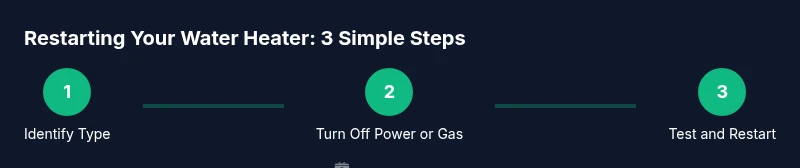
- Identify your heater type (electric, gas, or tankless) and read the label.
- Turn off the energy source before touching any components.
- Restore energy only after confirming a safe setup.
- Set a safe temperature (around 120°F).
- Test hot water and observe for leaks or burning smells.
Tools & Materials
- Non-contact voltage tester(Verify power is off at the heater before any work.)
- Screwdriver set (Phillips and flat-head)(Open access panels and control plates as needed.)
- Adjustable wrench(Use on gas valves or fittings if required.)
- Multimeter (optional)(Helpful for confirming electrical state on complex setups.)
- Flashlight(Bright, focused light to inspect panels and labels.)
- Bucket or container(Use if draining is advised by the manual.)
- Towel or rag(Keep area dry and clean while handling valves.)
- Gloves(Protect hands during valve and panel work.)
Steps
Estimated time: 15-25 minutes
- 1
Identify heater type
Locate the unit and read the label to determine whether it is electric, gas, or tankless. This determines the exact restart path and safety steps. If you’re unsure, stop and consult the manual or a professional.
Tip: Check the model label for any safety notices before proceeding. - 2
Turn off the energy source
In one clear action, shut off the energy source to the heater—electric breakers off, gas valve closed, or solar system shut-off as applicable. This prevents shocks or ignition while you inspect.
Tip: Use the panel label to locate the correct switch or valve. - 3
Verify power off
Use a non-contact voltage tester to confirm there is no live power at the heater. This ensures safety before you proceed with any panel work or ignition steps.
Tip: If you don’t detect power, you’re ready for the next steps. - 4
Access thermostat/ignition panel
Remove the panel cover following the manual to access the thermostat or ignition area. Keep track of screws and replace the cover securely after you’re done.
Tip: Note the current settings before changing anything. - 5
Set thermostat to 120°F
Adjust the thermostat to a safe, standard temperature (commonly 120°F). If you have a digital control, use the keypad; if a knob, set to the marked 120°F position.
Tip: Avoid very high temperatures to prevent scalding. - 6
Restore energy supply
Turn the power back on or reopen the gas supply. Allow the unit to initialize, which may take a short moment depending on model.
Tip: Stand back a few feet to observe flames or indicators safely. - 7
Test hot water
Run hot water from a nearby faucet for 1–2 minutes to confirm heat delivery and stable temperature.
Tip: If temperature fluctuates, recheck settings or inspect sensors. - 8
Troubleshoot or call a pro
If you still don’t get heat or you detect gas smells, shut off energy and contact a qualified technician.
Tip: Gas odors require immediate professional assistance.
Got Questions?
Can I turn on a water heater by myself?
Yes, you can restart a water heater on your own if you follow safety steps and know your unit type. Do not attempt if you smell gas or see signs of a leak. Always consult the manual or a professional for gas-related concerns.
Yes. If you know your unit type and follow the safety steps, you can restart it yourself. If you smell gas or see a leak, call a pro immediately.
What temperature should I set my water heater to?
Most households are comfortable with 120°F (49°C). This offers a good balance of hot water and energy efficiency while reducing scalding risk. Adjust if you have specific needs or safety concerns.
A common safe setting is 120 degrees Fahrenheit. You can adjust within the recommended range based on your household needs.
Why isn’t the water heat after restarting?
Possible causes include thermostat misadjustment, an electrical issue, or a gas supply problem. Check the thermostat setting first, then verify power or gas supply. If unresolved, consult a professional.
If there’s no heat after restart, check the thermostat and energy supply first, then call a pro if needed.
Is it safe to relight a gas pilot light myself?
Relighting a gas pilot can be risky. If you follow the manufacturer’s instructions carefully and don’t smell gas, you may relight. If you’re unsure, contact a licensed technician.
Relighting a gas pilot is risky—follow the manual carefully, and call a professional if you’re unsure or smell gas.
How often should I maintain my water heater?
Annual or biannual maintenance is typical, including inspecting connections, flushing sediment, and checking safety devices. Regular maintenance helps extend the unit’s life and reliability.
Most heaters benefit from yearly maintenance, including flushing and safety checks. Regular checks can prevent unexpected failures.
Watch Video
The Essentials
- Identify heater type before starting
- Shut off energy source to ensure safety
- Set thermostat to a safe temperature (≈120°F)
- Test hot water to confirm heating works
- Call a pro for gas leaks or persistent issues