How to Turn Off the Water Heater: A Homeowner's Guide
Learn a safe, step-by-step method to shut off your water heater for maintenance, leaks, or emergencies. This guide covers electric and gas models, safety checks, and relighting tips.


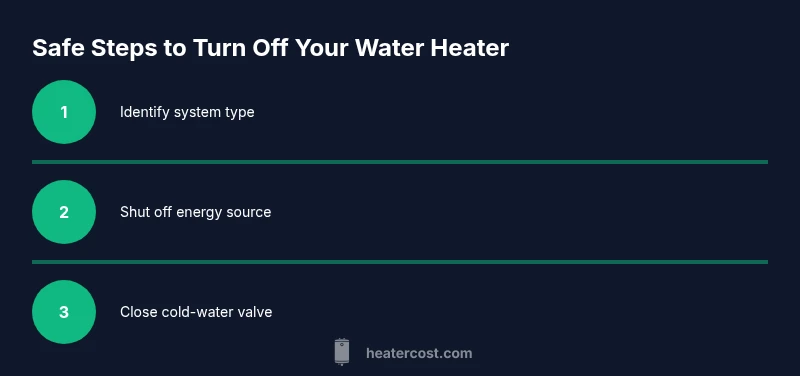
To turn off the water heater, identify your system type (electric, gas, or propane) and use the correct shut-off method. Electric heaters: switch off the dedicated circuit breaker, or unplug if accessible. Gas heaters: close the gas supply valve, then ensure the thermostat is set to pilot or off if present. According to Heater Cost, this is a safety procedure used during maintenance or emergency shutoffs.
Why turning off the water heater matters
Shutting off the water heater is more than a matter of saving energy—it’s a critical safety practice during routine maintenance, when you detect leaks, or if you smell gas or hear unusual noises. Whether you own an electric, gas, or propane model, a deliberate shutoff helps prevent scalding, reduces the risk of water damage, and minimizes hazards from malfunctioning components. Heater Cost analysis highlights that many homeowners overlook isolating the heater from the water supply before inspecting connections or valves. By turning off heat input and isolating the tank, you gain control over the situation, enabling safer inspections for corrosion, loose fittings, or signs of wear. If you’re ever unsure, err on the side of caution and seek professional help. This guide walks you through safe, practical steps for both electric and gas systems, so you can handle common maintenance without creating new risks.
Safety first: assess the situation
Before touching anything, take a quick risk assessment. Look for dampness, pooling water, or a sulfurous or rotten-egg odor indicating a gas leak. If you detect gas, evacuate immediately and call your local emergency number; do not operate switches or use a phone inside the area. If water is pooling, shut off the main water supply if you can access the isolation valve on the cold inlet. Wear protective gloves and closed-toe shoes, and avoid touching electrical components with wet hands. Electric heaters can still pose a risk even when the breaker is off, so verify with a tester if possible. If you’re renting or managing a property, ensure tenants know the plan and have a written safety procedure to follow during outages or maintenance.
Identifying controls and what to shut off
Water heaters come in electric and gas configurations. Electric models are powered by a dedicated circuit breaker in the main panel, while gas models use a shut-off valve on the gas line near the heater. Inspect the unit label for energy source and model details, using a flashlight if needed. After you determine the correct control, plan to shut it off before isolating the water supply. If you can’t locate a shut-off valve or breaker, or if the valve is stuck, stop and call a licensed professional to avoid injury.
Electric water heater: turning off the power safely
Start by locating the correct circuit breaker in the main panel and flipping it to OFF. If the unit is plug-in, unplug it from the wall, though many are hard-wired. Use a non-contact voltage tester to confirm there is no live voltage at the thermostat or heating element before proceeding with any handling. Keep the area dry and well-lit—if the panel or wires look damaged, stop and contact an electrician. Once power is cut, wait a few minutes for elements to cool before touching any components. If you smell burning or see melted insulation, stop and call a professional immediately.
Gas water heater: shutting off the gas supply
To shut off gas, turn the shut-off valve on the gas line perpendicular to the pipe until it stops. If you cannot locate the valve or it is difficult to turn, contact your gas utility or a licensed plumber. After closing the valve, wait 5–10 minutes to clear any residual gas, and do not attempt to relight the heater until a professional has inspected the system. Verify that the flame is extinguished by observing the vent and any pilot indicators on the unit. Never use flames or create sparks in the area while gas is suspected to be present.
Water inlet valve isolation: closing the cold-water shut-off
Find the cold-water shut-off valve on the inlet pipe connected to the heater. Turn the valve clockwise to fully close and isolate the tank from incoming water. If the valve is corroded, stiff, or hard to reach, do not force it—seek professional assistance. Isolation prevents further leaks or accidental filling while the heater is off and provides a safer environment for inspection or service.
After turning off: safe checks and relighting readiness
Confirm the heater is fully off by testing the thermostat and, for gas units, ensuring the gas is fully shut off. Check for any gas smells; if detected, evacuate and call emergency services or the gas company. When you’re ready to relight or restore power, follow the manufacturer’s relighting instructions precisely and do not bypass safety features. If you’re uncertain about the relighting procedure, schedule service to avoid the risk of explosion or fire.
Common mistakes to avoid
Avoid assuming the heater is off after flipping a switch or closing a valve. Always verify with a tester or by inspecting the thermostat/pilot area. Do not work on the unit if you’re unsure of the fuel type or the location of shut-offs. Never operate electrical components in wet environments or near standing water, and never force a valve that won’t turn. For safety, keep children and pets away during maintenance and have emergency contact information ready.
Maintenance and safety checks for future use
Regular maintenance reduces the chances of leaks or malfunctions. Schedule annual inspections, flush sediment from electric heaters if recommended by the manufacturer, and inspect the expansion tank and relief valve for proper operation. Label all shut-off points and keep the owner’s manual accessible. When in doubt, contact a licensed professional rather than risking improper servicing.
Tools & Materials
- Non-contact voltage tester(To verify there is no live electrical current at the heater controls before touching components)
- Flashlight(Ensure the workspace is well-lit in utility rooms)
- Owner's manual or model number(Helpful for model-specific relighting or safety steps)
- Work gloves(Protection when handling valves or metal components)
Steps
Estimated time: 30-45 minutes
- 1
Identify your water heater system type
Look for the unit label or consult the owner's manual to confirm whether you have an electric, gas, or propane water heater. Knowing the energy source guides which shut-off to use and reduces the risk of a wrong operation.
Tip: Keep the model and energy source information handy for quick reference. - 2
Shut off the appropriate energy source
Electric: flip the dedicated circuit breaker to OFF, or unplug the unit if it’s a plug-in model. Gas: close the gas shut-off valve on the line near the heater. Do not attempt both at once unless you’re certain of the setup.
Tip: Use a non-contact voltage tester to confirm power is off before touching components. - 3
Close the cold-water inlet valve
Rotate the cold-water shut-off valve clockwise until fully closed to isolate the tank from incoming water. This prevents leaks and overflow while the heater is off.
Tip: If the valve is stiff or difficult to reach, don’t force it—seek professional assistance. - 4
Set the thermostat to OFF or PILOT OFF
For electric heaters, ensure the thermostat is set to OFF after power is cut. For gas heaters, set the thermostat to PILOT OFF or OFF as appropriate to prevent ignition when restarting.
Tip: Document the current settings before changing anything in case you need to restore them later. - 5
Relieve pressure and check for safety
Open a nearby hot-water faucet to vent air and reduce pressure in the tank. Do not force valves if there is resistance, and avoid leaning over heated pipes.
Tip: Have a bucket ready and wear gloves to protect from hot water spray. - 6
Wait and verify shutdown
Wait 5–10 minutes to allow the system to cool and confirm there’s no heat input or gas flow. Recheck that the breaker is off or the gas valve remains closed.
Tip: If you smell gas or notice warning sounds, leave immediately and call emergency services. - 7
Plan for relighting or re-energizing
When you’re ready to resume use, follow the manufacturer’s relighting instructions. If you’re unsure, contact a professional to avoid hazardous conditions.
Tip: Store any relighting instructions in a known place near the unit.
Got Questions?
Is turning off a water heater dangerous?
When done following the correct steps, turning off a water heater is a standard safety procedure. Always identify the system type and use the appropriate shut-off. If you encounter gas leaks or feel unsure, contact a professional.
Turning off a water heater is safe when you follow the right steps and identify the system type. If you smell gas or feel unsure, get professional help.
Can I turn off the water heater during a power outage?
Yes. You can shut off the energy source to prevent accidental heat input when service resumes. Re-energize or re-light only after confirming safety per the manufacturer’s instructions.
Yes. You can turn it off during a power outage, but relight only after ensuring safety according to the manual.
Should I turn off the water heater if I’m leaving for an extended period?
Turning off the heater while away can prevent leaks and reduce energy use. If you’re leaving for a long time, shutting off power or gas and water supply is prudent, then relight or re-energize upon return following the manual.
If you’ll be away for a long time, shutting it off can save energy and prevent leaks. Relight or regain power when you’re back following the manual.
What’s the difference between turning off the breaker vs the thermostat?
The breaker cuts electrical power entirely to an electric heater, while the thermostat controls heat input. For gas heaters, turning off the gas valve stops fuel delivery. Use both correctly depending on the system and follow safety guidelines.
The breaker cuts power, the thermostat controls heat. For gas heaters, shut off fuel at the gas valve. Always follow safety guidelines.
How long should I wait before relighting after turning off?
Wait for the area to cool and for any gas to clear if a gas system was involved. Most manufacturers recommend a brief cooling period and a careful relight following the manual.
Wait for cooling and clearing of gas before relighting, then follow the manual.
Do I need a professional to turn off the heater?
If you smell gas, cannot locate shut-offs, or feel unsafe, contact a licensed professional. For routine safety, you can perform basic shutoffs with caution and the right precautions.
Call a professional if you smell gas or you’re unsure about the shut-offs. Safety first.
Watch Video
The Essentials
- Identify your heater type before starting
- Shut off the correct energy source first
- Isolate the water supply to prevent leaks
- Verify safety status before relighting or powering back on
- Seek professional help for gas issues or uncertain steps