How to Turn Off a Heater Without a Thermostat
Safety-focused guide to turning off a heater without a thermostat, covering electric, gas, and boiler systems with practical steps and essential safety tips for when to contact a professional.


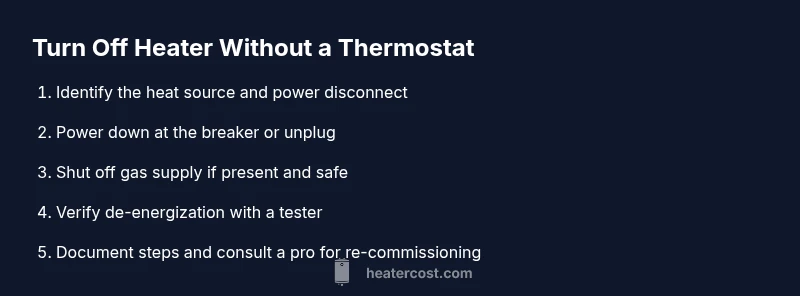
To turn off a heater without a thermostat, cut power at the dedicated breaker, or unplug the unit if corded; for gas units, shut off the gas supply. Verify power is off with a tester before touching anything. This quick guide covers electric, gas, and boiler scenarios and when to call a pro.
Why turning off a heater without a thermostat might be necessary
According to Heater Cost, homeowners occasionally need to interrupt heat without access to a functioning thermostat, such as during a thermostat failure, a temporary service scenario, or when a mechanical control is stuck. This situation isn't ideal, but having a practiced shutdown plan can prevent heat-related damage, reduce fire risk, and keep your household safe while you arrange professional help. In many homes, the heater is the primary climate control device, and a thermostat outage can leave a room uncomfortable or even unsafe if temperatures drop too quickly or rise too high in extreme conditions.
Different heater types require different shutdown approaches. Electric baseboard heaters, wall units, and space heaters often have plug-in or hard-wired power controls. Gas furnaces and boilers may depend on gas valves or service switches that bypass the typical thermostat signal. Understanding these distinctions helps you choose the safest method without compromising equipment safety.
This guide also acknowledges real-world constraints homeowners face, such as limited access to manuals, unfamiliar panel layouts, or nonstandard installations. By focusing on universally applicable safety steps, you can reduce risk regardless of brand or model.
How different heater types respond when the thermostat is unavailable
Electric heaters (baseboard, wall units, space heaters) generally shut off when their power source is interrupted. If the unit is corded, unplugging it or flipping a dedicated breaker will stop heat generation. Do not touch exposed elements or internal wiring while the unit is energized. For hard-wired fixtures, a properly labeled circuit breaker is essential to avoid accidental re-energization.
Gas heaters (furnaces, boilers with standing pilots) require caution because fuel is involved. In many homes the thermostat signal simply triggers the gas valve; if the thermostat fails, you may be able to shut off heat by closing the gas shut-off valve near the appliance or at the gas supply line. Always ensure you can see a clear path to the valve before approaching.
Central systems with an integrated boiler or furnace add another layer: a service switch inside the equipment cabinet can disable heat calls, but this should be done only if you can safely access the panel and have confirmed power is off. If you are unsure of the system type, err on the side of caution and contact a licensed professional before attempting a manual shutoff.
Safety prechecks before you touch any wiring or valves
Before interacting with any heating equipment, perform basic safety checks to reduce risk. Confirm you are wearing appropriate footwear and gloves if needed, and ensure the area around the heater is clear of combustibles. Use a non-contact voltage tester to verify there is no live current where you will be working, and never rely on a single sense (sight or smell) to determine safety. If you smell gas, hear hissing, or suspect a leak, evacuate immediately and call emergency services.
Keep a written note of the exact model or serial number; this can help when you call a professional and reduces the time needed to locate the correct shutdown procedure in manuals. Remember: turn off the power before attempting any mechanical adjustments to avoid electric shock or short circuits.
The practical, emergency shutdown methods by heater type
Electric-only units: First choice is power-down at the circuit breaker dedicated to the heater. If a corded unit, unplug it from the wall outlet. When there is no easy disconnect, switch off the appropriate breaker and press the unit’s own power switch if present. Do not touch any heating elements.
Gas furnaces/boilers: If you have a readily accessible gas shut-off valve near the unit, close it slowly to avoid a spark or abrupt pressure change. If you cannot safely access the valve, or you detect a gas odor, evacuate and call the gas company or emergency services. After shutting off gas, do not relight or re-energize until a professional inspects the system for integrity.
Hybrid or oil-fired systems: For some hybrid setups, you may need to shut off both electrical power and fuel supply. Follow the manufacturer’s guidance or contact a professional to avoid inadvertent re-ignition or fuel leaks. In all cases, never bypass safety interlocks or disable protective devices.
After shutdown: what to inspect and what to tell a technician
Once heat generation has stopped, inspect for any signs of damage such as burning smells, unusual noises, or arcing marks on wiring. Document any error codes or flashing lights on the control panel to share with a technician. If you shut off gas, keep the area ventilated and inform the technician about the shut-off location and the observed conditions. When you contact a pro, provide the model, age, and last service date to help them diagnose quickly.
Common mistakes and quick fixes to avoid
Avoid turning off the main power switch unless you have explicitly confirmed it will disable only the heater circuit. Never remove panels or try to bypass safety features to stop heat. Do not attempt to rewire or replace valves without proper training. Always consult a licensed technician for re-commissioning after any off-thermostat shutdown, especially if you notice abnormal smells, sounds, or performance changes.
Tools & Materials
- Non-contact voltage tester(Confirm de-energization before touching any wires or terminals)
- Screwdriver set (Phillips and flat-head)(Access panels or service switches safely)
- Adjustable wrench(Used for gas valve connections if present)
- Flashlight(Illumination in dim furnace areas)
- Gloves and eye protection(Personal safety when handling panels or valves)
- Gas leak detector spray (or soapy water)(Pre-checks for leaks after shut-off (do not rely solely on this))
Steps
Estimated time: 15-45 minutes
- 1
Identify heater power source
Locate the heater’s power source and determine whether it is corded, hard-wired, or part of a central system. Confirm you can access the relevant shutoff safely before proceeding. This step prevents accidental re-energization and helps you plan the safest sequence.
Tip: Label the control or breaker once identified for future reference. - 2
Power down at primary disconnect
If the heater is corded, unplug it from the outlet. If it is hard-wired, flip the dedicated circuit breaker to OFF and wait 30 seconds to ensure complete de-energization. Do not touch heating elements or exposed wiring during this time.
Tip: Use a non-contact tester to confirm no current is present after flipping the breaker. - 3
Shut off gas supply if applicable
For gas heaters with an accessible shut-off valve, close the valve slowly and fully to interrupt the fuel supply. If you cannot reach the valve safely or detect a gas odor, evacuate and call emergency services immediately.
Tip: Do not operate the valve with bare hands if you smell gas; wait for professionals. - 4
Disable heat calls on central units
If your system is connected to a furnace or boiler with a service switch or panel, use the switch to disable heat calls only if you can access the panel safely and power is already confirmed off. Avoid bypassing safety interlocks.
Tip: Refer to the manual for the exact panel location; panels vary by model. - 5
Verify shutdown and observe
After completing power or gas shutoff, observe the heater area for any signs of activity, unusual noise, or smells for several minutes. Ensure no heat is generated before proceeding with any maintenance.
Tip: Keep a safe distance while you recheck—do not re-energize if you’re unsure. - 6
Document and seek professional help
Record the shutdown steps you performed and note any abnormal conditions. Contact a licensed technician to re-commission or service the system, especially after a shutoff without a thermostat.
Tip: Provide model, age, and any observed codes to accelerate diagnosis.
Got Questions?
Is it safe to shut off a gas heater without a thermostat?
If you detect a gas odor or suspect a leak, evacuate and contact emergency services. If it’s safe to proceed, close the gas shut-off valve and arrange professional service before re-energizing the system.
If you smell gas, leave the area and call emergency services. If you can do it safely, shut the gas valve and call a technician before turning the system back on.
What should I do after turning off the heater without a thermostat?
Check for signs of damage or leaks, note any error codes, and contact a licensed technician to inspect the system before restoration. Keep the area ventilated and avoid relighting or restarting until cleared.
After shutting down, look for damage or leaks and call a pro before you turn it back on.
Can I use the main power switch to stop heat in a central system?
Yes, you can interrupt power to a central unit with the service switch, but only if you know its exact function and the system’s safety interlocks. When in doubt, contact a professional.
Using the main switch is possible, but only if you’re sure what you’re affecting. When unsure, call a pro.
What tools do I need to safely turn off a heater without a thermostat?
A tester, screwdriver set, adjustable wrench, flashlight, gloves, and possibly a gas leak detector. Avoid touching live components and never bypass safety features.
You'll need basic hand tools and safety gear; don’t bypass safety features.
When should I avoid turning off a heater myself?
If you’re unsure of the system type, detect a gas odor, hear abnormal noises, or see signs of damage, stop and call a licensed technician. Improper shutdown can cause safety risks.
If anything feels unsafe or unfamiliar, call a professional.
Will turning off power harm my heating system?
Properly cutting power or fuel when needed generally won’t damage the system, but re-commissioning and diagnostics by a professional are important to prevent safety issues.
Turning off power correctly is generally safe, but you should have a pro check it before turning back on.
Watch Video
The Essentials
- Power off before touching any heater components.
- Differentiate electric vs gas shutdown methods.
- Verify no heat is produced after shutdown.
- Call a professional for restoration and safety checks.