What to Do When Your Water Heater Stops Working: An Urgent Troubleshooting Guide
Urgent, practical steps to diagnose and fix a water heater that stops working. Safe checks, common causes, and when to call a pro to restore hot water quickly.


What to Do When Your Water Heater Stops Working
When your hot water suddenly goes cold, it disrupts daily routines and can trigger a cascade of inconveniences. According to Heater Cost, a quick, calm assessment can save you time and money. Start by identifying whether you have an electric or gas-powered unit, then verify the basics: is there power or gas flow, is the thermostat set correctly, and is the reset button pressed if your model has one? In many homes, a simple reset or a tripped breaker is enough to restore hot water. If the problem persists, you’ll want a systematic approach that distinguishes safety concerns from mechanical failures. The goal is to stabilize the situation, avoid unsafe work, and determine whether you can fix the issue yourself or need a licensed professional. This guide walks you through a practical, urgent troubleshooting process that applies to most conventional storage-tank water heaters found in residences. By following these steps, you’ll gain clarity about the root cause and the safest, most cost-effective path forward.
Quick Safety Checks Before You Touch Anything
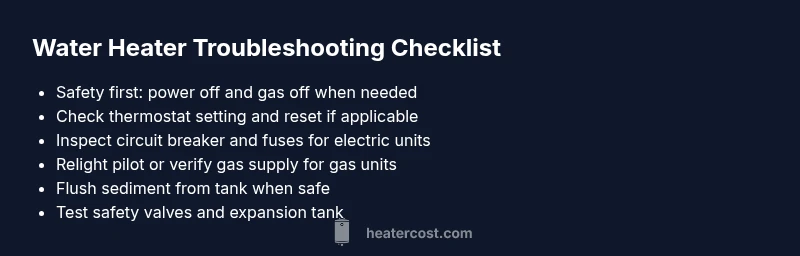
Safety first. Before you poke around a water heater, switch off power to electric units at the circuit breaker and, if you have a gas heater, shut off the gas supply according to the manufacturer’s instructions. Check for obvious signs of trouble: scorch marks, a rotten-egg smell, or a pool of water around the tank. Do not attempt to disassemble or drain a hot tank if you’re unsure of safety protocols. If you detect a gas odor, evacuate the area and call the gas company or emergency services. For renters and homeowners, many simple issues can be addressed with the right precautions, but never work on a hot tank or pressurized valve without turning off power and water first. These precautionary steps reduce the risk of burns, leaks, or electrical shock and set the stage for effective troubleshooting.
Understanding the Likely Causes
Most water heater failures fall into a few common categories. Electrical systems can trip a breaker or a faulty thermostat/elements fail over time. Gas-powered models may lose flame due to a shut-off valve, an empty gas supply, or a pilot light outage. Sediment buildup in the tank reduces heating efficiency and can cause strange noises or cold water at the tap. Leaking valves or a faulty pressure relief valve can also impede operation. By recognizing these patterns, you can prioritize checks and avoid unnecessary replacements. Heater Cost analyses emphasize starting with the most accessible and reversible causes before escalating to component replacement.
How to Identify Electrical, Gas, or Thermostat-Related Issues
Electrical heaters usually show a tripped breaker, a blown fuse, or an inactive reset button on the thermostat. Gas models rely on a continuous gas supply and a functioning pilot or electronic ignition. If the thermostat is set too high or too low, hot water may become inconsistent or stop entirely. Listen for burner ignition on gas heaters—no ignition often means gas supply issues or a safety shutdown. For electric heaters, a lack of heat while the display shows power often points to heating elements or thermostat faults. These distinctions guide whether you should perform tests yourself or call a professional to verify burner operation, venting, and electrical integrity.
Immediate Steps You Can Take Safely (Non-Invasive)
Begin with non-invasive checks: verify the thermostat setting (120–140°F is typical), confirm the circuit breaker is on and not tripped, and reset the high-temperature/limit switch if your model includes one. For gas heaters, relight the pilot according to the manufacturer’s instructions if safe to do so, ensuring proper ventilation. If you have a drain valve, you can carefully perform a basic drain to clear sediment when the tank is cool, but never drain a hot tank or without following the correct procedure. Throughout, avoid disassembling sealed components, touching electrical terminals, or attempting to bypass safety controls. These steps can restore heat or reveal a more serious issue that requires professional service.
When to Call a Professional and What They’ll Do
If basic resets and safety checks fail, professional help is warranted. A licensed technician will inspect electrical connections, test heating elements, verify thermostat operation, check gas lines and combustion for gas heaters, and inspect the venting system. They will also examine the T&P relief valve and expansion tank for safety and code compliance. An expert can perform a controlled flush, replace worn components, and assess the overall health of the unit. If the unit is aging or repeatedly failing, they’ll help you decide between repair and replacement, factoring in safety, efficiency, and cost.
Prevention Strategies to Extend Water Heater Life
Preventive maintenance reduces the frequency of sudden failures. Schedule an annual flush to remove sediment, inspect and replace the anode rod every 3–5 years (or as recommended by the manufacturer), test the T&P valve, and insulate the tank and pipes for efficiency. Set the temperature to a safe level to prevent scalding and reduce energy use. Consider installing an expansion tank if your system lacks one to handle pressure changes. Treat minor repairs promptly and schedule professional checkups regularly to catch wear before it becomes a major problem.
Budgeting for Replacement vs Repair: A Quick Decision Guide
As water heaters age, repairing individual components can become less cost-effective than replacement. Use a practical timeline: if the unit is more than 10–15 years old and requires multiple major parts, replacement is often the smarter option. Factor in energy efficiency gains from newer models, which can reduce operating costs over time. Heater Cost recommends weighing upfront replacement costs against expected savings, warranty coverage, and the risk of future leaks or failures. Regardless of choice, plan for professional installation to ensure safety and code compliance.